
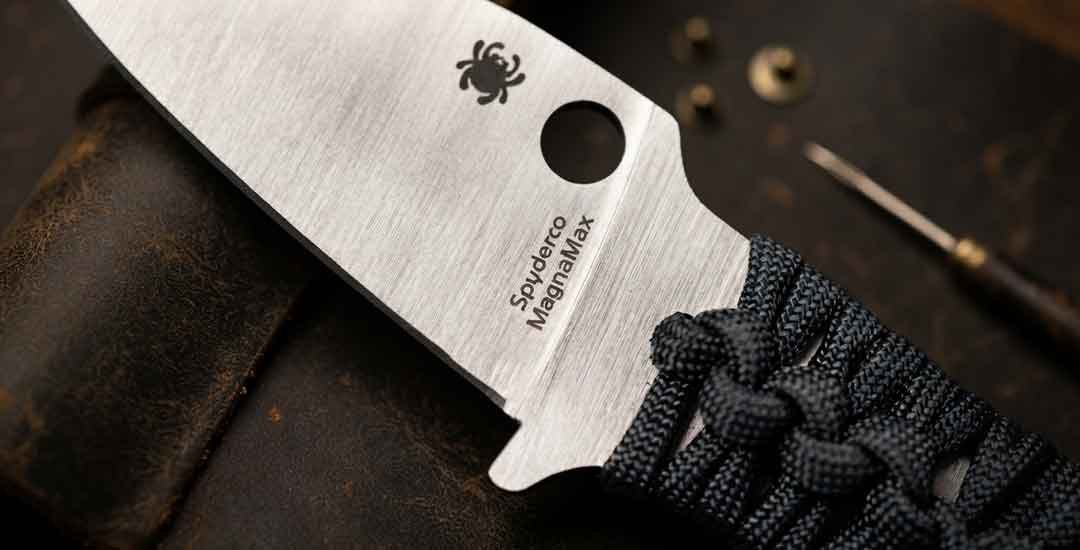
MagnaMax Steel – Everything You Need to Know
MagnaMax is a notable new knife steel that has been

There’s a moment in the wilderness when everything clicks. The fire catches, the shelter holds, and the knife in your hand has done exactly what you needed it to do. That moment doesn’t happen by accident. It happens because you chose the right blade.
A great bushcraft knife isn’t just a cutting tool. It’s your fire starter, your carving companion, your field dressing partner, and your emergency lifeline — all wrapped into one rugged, reliable package. Whether you’re batoning wood for a Survival fire or fashioning snares and traps, the knife you carry makes all the difference.
Top-rated bushcraft knives share a few non-negotiable traits — full construction, excellent edge retention, and corrosion resistance that holds up in the worst wilderness conditions. At American Knife Depot, we stock thousands of blades across every category imaginable. We’ve handled, tested, and evaluated countless fixed blade knives, folding bushcraft knives, and everything in between. These are our six picks for the best bushcraft knives available in 2026 — chosen for real-world performance, not marketing hype.
| Knife | Best For | Blade Steel | Blade Length | Price Range |
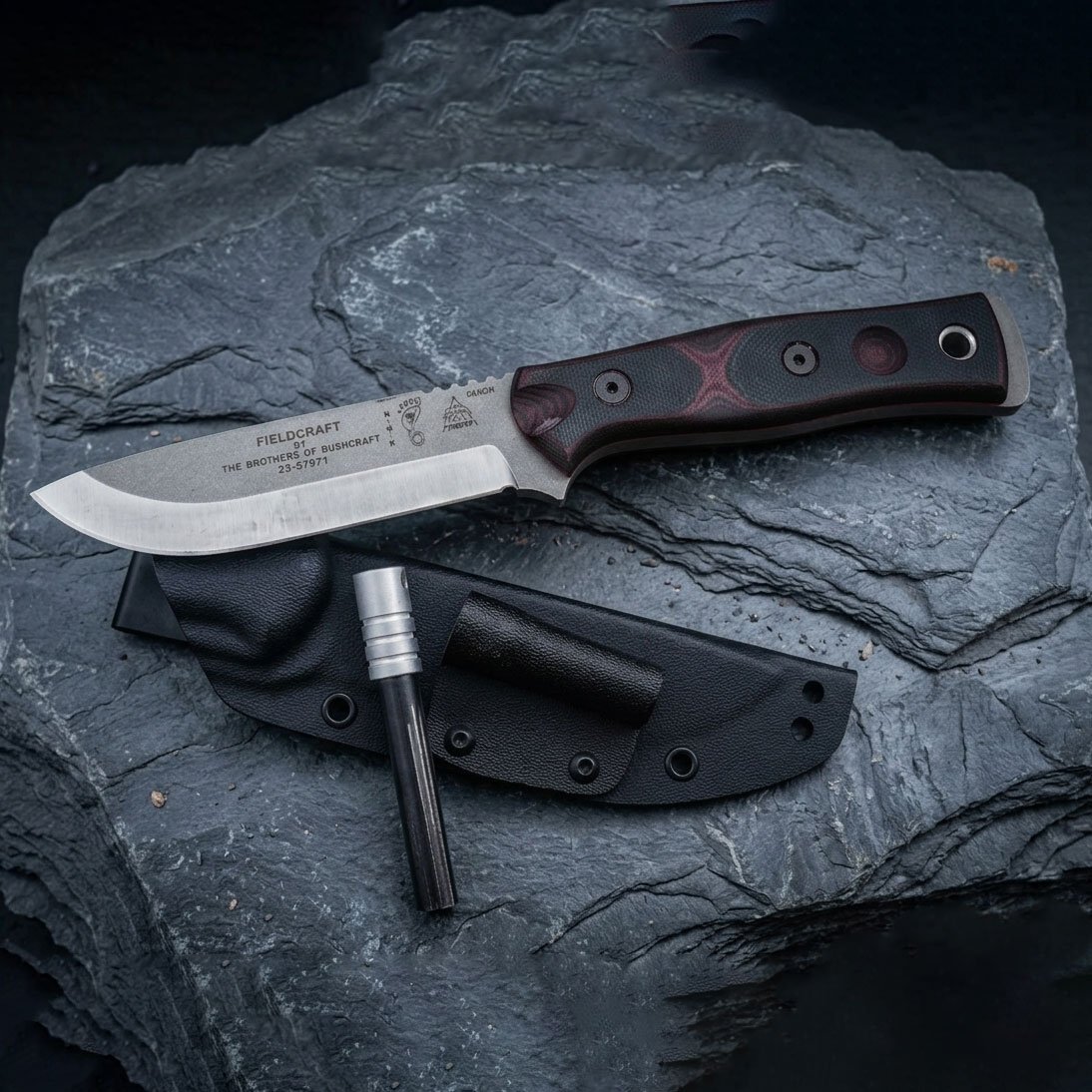
| TOPS Bob Fieldcraft | Best Overall | 154cm / 1095 | 4.625 in | $$ |
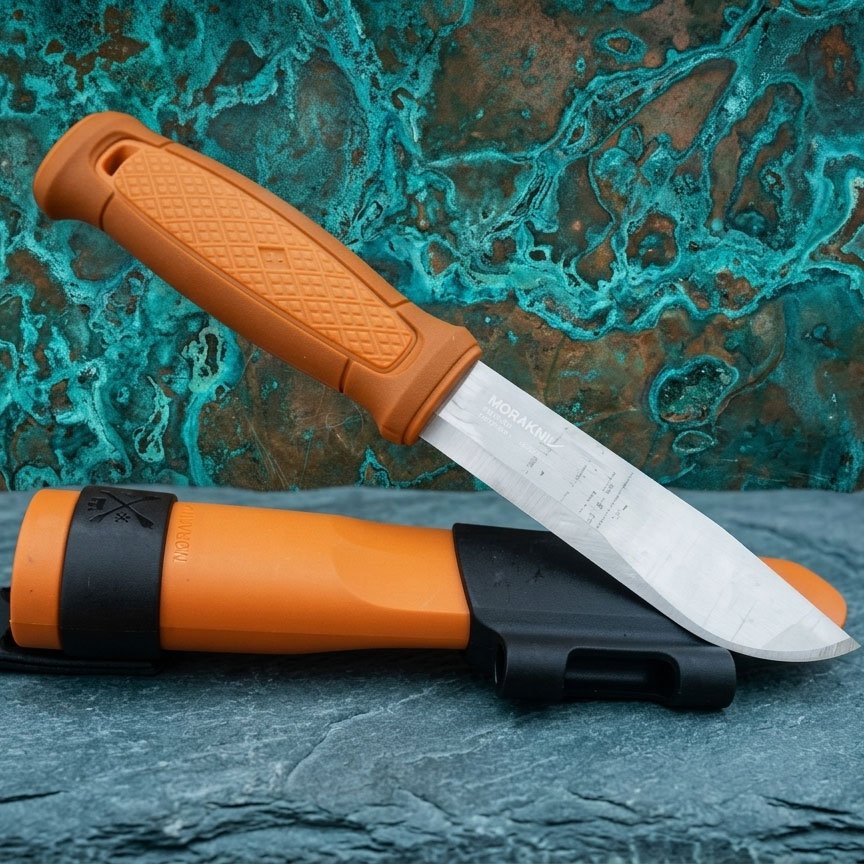
| Morakniv Kansbol | Best Budget | Sandvik 12C27 | 4.125 in | $ |
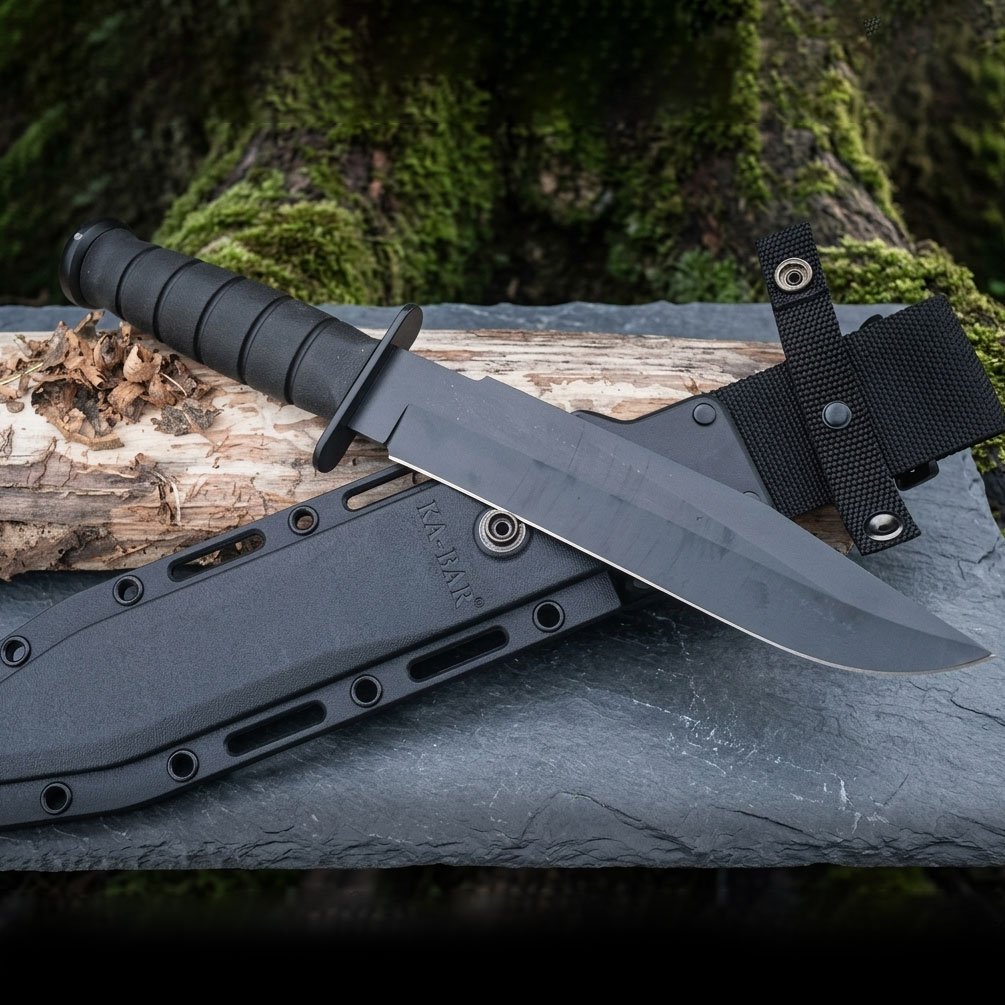
| Ka-Bar Fighter | Best Large | 1095 Cro-Van | 7.25 in | $ |
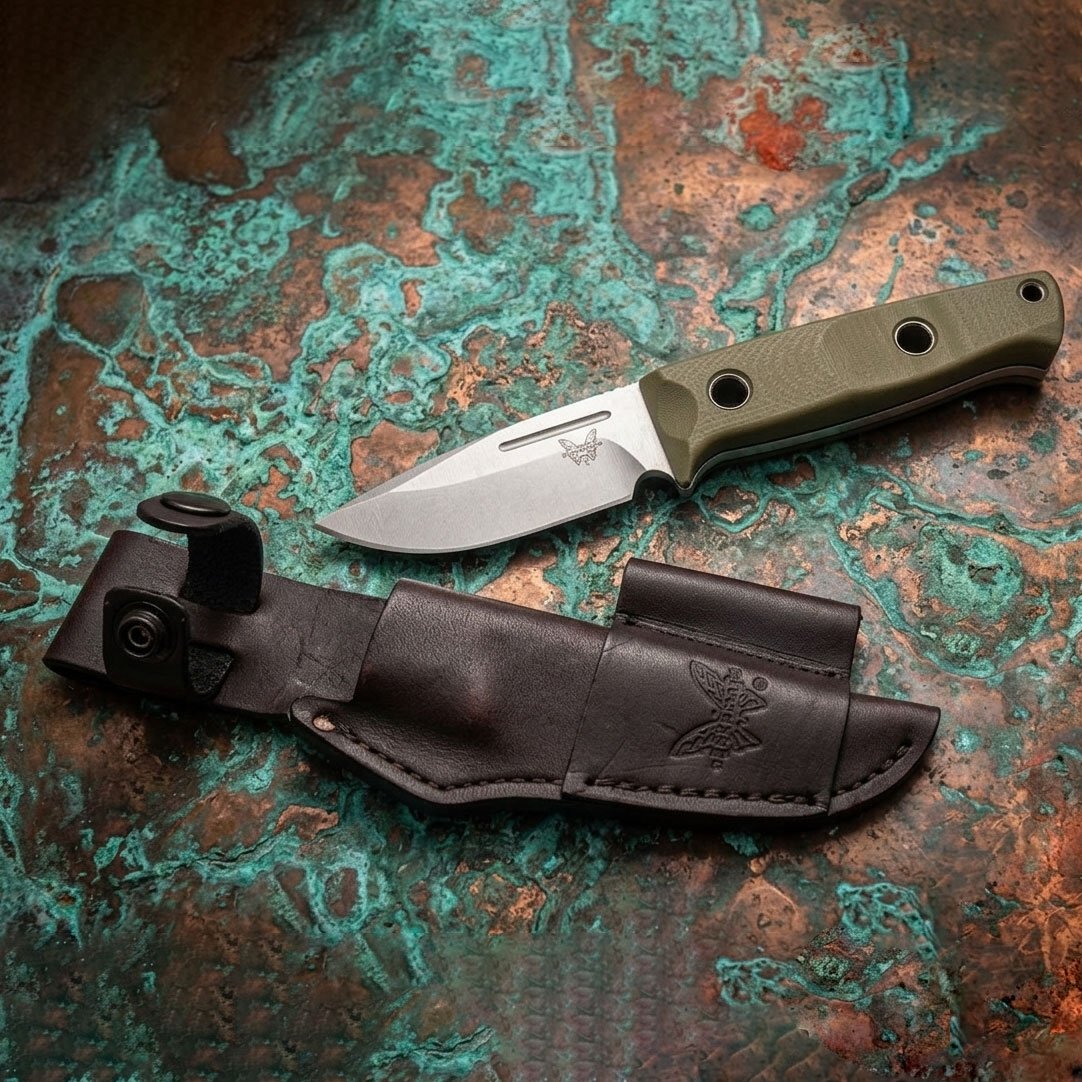
| Benchmade Mini Bushcrafter | Best Small | CPM-S30V | 3.38 in | $$$ |
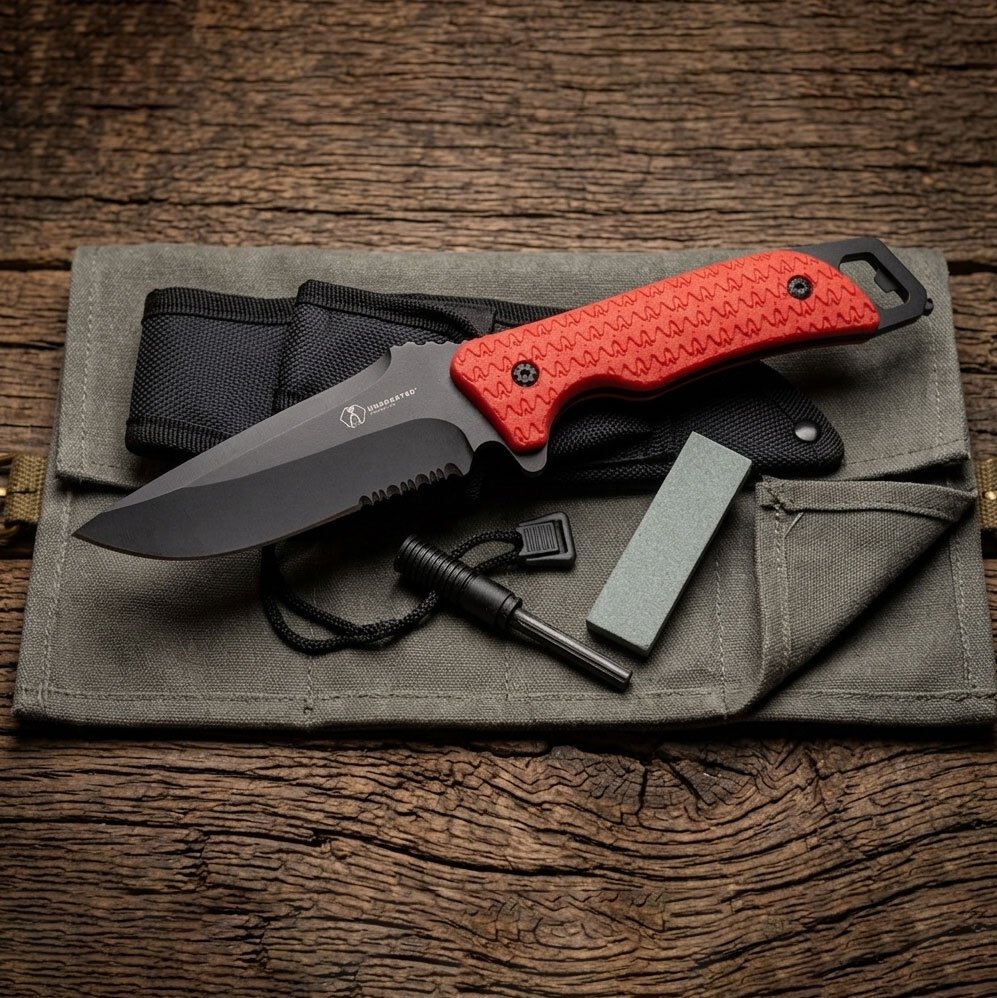
| Uncharted Supply Co Empire | Best Serrated | 420 Stainless | 4 in | $ |
| Esee 6 | Best Flat Grind | 1095 Carbon | 5.75 in | $$ |
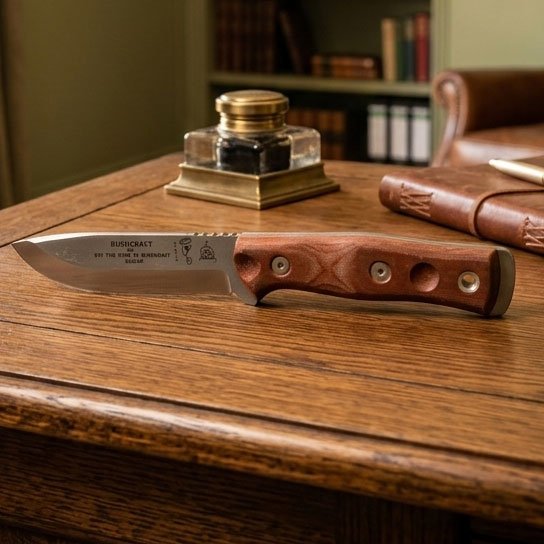
The TOPS Bob Fieldcraft earns its place at the top of this list without much debate. It’s a full-tang bushcraft knife built in the USA with exceptional balance and a handle that feels custom-fitted to your grip. The jimping on the spine gives you serious thumb control during precision carving and fine woodwork. Combined with deep handle contours and well-placed finger grooves, this knife simply disappears in your hand.
Think of it as the forestry knife that crossed over into serious Survival territory. It’s equally at home breaking down a campsite or handling delicate field dressing work — the kind of versatility that makes it the toughest knife on this list by reputation and by feel.
Feathersticking, batoning wood, field dressing game — the Fieldcraft handles all of it with confidence. The 154cm stainless steel blade resists rust in wet conditions, and its edge retention outlasts most competitors in this price range. The beefy blade geometry gives you confidence during hard use without sacrificing the control you need for precision tasks. It even ships with a quality ferro rod, making it a complete bushcraft knife with a ferro rod setup right out of the box.
Pros: Superb balance, excellent edge retention, comfortable handle, includes ferro rod. Cons: Noticeably heavy, sheath retention runs tight initially
Best For: Serious outdoor enthusiasts who want one rugged, reliable Survival bushcraft knife that does everything well.
At roughly $35, the Morakniv Kansbol redefines what a budget bushcraft knife can be. The Sandvik 12C27 stainless steel blade arrived razor sharp and maintained that edge through heavy use — far better than most 8Cr13MoV steel options at this price point. The polymer grip has a rubberized feel that stays secure in wet conditions and cold weather alike. Among inexpensive bushcraft knives, nothing comes close to matching this level of fit and finish.
The 90-degree spine throws a massive spark off a ferro rod — one of the best fire-starting experiences you’ll get from any budget bush knife. Mora cleverly combined a flat grind near the tip with a modified Scandi grind lower on the blade, making this one genuinely versatile outdoor knife. It handles cutting rope, trimming fishing line, and basic camp tasks without skipping a beat.
“The Kansbol proves that budget bushcraft knives don’t have to compromise on performance. It’s the perfect starter blade for anyone learning wilderness Survival skills.”
Pros: Incredible price, surprising edge retention, excellent 90-degree spine, corrosion-resistant steel. Cons: Partial tang limits heavy batoning and wood splitting tasks
Best For: Beginners, youngsters learning Survival skills, and anyone needing a reliable, affordable bushcraft knife without breaking the bank.
Some bushcraft tasks demand a big bushcraft knife. Extended shelter construction, heavy wood processing, and serious camp work all benefit from the Ka-Bar Fighter’s massive 7.25-inch blade. This is the kind of large bushcraft knife that doubles as a bushmaster knife in the field — capable of handling everything from heavy chopping to clearing brush. The 1095 Cro-Van steel holds a surprising edge despite the kind of abuse that would destroy lesser blades. Ka-Bar’s legendary build quality shows up in every inch of this rugged outdoor knife.
The Kraton G copolymer handle is among the most solid grips we’ve ever tested. It’s hefty, slightly rubberized, and planted firmly in your palm while chopping hard. Wood batoning is where this knife truly earns its keep — the thick blade drives through logs cleanly. It’s a genuinely good full-tang knife for anyone who needs a large, capable blade for demanding outdoor work. The stock sheath is the one weak point here; an aftermarket sheath is worth the investment.
Pros: Rugged handle, excellent blade durability, strong edge retention, solid price. Cons: Heavy, cheap stock sheath, thinner blade compared to dedicated choppers
Best For: Experienced bushcrafters tackling heavy-duty tasks like large-scale shelter construction and extended wilderness camps.
CPM-S30V steel is one of the most respected blade steels in the knife world — and Benchmade puts it to excellent use here. This small bushcraft knife punches well above its size class. Edge retention is genuinely outstanding. Cutting heavy braided fishing line, paracord, and cordage feels almost effortless. The G10 handle, while smoother than some prefer, has belly curves that lock naturally into your fingers. It’s a compact camping knife design that doesn’t compromise on quality.
The spine throws a solid spark for fire starting, and the jimping gives you precise blade control during detailed carving and V-notch work. The5-inch full-tang clip-point blade geometry keeps the knife nimble without sacrificing strength. Blade size makes batoning impractical, but every other bushcraft task is well within reach. This is a high-end bushcraft knife built for people who won’t settle for second best.
Pros: Elite CPM-S30V steel, exceptional edge retention, excellent blade control, USA-made. Cons: Expensive (near $400), some branding on the blade, short for batoning
Best For: Experienced outdoorspeople seeking a compact, Premium fixed-blade bushcraft knife with elite steel and serious reliability.
Most bushcrafters stick with a plain edge. But if you regularly work with heavy rope, paracord, or cordage — or simply want an emergency cutting tool that can slice through a stuck seatbelt — a serrated bushcraft knife earns its place on your belt. The Empire’s serrations are subdued and practical, not the aggressive saw-teeth you see on cheap Survival knives. It’s the kind of rescue knife functionality most people hope they never need but are glad to have.
The flat grind on the non-serrated portion of the blade handles wood splitting and batoning surprisingly well for a 420 stainless steel knife. Ergonomics are the real standout here — the finger groove, thumb rise, and rubberized grip combine to create a handle that feels locked in during heavy work. At around $40, this is a tremendous value as the best affordable bushcraft knife with a complete setup, including a sharpener and ferro rod. Among bushcraft knives for sale at this price point, the Empire delivers more than it has any right to.
Pros: Excellent ergonomics, tough blade, sharpener and ferro rod included, great value. Cons: Heavy at 15 oz, cheap sheath, manufactured in China
Best For: Outdoor enthusiasts and emergency responders who prioritize emergency cutting capability alongside standard bushcraft performance.
The Esee 6 has earned a legendary reputation in bushcraft circles — and that reputation is fully deserved. Its 1095 carbon steel blade features one of the cleanest flat grinds available today. The thick blade handles wood-batoning, feather-sticking, and fire-sticking without complaint. Where it truly shines is in the fine woodwork. V-notch carving, detailed cuts, precision tasks — the Esee 6 handles them all with remarkable control. It’s also a capable field-day knife, dependable whether you’re running a Survival course or spending a week deep in the backcountry.
Jimping on the blade spine gives you excellent thumb control during extended carving sessions. The transferable lifetime warranty — covering full repair and replacement, no questions asked — sets Esee apart from nearly every competitor. Compared to other knives built on 8CrMoV13 or lower-tier steels, the 1095 carbon steel here delivers noticeably better edge retention and easier field sharpening. The stock sheath is this knife’s only real weakness, but an aftermarket sheath instantly solves it.
Pros: Outstanding flat grind, superb edge retention, excellent durability, transferable lifetime warranty. Cons: Stock sheath is underwhelming, 1095 carbon steel requires rust prevention care in wet environments
Best For: Bushcrafters who prioritize carving, fine woodwork, and wood processing with a reliable, battle-tested fixed blade knife.
Why hunt across a dozen sites when everything’s in one place? American Knife Depot carries all six of these knives plus thousands more — from budget bushcraft knives under $50 to top-rated bushcraft knives from the world’s most trusted brands. With over 13,000 products, a 4.8-star rating from 13,700+ verified customers, and free shipping on orders over $300, there’s no smarter place to shop for bushcraft knives for sale—sharp gear. Real value. Built for those who demand the best.
Choosing the right knife steel is the single most important decision you’ll make. There’s no perfect answer — every steel involves trade-offs.
| Feature | Carbon Steel (1095) | Stainless Steel (CPM-S30V) |
| Edge Retention | Very Good | Excellent |
| Corrosion Resistance | Lower | High |
| Ease of Sharpening | Easy | Moderate |
| Price | Budget-Friendly | Premium |
| Best For | General bushcraft | Wet environments, precision work |
A full-tang knife extends the blade steel through the entire handle. That continuity of steel means strength, durability, and confidence during demanding tasks like wood batoning and shelter construction. A partial tang knife works fine for lighter bushcraft tasks — the Morakniv Kansbol proves that — but don’t push it through heavy chopping or prying.
| Blade Size | Best Use Case | Example |
| Under 4 inches | Precision tasks, EDC, light carving | Benchmade Mini Bushcrafter |
| 4–5 inches | All-around bushcraft, fire starting, field dressing | TOPS Bob Fieldcraft |
| 5–6 inches | Wood processing, batoning, shelter work | Esee 6 |
| 7+ inches | Heavy chopping, large-scale camp projects | Ka-Bar Fighter |
Your handle is your connection to the blade. Key features to evaluate:
Most bushcrafting knife users should default to a plain edge. It excels at precision tasks, feathersticking, and carving. Serrated edges are harder to sharpen in the field. That said, a serrated edge cuts paracord, heavy rope, and seatbelts faster than anything else — which is exactly why emergency rescuers carry them.
Every knife on this list has a mediocre stock sheath — it’s almost an industry tradition. Don’t let that stop you from buying a great blade. Aftermarket sheaths are widely available and genuinely improve the belt-loop sheath-carrying experience. Focus on the knife first.
| Budget | What to Expect |
| Under $50 | Reliable, inexpensive bushcraft knives like the Morakniv Kansbol and Empire |
| $50–$150 | Mid-range blades with better steel, full tang, and improved handle ergonomics |
| $150–$300 | Premium bushcraft knives with top-tier steel, USA manufacturing, and superior fit |
| $300+ | High-end bushcraft knife territory — CPM-S30V, elite brands, collector-grade builds |
| Task | Key Knife Feature Needed |
| Batoning and wood splitting | Full tang, thick blade, Scandi grind |
| Feathersticking and fire starting | Sharp edge, 90-degree spine for ferro rod |
| Carving and fine woodwork | Flat grind, good jimping, blade control |
| Field dressing game | Blade balance, sharp tip, comfortable handle |
| Shelter construction | Large blade, full tang, blade durability |
| Emergency cutting — rope, paracord, seatbelts | Serrated edge or razor-sharp plain edge |
| Cordage cutting and paracord work | Plain or serrated edge, ergonomic handle |
| Food preparation at camp | Stainless steel blade, easy sharpening |
Yes — and it doesn’t need to be heavy. A compact option like the Work Sharp field sharpener fits in any pack and keeps your blade ready for serious work. Some knives, like the Morakniv Kansbol, include a built-in sharpener in the sheath. Either way, maintaining a factory-sharp edge in the field is far easier than re-profiling a damaged one back home. Carbon steel blades like the Esee 6 benefit most from a quick touch-up after heavy batoning or wood processing sessions.
What is a bushcraft knife?
A bushcraft knife is a fixed-blade knife — typically full-tang — designed for wilderness Survival tasks, including batoning wood, fire starting, carving, and field dressing game.
What’s the best steel for a bushcraft knife?
1095 carbon steel and CPM-S30V stainless steel are the most popular choices. CPM-MagnaCut is rapidly emerging as a top option for wet environments, while CPM-3V steel leads the pack for sheer toughness under hard use.
What’s the difference between a Scandi grind and a flat grind?
A Scandi grind has a wide, single bevel ideal for wood chopping and batoning. A flat grind is more versatile, handling everything from food preparation to detailed carving and cordage cutting.
Is a full-tang knife always better?
For heavy bushcraft tasks, yes. A partial tang knife handle lighter works fine but isn’t reliable under the stress of batoning or hard chopping.
Can you use a folding knife for bushcraft?
A bushcraft folding knife — including options like the Bushcraft Boss folding knife — works well for lighter tasks like cutting rope or food preparation. For demanding work like batoning, shelter construction, and field dressing, a fixed-blade bushcraft knife is always the stronger choice.
What size fixed-blade knife is best for beginners?
A 4–5-inch blade is the sweet spot. It’s versatile enough for most tasks without being unwieldy. The Morakniv Kansbol is an ideal starting point for anyone new to bushcrafting.
How do I maintain my bushcraft knife in the field?
Wipe carbon steel blades dry after use and apply a light coat of oil to prevent rust in wet conditions. Stainless steel blades are more forgiving but still benefit from basic care. A compact field sharpener keeps your edge ready between uses.
Serrated vs plain edge — which should I choose?
Plain edge for precision bushcraft work. Serrated edge if emergency cutting — seatbelts, heavy rope, thick cordage — is a priority for your outdoor scenarios.
Every knife on this list earns its place for a real reason. The TOPS Bob Fieldcraft is the best overall bushcraft knife — balanced, rugged, and built for everything the wilderness throws at you. The Morakniv Kansbol remains the undisputed king of budget bushcraft knives. The Esee 6 is the carver’s choice. The Ka-Bar Fighter handles big jobs without flinching. The Benchmade Mini Bushcrafter delivers elite performance in a compact package. And the Uncharted Supply Co Empire covers the bases most plain-edge knives simply can’t.
Whatever your skill level or budget, the right blade is out there. American Knife Depot stocks all of these knives and thousands more — from inexpensive bushcraft knives perfect for beginners to the top 10 best bushcraft knives from brands like Ka-Bar, Benchmade, Esee, TOPS, and Morakniv. Explore the full collection of bushcraft knives for sale today and find the blade that’s built for your kind of adventure.
All knives reviewed were evaluated based on real-world performance across batoning, carving, fire starting, and field use. American Knife Depot maintains editorial independence in all product recommendations.
MagnaMax is a notable new knife steel that has been
The history of Chaves Knives begins with one maker, basic
![Rated: 15 Best OTF Knives of 2026 [By Category]](https://americanknifedepot.com/wp-content/uploads/2026/09/Featured-Image-7.jpg)
Finding the best OTF knife is less about chasing the
The Leatherman ARC multitool promises premium materials, 20 tools, and
















Civivi nails everyday carry. Smooth action, perfect balance, and clean design. Easily one of the best EDC knives I’ve owned at this price point.