
Best Lightweight Pocket Knife: Top Picks for Everyday Carry
A pocket knife should solve problems without weighing down your
Picture this. It’s 1943. A Marine in the Pacific pulls out his Ka-Bar, cuts through dense jungle brush, pries open an ammunition crate, and an hour later uses that same blade in close-quarters combat. One knife. Three jobs. Zero failures.
That’s exactly what made WWII knives different from anything that came before.
The Second World War didn’t just reshape tanks and aircraft — it completely transformed the military knife. Nations on every side poured their engineering ingenuity into edged weapons that could handle battlefield utility and close-combat punishment simultaneously. The result? Some of the most iconic fighting knives in human history. Blades that defined twentieth-century combat knives and still influence military design today.
This guide covers every major blade — Allied and Axis — with the depth and honesty that most articles skip entirely.
Before diving into specific models, let’s talk about what separates a great combat knife from a mediocre one. Commanders during the Second World War demanded four things from every military knife issued to their troops:
WWI trench knives taught a brutal lesson: a purely specialized weapon is a liability. The best WWII knife designs balanced combat lethality with everyday practicality. Weapon standardization became a core goal for Allied planners, while Axis nations often pursued ambitious military modernization projects that wartime pressures ultimately derailed.
Wartime combat blades also had to survive material shortages — a reality that pushed manufacturers toward synthetic grips, resin scabbards, and composite materials nobody would have considered before the war. Mass production added another layer of complexity. Some nations churned out millions of standardized fighting knives. Others focused on limited runs for elite troops. Both approaches produced legendary blades.
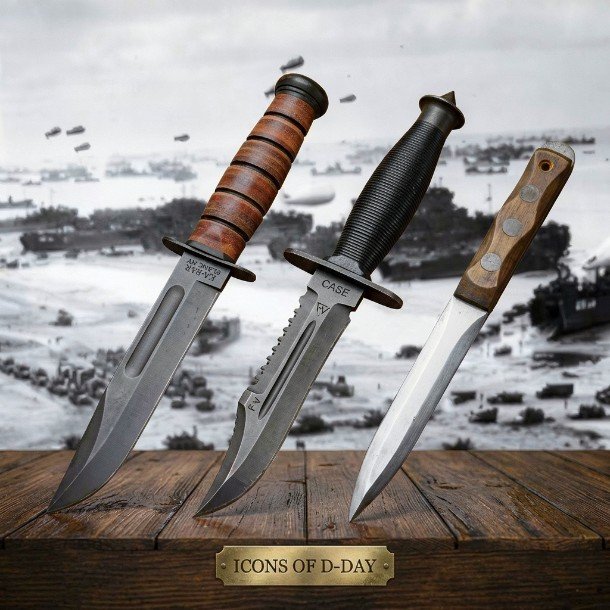
The United States entered the war with a clear philosophy — every soldier needed a fighting and utility knife capable of handling anything. What followed was an explosion of wartime knife production, creating historic military knives still studied by collectors and military historians today.
Recommended image alt text: “Ka-Bar Fighting Utility Knife WWII — 1219C2 Marine Corps combat blade with stacked leather handle and parkerized finish”
If you ask any historian to name the single most recognizable WW2 knife, they’ll say Ka-Bar. No hesitation.
The U.S. Marine Corps adopted the Ka-Bar Fighting Utility Knife — officially the 1219C2 Fighting Utility Knife, later standardized as the Navy Mark 2 — in late 1942. Marines needed a replacement for fragile trench-style knives that snapped under hard use. This was weapon standardization in action: one reliable blade for millions of men.
Design breakdown:
Production started with Camillus Cutlery in 1943, then expanded to Union Cutlery — whose “Ka-Bar” trademark became the knife’s permanent nickname — as well as PAL, Robeson, and others. These WWII knife manufacturers collectively produced millions of US WW2 knives for Marines, sailors, and soldiers across every theater.
The Marine Corps Ka-Bar — the USMC fighting knife — did everything. Opening ammunition crates in the morning, cutting brush at noon, and close fighting at night. It’s the definition of combat utility, and it’s why this blade still sells today.
“The Ka-Bar wasn’t just a weapon. It was a tool every Marine trusted with his life.”
Recommended image alt text: “M3 Trench Knife WWII — U.S. Army standard issue combat blade with spear point and leather grip”
While Marines carried the Ka-Bar, the Army needed its own answer. The M3 Trench Knife arrived in March 1943 as the official U.S. Army fighting knife for soldiers not routinely issued bayonets — specifically carbine and submachine gun crews. This was a durable field knife built for the realities of mechanized warfare.
Key specs:
By August 1944, over 2.5 million M3S had been manufactured across nine contractors — a feat of large-scale production that reflects America’s remarkable industrial capacity. Paratroopers and Rangers got them first. The blade excelled as a deep-thrusting blade in close-quarters situations, though many soldiers found it less effective as a heavy-duty utility blade than the Ka-Bar.
Its legacy? The M3’s geometry directly inspired the M4 bayonet for the M1 carbine — proof that good military blade development outlasts the war that created it. The evolution of the bayonet in WWII tells us a lot about how combat doctrine shifted during those years.
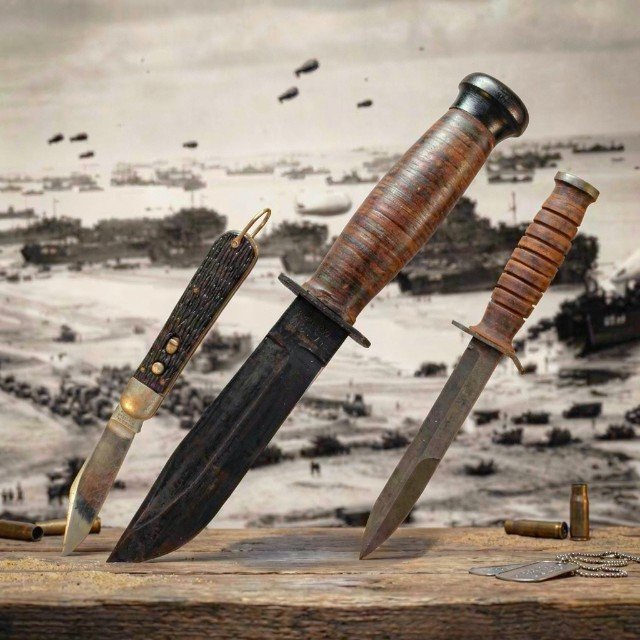
Recommended image alt text: “Case V-42 Stiletto — rare WWII commando dagger with skull crusher pommel used by First Special Service Force.”
Some WWII fighting knives weren’t built for millions of soldiers. They were built for a few hundred of the most dangerous men alive.
The Case V-42 Stiletto was designed in 1942 specifically for the First Special Service Force — the joint Canadian-American commando unit the Germans called the “Devil’s Brigade.” This was a special operations weapon conceived for infiltration missions, sentry removal, and silent combat behind enemy lines.
Design breakdown:
Only 3,000–3,400 V-42s were ever produced, making it one of the rarest WWII knives in existence. The slender blade excelled at rapid thrusts and deep penetration but snapped under heavy utility work — the honest tradeoff of any combat dagger WWII specialists carried.
The V-42 Devil’s Brigade knife is so closely tied to the unit’s identity that it appears on its crest. For serious WWII knife collectors, a genuine V-42 sits at the very top of the want list.
Recommended image alt text: “Ek Commando Model 2 WWII fighting knife — full tang rock maple grip private purchase combat blade.”
John Ek couldn’t enlist. A disability kept him out of uniform. So he did the next best thing — he built fighting knives that paratroopers, Rangers, and Marines sought out with their own money. His story is one of the most compelling in all of military knife history.
From his workshop in Hamden, Connecticut, Ek developed a line of private-purchase fighting knives built around one principle: absolute reliability under the harshest conditions.
The Ek Commando lineup:
| Model | Blade Type | Key Feature |
| Ek Commando Model 1 | Single-edged spear point | Long false edge for thrusting |
| Ek Commando Model 2 | True double-edged dagger | Maximum penetrative power |
| Ek Commando Model 3 | Single-edged with crossguard | Added hand protection |
| Ek Commando Model 4 | Double-edged with a crossguard | Full fighting configuration |
Every John Ek fighting knife featured a full-length tang, rock maple grips secured with poured-lead rivets that could be tightened in the field, and a leather sheath built for hard use. No government contract. No official adoption. Just soldiers choosing the best military fighting knife they could find — and finding Ek. The Ek Commando knife line earned a reputation built entirely on field durability and word of mouth.
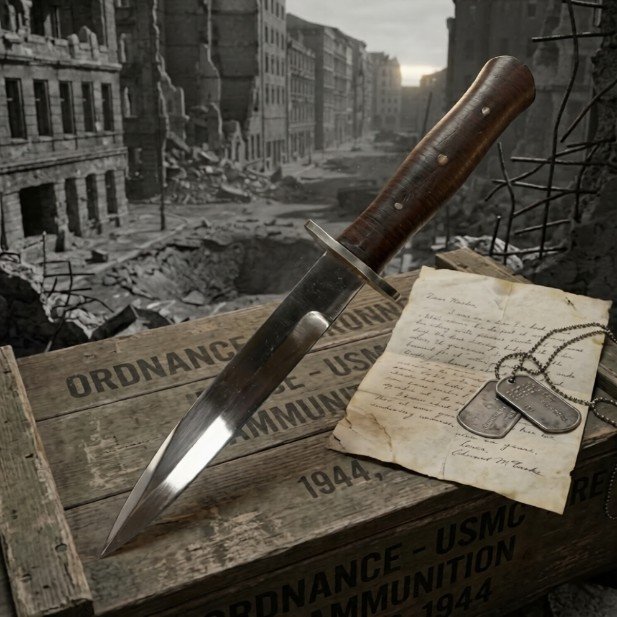
Recommended image alt text: “USN MK1 U.S. Navy Mark 1 utility knife WWII — compact naval service knife with NORD scabbard.”
The U.S. Navy Mark 1 — the USN MK1 — gave sailors a compact, dependable naval service knife for life aboard ship. At 5.25 inches, it was shorter than the Ka-Bar, making it a genuinely lightweight fighting knife that handled everything from cutting rope and webbing to field maintenance without getting in the way in tight shipboard spaces.
Camillus, Colonial, PAL, and Union Cutlery all produced the Mark 1, paired with NORD scabbards, resin-impregnated scabbards engineered to resist saltwater corrosion. The WW2 US Navy knife reached nearly every front where American naval personnel served, functioning primarily as a utility knife but capable of serving as a last-resort weapon when required.
Recommended image alt text: “M2 Paratrooper switchblade knife WWII — Schrade gravity knife for cutting parachute lines and harness webbing”
Here’s a problem nobody thinks about until it’s too late. You’ve just landed behind enemy lines, your parachute rigging is tangled around your arm, and you need to cut free right now — with one hand.
The M2 Paratrooper Knife — officially the Knife, Pocket, M2 — solved that problem. Developed by the Geo. Schrade Knife Co. and approved in December 1940, this spring-opening folder deployed with a single button press. The Schrade M2 knife was also called a switchblade paratrooper knife or a one-handed paratrooper knife, and it provided airborne troops with a genuine emergency cutting tool capable of instantly handling shroud lines and harness webbing.
Key specs:
The M2 reached Army paratroopers, selected aircrew, and OSS operatives. It wasn’t a combat blade — it was a rescue tool first. Postwar, it continued under MIL-K-10043 procurement as the Parachutist’s Snap Blade Knife, cementing its place in airborne forces history.
Recommended image alt text: “Fairbairn-Sykes Fighting Knife WWII — British commando dagger with double-edged blade and grooved grip by Wilkinson sword.”
William Fairbairn and Eric Sykes didn’t design the Fairbairn-Sykes knife in a boardroom. They designed it from years of real hand-to-hand fighting with the Shanghai Municipal Police — some of the most violent street combat of the early twentieth century. That experience made the Fairbairn-Sykes commando dagger unlike any other military dagger design of its era.
When Britain needed trainers for its Commandos, Fairbairn and Sykes brought every hard-won lesson with them. The result was a British fighting knife WWII troops trusted for silent killing and surprise attacks.
Design features:
The Fairbairn-Sykes knife reached British Commandos, the Special Operations Executive, and American OSS operatives — making it one of the most widely distributed special-forces knives of WWII. It was fragile for heavy fieldwork, no question. But for infiltration missions and sentry removal, nothing matched it.
Its silhouette became unit insignia for multiple commando formations and remains the defining symbol of Allied raiding forces. The commando training weapon that Fairbairn and Sykes developed permanently changed how special operations thought about close-combat weapons.
Recommended image alt text: “BC-41 knuckle duster knife British Commando WWII — cast metal grip fighting blade, rare wartime example”
The BC-41 commando knife combined a double-edged blade with a cast metal knuckle-duster grip, drawing directly from WWI trench knife design. Effective in sudden assaults, its bulk limited practical carry — and it was quickly replaced by the Fairbairn-Sykes. Surviving examples are among the most collectible WWII knives on the market today precisely because so few were made. The BC-41 represents a fascinating footnote in military dagger designs — a bridge between trench-warfare thinking and modern commando-raiding weapons.
The Smatchet fighting knife — also Fairbairn’s creation — took a completely different approach. At 16.5 inches overall with a broad, leaf-shaped blade and weight-forward balance, it delivered devastating chopping blows and powerful thrusting in the same swing. SOE operatives and OSS personnel carried this large military knife when stealth gave way to open fighting. Its postwar influence on combat dagger design demonstrated that a broad combat blade could serve as a compact alternative to a machete in close-quarters combat.
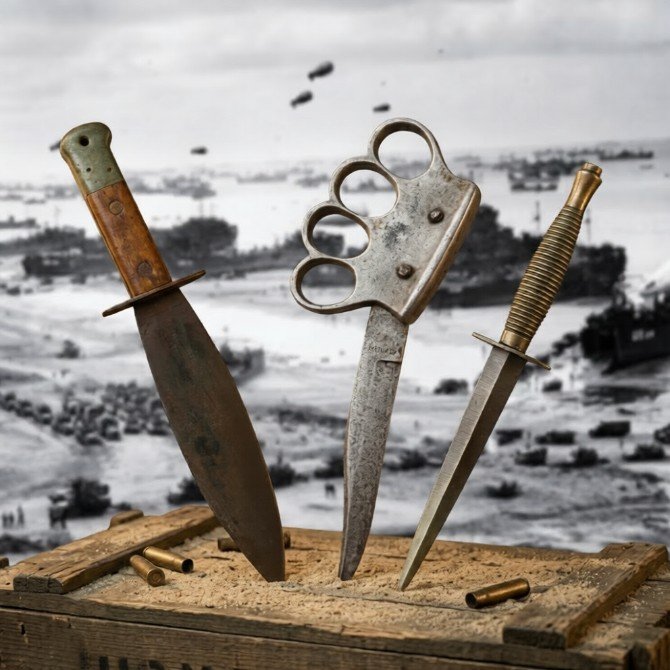
Recommended image alt text: “Seitengewehr 42 Infanteriemesser German WWII infantry combat knife — detachable toolkit handle by Carl Eickhorn Solingen.”
The Seitengewehr 42 — the Infanteriemesser, or Infantry Combat Knife — was Germany’s attempt to build the perfect military sidearm: bayonet reach, field-knife utility, and a detachable toolkit built into the handle, including a screwdriver and an awl. It represents one of the most forward-thinking military knife concepts of the entire war.
Designed by Wilhelm Gustloff Werke and produced by Carl Eickhorn in Solingen, the SG42 featured a 7-inch blade with a fuller to reduce weight and molded synthetic grips for field durability. Troop trials in 1943 were favorable — but factory retooling costs and shifting wartime priorities killed large-scale production. It never replaced the S84/98 III bayonet, and limited production meant most German infantry never saw one.
As a piece of combat knife history, the World War II German knife that almost changed everything remains one of the war’s great “what ifs.” It pioneered combat utility thinking that wouldn’t become mainstream for decades.
Recommended image alt text: “Fallschirmjäger-Messer Luftwaffe paratrooper gravity knife WWII — folding marlinspike German airborne rescue tool”.
The Fallschirmjäger-Messer solved the same problem as the American M2 — cutting free from parachute rigging and harness webbing with one hand — but with characteristically German engineering complexity. Introduced in 1937, this Luftwaffe paratrooper knife was a genuine gravity-operated knife: press a lever, and the blade deployed under its own weight. A folding marlinspike-handled rope work for amphibious and airborne operations alike.
Comparing it to the American M2 is revealing. Same problem. Two very different solutions. The German military knife went for mechanical elegance; the American went for simplicity. Both worked. The Fallschirmjäger-Messer remains one of the most mechanically fascinating ww2 german fighting knives ever produced — and among the most sought-after pieces of soldier field equipment for serious collectors.
Recommended image alt text: “Pugnale M1939 Italian fighting knife WWII — Model 39 combat dagger with oval guard and hinged belt loop metal scabbard.”
The Pugnale M1939 — the Model 39 Fighting Knife or M39 — drew its design DNA from the Austrian Sturmesser model 1917 and delivered an 8-inch single-edged blade with a false edge near the tip for enhanced piercing capability. Wooden slab grips secured with riveted grips and steel washers, an oval guard, and a hinged belt loop on the metal scabbard made it practical for real amphibious landing equipment contexts.
Elite units carried it across the board — paratroopers, Blackshirt battalions, the San Marco Regiment, and Decima MAS special units all depended on this Italian assault dagger. Its commanding size made it one of the largest standard Italian fighting knives of the war — and one of the most imposing combat daggers WWII produced by any Axis power.
The lighter M91 fighting knife served Italy’s Folgore paratrooper and Nembo paratrooper divisions in North Africa. Soldiers praised its balance for close-quarters combat — its cutting ability and thrusting performance made it adaptable in a way larger blades couldn’t match. Some troops even used it as a throwing knife, though that was never the intent. Today, both the M39 and M91 represent the overlooked depth of historic military knives from the Italian theater.
| Feature | Allied Approach | Axis Approach |
| Primary goal | Dual-use utility + combat | Specialist or multi-tool |
| Production scale | Millions (Ka-Bar, M3) | Limited runs (SG42, V-42) |
| Special forces focus | F-S, Smatchet, V-42, Ek | Fallschirmjäger-Messer |
| Materials innovation | Resin scabbards, synthetic grips | Detachable toolkits, composite grips |
| Scabbard design | M8A1, NORD, plastic scabbard | Metal scabbard with hinged belt loop |
| Legacy influence | Modern combat knife standards | Mechanical design innovation |
The market for collectible WWII knives is active, competitive, and full of fakes. Whether you’re hunting for rare WWII knives or building a comprehensive collection of vintage military knives, knowing what to look for helps protect your investment.
What serious WWII knife collectors examine:
Most valuable models on the market today:
| Knife | Collector Rarity | Estimated Value Range |
| Case V-42 Stiletto | Extremely rare | $800–$3,000+Approx |
| Ek Commando Model 2 | Rare | $400–$1,200Approx |
| BC-41 Commando Knife | Very rare | $600–$2,500Approx |
| Ka-Bar WWII original | Common | $150–$600Approx |
| Fairbairn-Sykes (Wilkinson) | Scarce | $300–$1,500Approx |
| Seitengewehr 42 | Very rare | $500–$2,000+Approx |
WWII knife reproductions and commemorative military knives flood the market — particularly for high-demand models like the Ka-Bar and Fairbairn-Sykes. Learn the difference. A genuine WW2 army knife with provenance is worth ten times as much as a reproduction, and the gap is only widening.
Looking for authenticated WW2 knives for sale? American Knife Depot carries a carefully curated selection of vintage military knives and historic combat equipment with verified provenance. Don’t gamble on unknown sellers when genuine pieces are available from a trusted source that knows these blades inside and out.
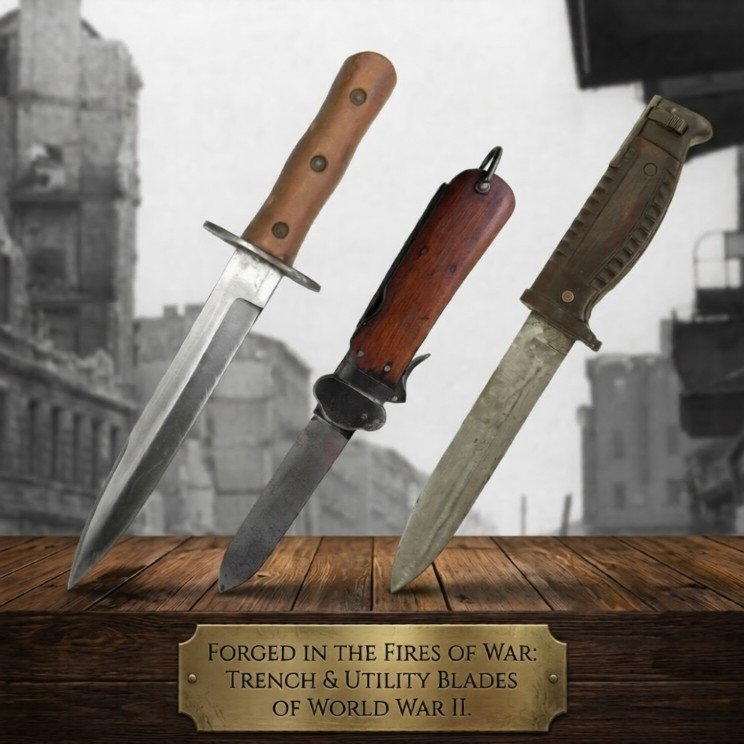
The military knife legacy of the Second World War runs deeper than most people realize. These weren’t just battlefield tools — they were laboratories for postwar knife design that shaped everything soldiers have carried since.
Postwar knife design didn’t start from scratch. It started from these blades, these wars, and the hard lessons of soldier Survival gear under the worst conditions imaginable.
What was the most common knife carried by American soldiers in WWII?
The M3 Trench Knife was the most widely issued US Army fighting knife, with over 2.5 million produced by August 1944. Marines, however, are more closely associated with the Ka-Bar Fighting Utility Knife — the defining American WW2 knife of the conflict.
What’s the difference between the Ka-Bar and the M3 Trench Knife?
The Ka-Bar (Navy Mark 2) featured a 7-inch clip-point blade and was designed as a true dual-purpose fighting and utility knife. The M3 used a 6.75-inch spear-point blade optimized for thrusting in close-quarters combat. The Ka-Bar handled heavier utility work better; the M3 was lighter and more compact.
Did all soldiers carry a fighting knife in WWII?
Not universally. Standard-issue military knives varied by branch, unit, and theater. Some soldiers carried army-issued knives like the M3; others purchased private-purchase combat knives like the Ek Commando line. Many infantry troops carried both a field knife and a bayonet.
Are original WWII knives legal to own and collect?
Yes — vintage military knives from WWII are entirely legal to own, buy, and sell in the United States. They’re classified as military collectibles and historic combat equipment, not regulated weapons. Always verify authenticity before purchasing.
What are WWII knives worth today?
Values range widely. A genuine Ka-Bar WWII knife in good condition runs $150–$600. Rarer pieces like the Case V-42 Stiletto or BC-41 commando knife can reach $3,000 or more at militaria auctions. WWII knife reproductions sell for a fraction of that — which is exactly why WWII knife identification skills matter.
Where can I find authentic World War 2 knives for sale?
Reputable militaria dealers, established auction houses, and specialist retailers are your safest options. American Knife Depot offers authenticated World War II knives for sale, along with expert guidance — the kind of knowledge that helps protect buyers from costly mistakes.
From the jungles of the Pacific to the rubble of Italian cities, WWII fighting knives were never just weapons. They were Survival tools, utility blades, and last-resort lifelines — all in one. Every design reflected the hard lessons of twentieth-century combat, shaped by wartime manufacturing realities, military procurement pressures, and the instincts of the soldiers who actually carried them into hand-to-hand encounters.
The Ka-Bar, the Fairbairn-Sykes, the V-42, the Fallschirmjäger-Messer — these aren’t just historic military knives. They’re evidence of human ingenuity under the most extreme pressure imaginable. Each blade tells a story about the nation that made it, the doctrine that demanded it, and the men who trusted their lives to it.
Whether you’re a historian, a serious collector of collectible WWII knives, or simply someone who appreciates the intersection of craftsmanship and history, these World War II knives deserve more than a passing glance. They earned their place in history one mission at a time.
Ready to add a piece of genuine battlefield history to your collection? Visit American Knife Depot — your trusted source for verified vintage military knives, authenticated WW2 knives for sale, and expert guidance from people who know these blades inside and out.
Because some history is worth holding in your hands
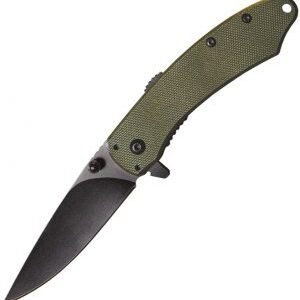
A pocket knife should solve problems without weighing down your
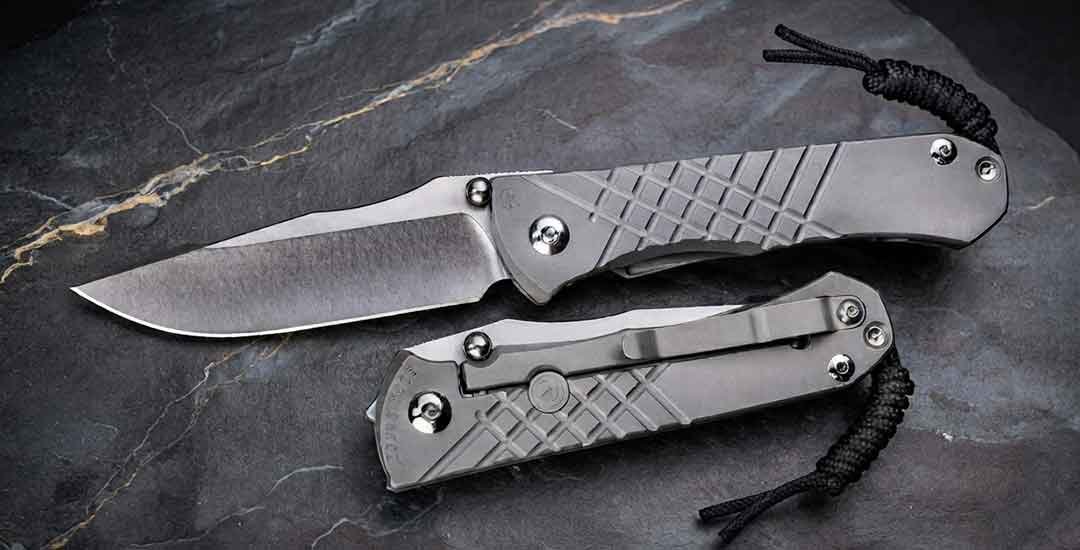
When Chris Reeve named his flagship folder “Umnumzaan,” he wasn’t
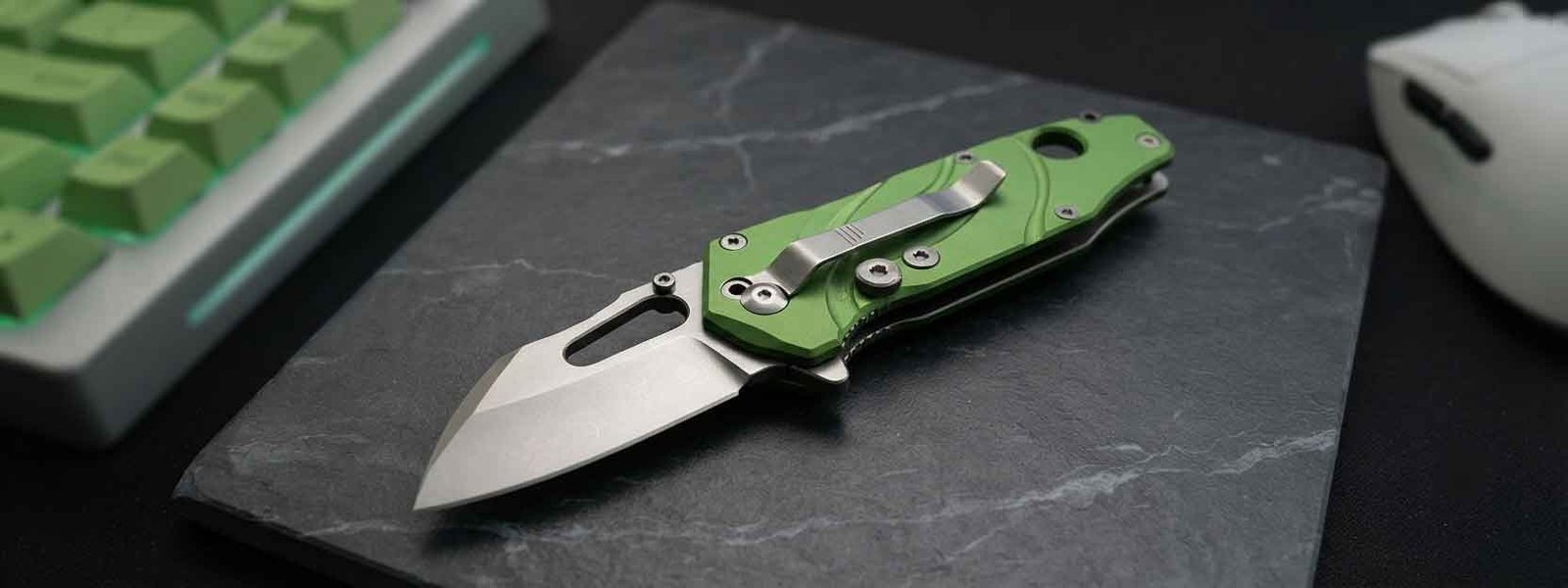
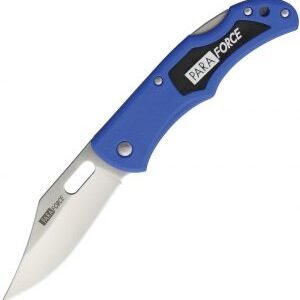
Pull out a gravity knife for the first time, and
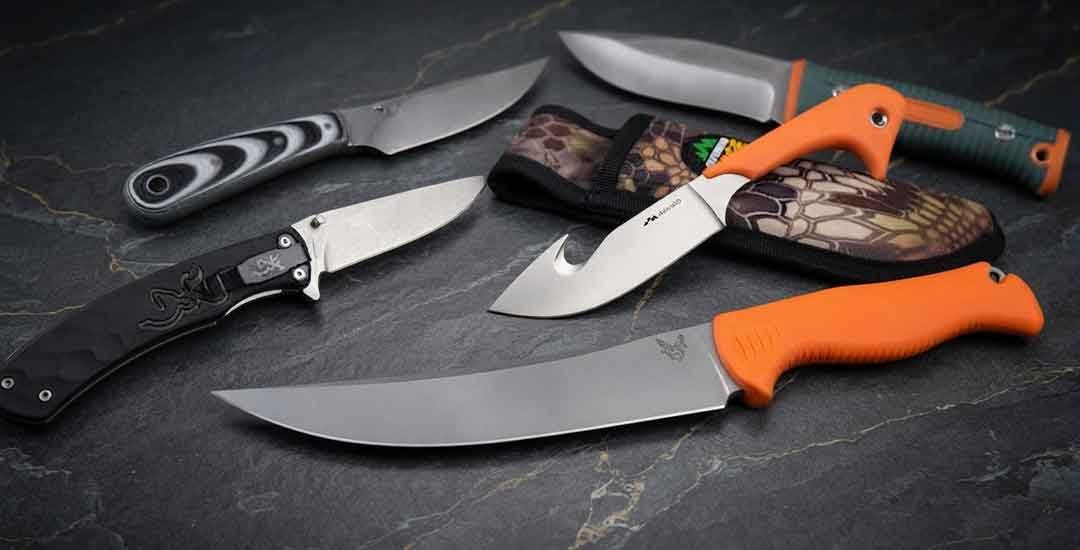
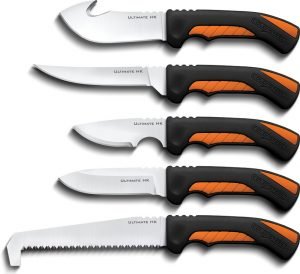
Picking the best field dressing knife shouldn’t feel like a












Civivi nails everyday carry. Smooth action, perfect balance, and clean design. Easily one of the best EDC knives I’ve owned at this price point.