




MagnaMax Steel – Everything You Need to Know
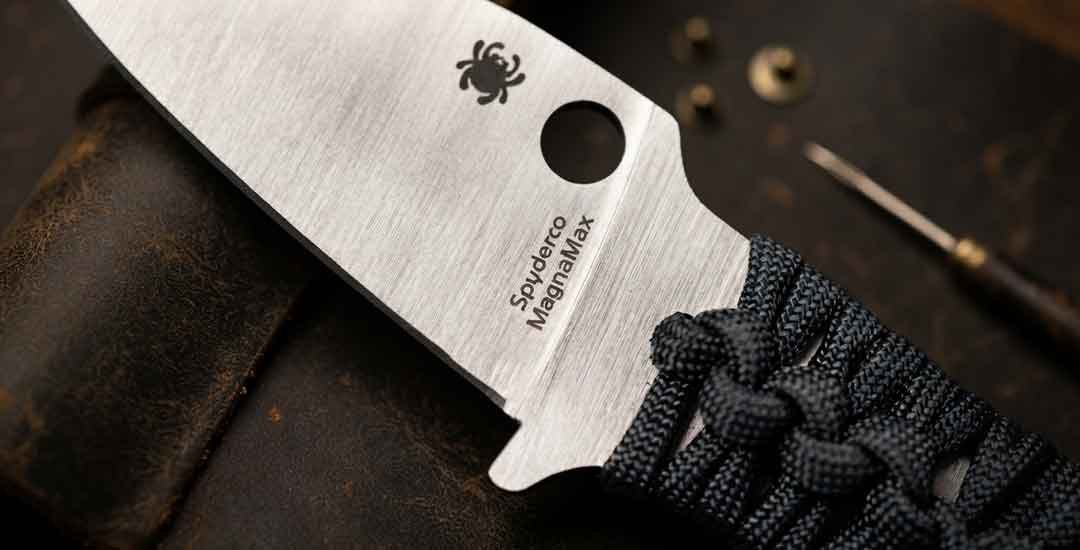
MagnaMax is a notable new knife steel that has been

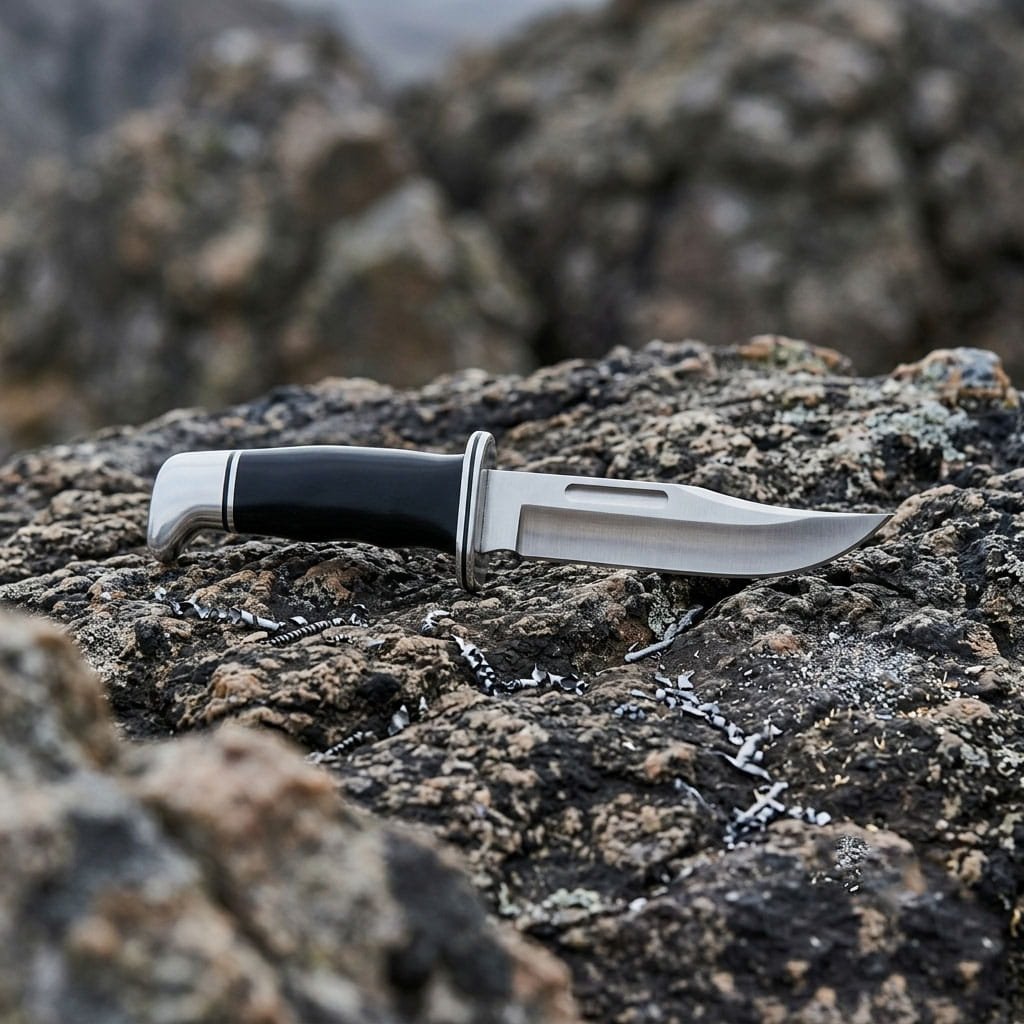
Few knives survive eight decades without a major redesign. The Buck 119 has. Since 1942, this large fixed blade has sat quietly on hunting belts, camping packs, and truck gloveboxes across America — not because of flashy marketing, but because it simply works.
This Buck 119 review covers everything serious buyers need to know. Blade steel—Tang construction. Sheath carry. Real-world field performance. Variant comparisons. All of it — no filler, no fluff.
Whether you’re a deer hunter, a weekend camper, or a collector eyeing a vintage Buck 119, this guide gives you the complete picture before you spend a dollar.
Before getting into performance, here’s the full breakdown:
| Spec | Details |
| Overall Length | 10.50 inches |
| Blade Length | 6.00 inches |
| Blade Thickness | 0.17 inches |
| Blade Material | 420HC Stainless Steel |
| Blade Style | Clip Point |
| Blade Grind | Hollow |
| Finish | Satin |
| Edge Type | Plain Edge |
| Handle Length | 4.50 inches |
| Handle Material | Phenolic (Polymer) |
| Weight | 7.50 oz |
| Sheath | Leather |
| Country of Origin | USA |
Clean. Straightforward. These Buck 119 dimensions tell most of the story before you even pick the knife up.
Here’s where things get interesting — and where a lot of buyers get confused.
The Buck 119 tang runs the full length of the handle. However, it doesn’t run full height. That means the steel doesn’t extend edge-to-edge through the handle the way a true full tang design would on something like a Ka-Bar or Bradford Knives Guardian.
Does that make it weak? Not really. The Buck 119 construction handles normal hunting and camping tasks without complaint. Field dressing deer, slicing camp food, general outdoor chores — the tang holds up fine. Where it shows limits is under heavy batoning stress or aggressive prying. That’s not what this knife was designed for anyway.
For normal knife use — hunting, camping, food prep, general outdoor tasks — the construction is more than adequate. It’s a deliberate design choice rooted in 80+ years of refinement, not a cost-cutting shortcut.
Bottom line: Don’t buy the Buck 119 expecting it to be a dedicated bushcraft beater. Buy it for what it is — a classic, USA-made hunting knife that handles real-world field use with ease.
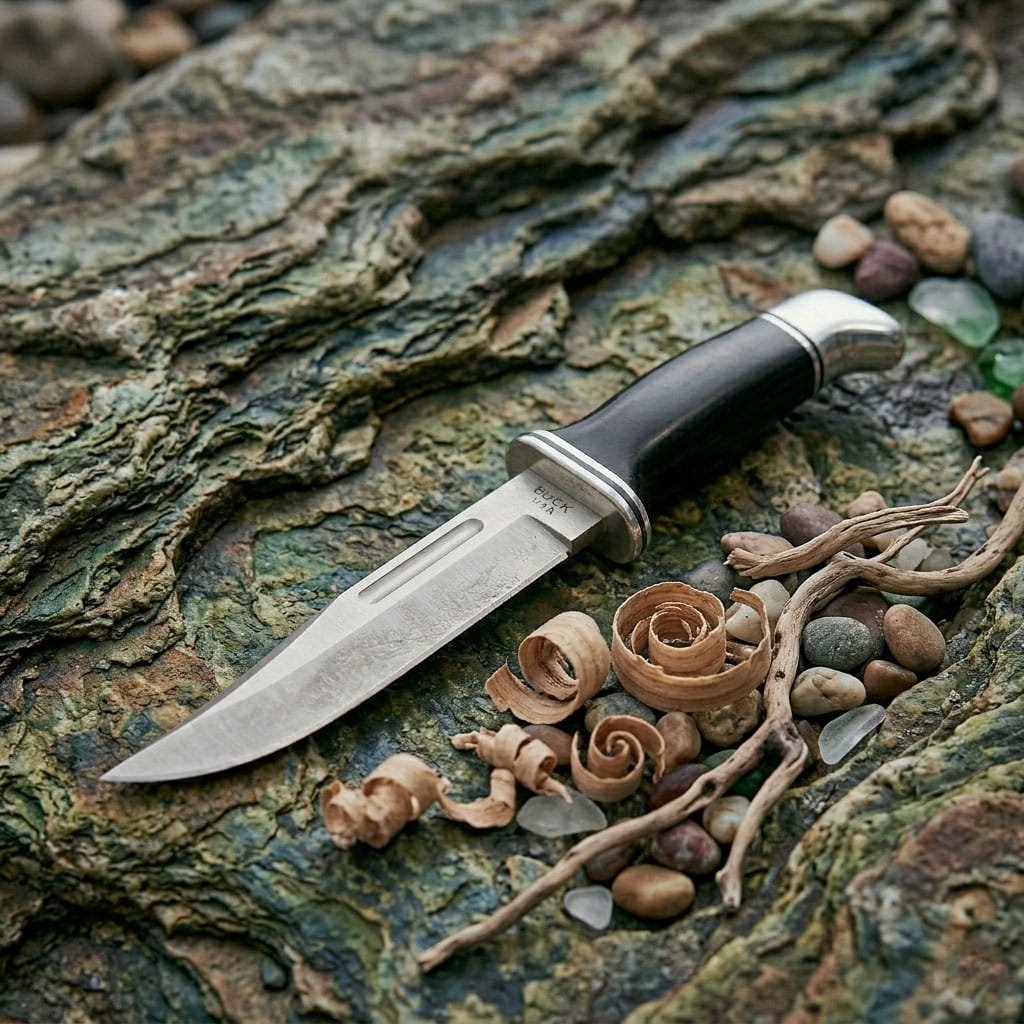
Buck’s 420HC stainless steel gets unfair criticism in some knife communities. Yes, it’s not CPM MagnaCut or S30V. But Buck’s proprietary heat treatment of its 420HC blade steel outperforms that of most manufacturers using the same material.
What you actually get in the field:
For hunters and campers who maintain their own blades, this is a practical, low-drama steel. The Buck 119 MagnaCut variant exists for buyers who want significantly better edge retention — the same classic frame, with dramatically upgraded steel.
Flat grinds dominate modern knife design. But the hollow grind on the Buck 119 blade has real advantages for hunting-specific tasks.
A hollow grind creates a thin, acute edge geometry that slices cleanly through meat and connective tissue. It’s also more forgiving to hone on a leather strop or ceramic rod without specialized sharpening equipment. For game cleaning and field dressing, it’s arguably more practical than a flat grind for most hunters.
The clip-point blade is one of the most hunting-friendly shapes ever put on a fixed blade. The piercing tip with its unsharpened swedge drops to an acute peak — purpose-built for opening body cavities cleanly without puncturing organs.
The satin-finished blade handles camp food prep equally well. Slicing vegetables, breaking down proteins, cutting cordage — it’s a genuinely versatile outdoor knife that earns its keep beyond the hunting field.
Experienced hunters debate this constantly. Many prefer blades between 3 and 4 inches for whitetail deer — more control, less bulk. A 6-inch blade offers more reach and leverage but can feel unwieldy during detailed capping.
That said, the Buck 119 blade length makes perfect sense for larger game, sustained camp chores, and general-purpose outdoor tasks where a compact hunting knife would leave you working harder than necessary. It’s a big hunting knife built for big jobs — know your use case before buying.
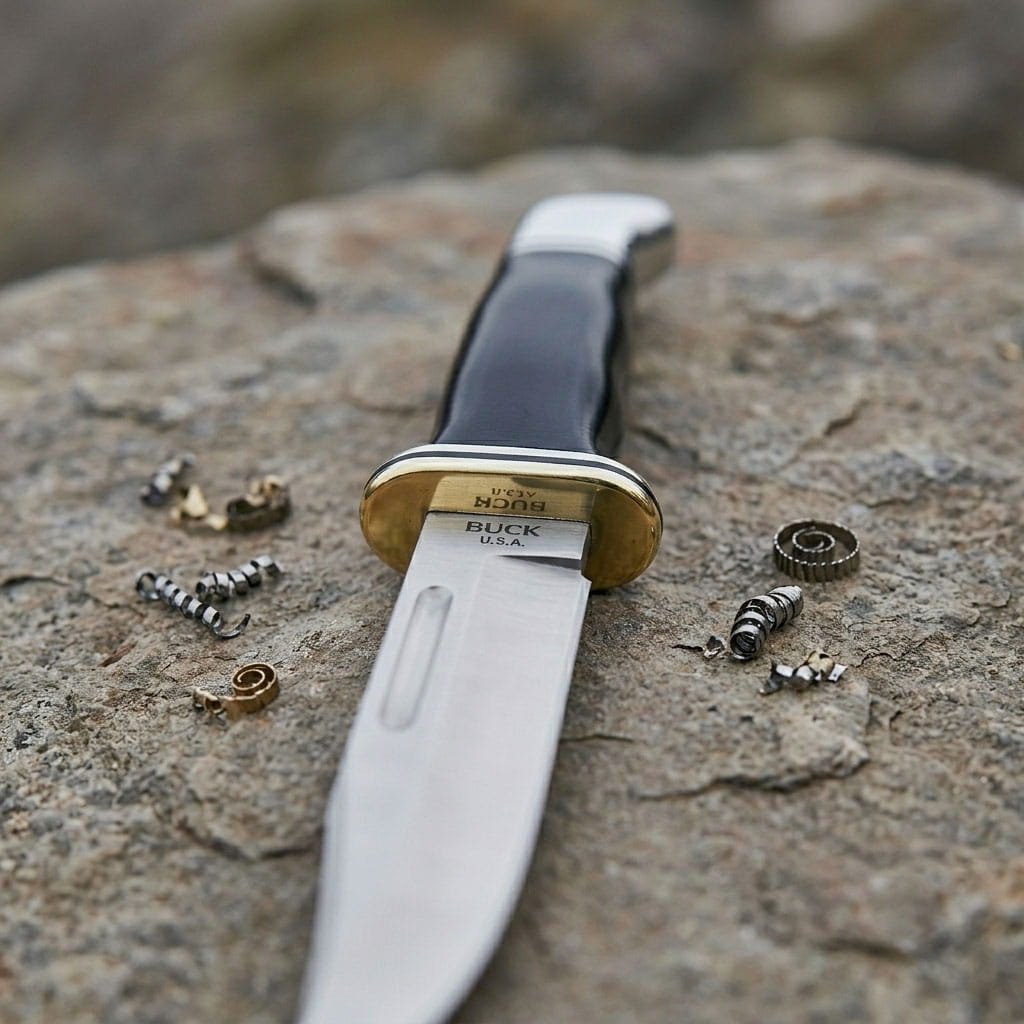
The Phenolic composite handle is smooth, hard, and — let’s be honest — slick when wet. The finger grooves, cross guard, and rear bolster compensate somewhat for the lack of traction, keeping the hotspot-free handle comfortable during extended dry-weather use.
Add moisture — rain, blood, water — and grip confidence drops noticeably. It’s the one area where the old-school knife design shows its age.
If wet grip performance matters to your use case, consider these handle alternatives:
Buck releases limited-edition handle variants that address the grip issue elegantly:
The Buck 119 Brahma knife deserves special mention. It represents a meaningful step up for buyers who want the proven 119 platform with more refined execution. Better materials, tighter fit and finish — same legendary blade geometry.
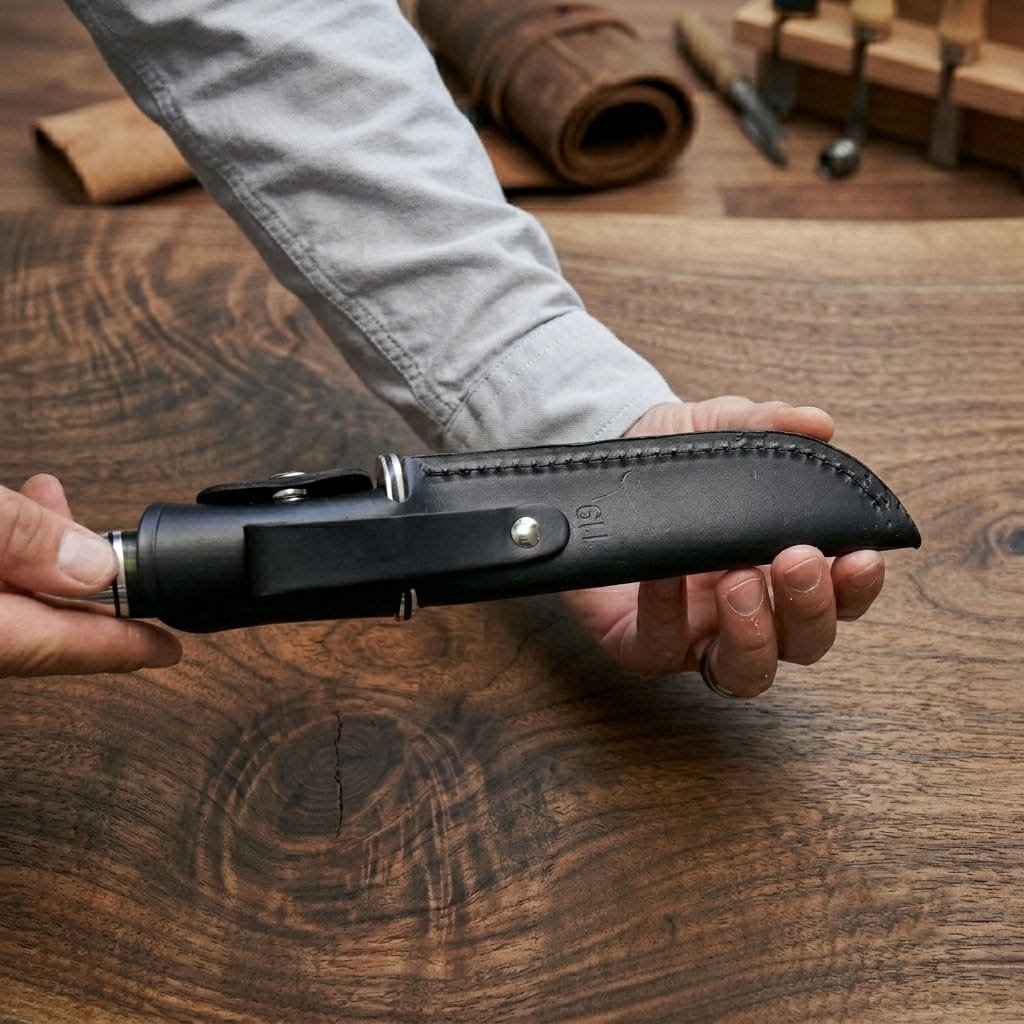
The buck sheath 119 is genuinely well-constructed. Thick leather, a plastic insert that maintains its shape over years of use, a drain hole at the bottom — practical details that reflect real-world hunting use.
The wrap-around snap retention system keeps the knife secure during active carry. Interestingly, even without snapping it closed, the system grips the knife firmly enough that accidental drops are unlikely. Small detail — but meaningful in the field.
The one legitimate complaint: the sheath rides high. The butt of the handle sits nearly 3 inches above the belt line, which feels awkward during extended carry — especially on long hunts.
Practical fixes:
Shopping for the Buck 119 or its variants? American Knife Depot carries a curated selection of Buck fixed blades — including sheaths and accessories — at competitive prices, with 13,700+ verified customer reviews and free shipping on orders over $300.
This is where the Buck 119 hunting knife earns its reputation. The clip-point blade geometry handles game processing exactly as designed. Clean entry into body cavities. Smooth slicing through connective tissue. Reliable performance from the first deer of the season to the last.
For elk, hog, or large game — the 6-inch blade length starts making real sense. For squirrel hunting and small game, it’s overkill. A compact hunting knife handles those tasks more efficiently.
The satin blade handles camp kitchen tasks well. Slicing, chopping, breaking down protein — it’s a capable camp food prep knife that doesn’t need babying. The hollow-ground cutting performance shines here just as much as it does in the field.
Honest limitation: the Buck 119 for bushcraft is serviceable but not purpose-built. Feather sticks are doable. Light shelter building tasks are manageable. But the clip point tip isn’t optimized for heavy wood processing.
Direct answer: don’t rely on it for batoning wood. The clip point takes abuse poorly under sustained batoning stress, and the tang construction wasn’t engineered for that kind of repetitive force. For processing firewood regularly, a full-height-tang bushcraft knife with a flat grind handles the job better.
Historically, large fixed blades like the Buck 119 drew inspiration from military knife designs — general-purpose blades built for food prep, shelter building, and utility work in field conditions. The 119 carries that same practical DNA. It’s not a dedicated combat knife, but the oversized fixed-blade profile reflects its utilitarian military heritage.
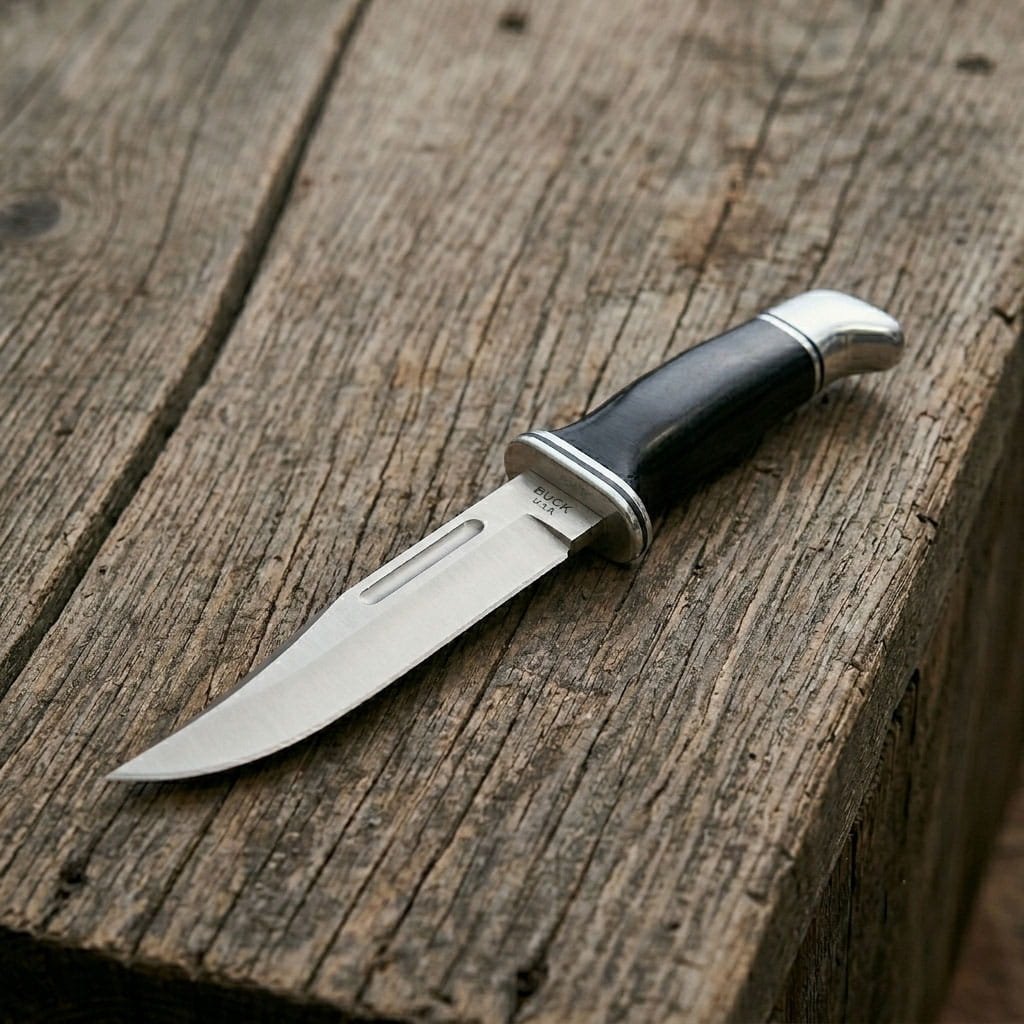
| Variant | Key Difference |
| Buck 119 Special | Standard production model, classic Phenolic handle |
| Buck 119 Special Pro | Enhanced ergonomics, upgraded fit and finish |
| Buck 119 Pro | Modern materials, improved overall build |
| Buck 119 Brahma | Premium handle materials, enhanced construction |
| Buck 119 Ironwood | Limited edition wood handle, collector appeal |
| Buck 119 Cocobolo | Rich wood handle, excellent grip aesthetics |
| Buck 119 MagnaCut | CPM MagnaCut steel — the modern performance upgrade |
| Buck 119 75th Anniversary | Commemorative special knife, collectible value |
| Vintage Buck 119 | Pre-1980s production, sought by collectors |
The buck 119 custom market is active too. Many makers offer modified Buck 119 builds — upgraded handle scales, reground blades, custom leather or kydex sheaths. If the standard 119 is close but not quite right, the custom route is worth exploring.
| Comparison | Key Difference |
| Buck 119 vs 120 | The 120 runs larger and heavier — better for big game, less versatile |
| Buck 119 vs 124 | The 124 Frontiersman is longer, thicker — more survival-oriented |
| Buck 117 vs 119 | The 117 is a compact hunter — better for small game and EDC |
| Buck 115 | Smaller profile, better for detail work, and lighter carry |
| Buck 101 fixed blade | Shorter, lighter — ideal traditional compact hunting knife |
Compared to larger fixed blades like the Dogs Head or Tom Brown Tracker, the Buck 119 wins out in versatility and practicality. The Tom Brown Tracker is a busy knife — recurve, sawback, multiple grinds. The 119 keeps it simple. For most hunters and campers, simple wins.
The hollow grind makes sharpening more accessible than most fixed blades. Here’s what works:
The factory edge comes sharp out of the box. Ongoing maintenance is straightforward — a genuine practical advantage of well-heat-treated 420HC steel that too many buyers overlook.
The buck 119 price typically runs $50–$80 for the standard Special model. Premium variants — Ironwood, Cocobolo, MagnaCut — range from $120 to $200+ depending on materials and availability.
For buyers wondering “Is Tang Heritage legit?” — exercise real caution with unfamiliar third-party resellers. Counterfeit and gray-market Buck knives exist. Stick to established retailers with verified customer reviews, clear return policies, and transparent pricing.
Buck 199 and Buck 19 aren’t standard production model numbers — if you’re seeing those listed by unfamiliar sellers, verify carefully before purchasing.
The term buckage gets thrown around in collector communities to describe the collective value or character of a Buck knife — it’s informal shorthand, not an official Buck designation.
For buyers looking to purchase the Buck 119 from a trusted source, American Knife Depot carries the full Buck lineup with verified pricing, authentic products, and free shipping on orders over $300. Over 13,000 products. 4.8-star rating. No guesswork.
| Pros | Cons |
| Sharp out of the box | Slick Phenolic handle in wet conditions |
| Excellent clip-point geometry for hunting | Sheath rides high on the belt |
| Easy-to-maintain 420HC steel | Not ideal for batoning or heavy bushcraft |
| Sturdy leather sheath with a drain hole | 6-inch blade is too large for some hunting tasks |
| USA-made knife with proven durability | Tang is not full height |
| Affordable fixed blade price point | No sawback, no recurve for bushcraft users |
| Time-tested traditional knife design | Replaceable handle options require limited editions |
Are Buck knives good?
Yes — genuinely. Buck knives have been made in the USA since 1902. Their proprietary heat treatment of 420HC steel outperforms most competitors at similar price points. The build quality, warranty support, and long-term durability back up that reputation.
Is the Buck 119 full tang?
The tank runs full length but not full height. It’s durable for hunting, camping, and general outdoor use. It isn’t engineered for extreme prying, batoning, or Survival abuse.
What is the difference between a buck and a stag?
In knife terminology, “buck” refers to the brand. “Stag” refers to a handle material derived from deer antler — common on vintage and custom knives. The two terms describe completely different things.
Is the Buck 119 good for deer hunting?
Absolutely. The clip-point blade and hollow grind make it one of the better purpose-built deer hunting knives at its price point. The 6-inch blade handles field dressing and game processing cleanly.
What’s the best sheath upgrade for the Buck 119?
A dangler ring on the stock leather sheath solves the high-ride issue affordably. For modern carry, a kydex sheath gives you faster draw and more carry positions. The Buck 119 cross-draw sheath is worth considering for specific carry situations.
Does Buck honor the warranty on the 119?
Buck offers a Forever Warranty on their knives. However, the warranty documentation notes that misuse — meaning use outside normal knife-like function — voids coverage. Use it as a knife, not a pry bar, and you’re covered.
How does the Buck 119 Special differ from the standard model?
The Buck 119 Special is the standard production model with the classic Phenolic handle. The Special Pro and Pro variants add ergonomic refinements and upgraded materials. The Special knife designation simply refers to the base production lineup.
What is the Buck 119 blade angle?
Buck recommends approximately 13–16 degrees per side. The hollow grind makes it easier to maintain that angle than with most blade geometries.
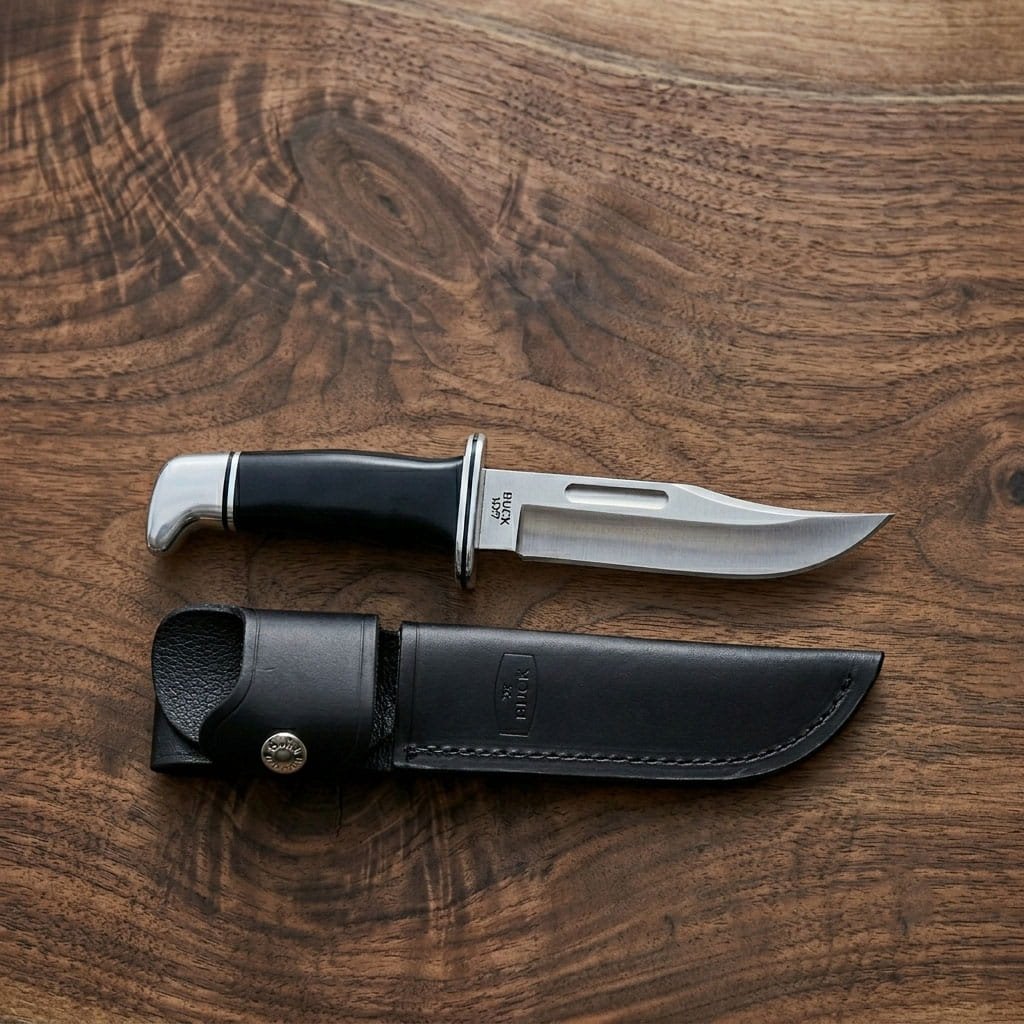
The Buck 119 knife isn’t trendy. It doesn’t chase modern knife fads — no tanto point, no aggressive jimping, no $300 price tag. What it delivers is 80+ years of proven field performance, a hunting-friendly clip-point blade, practical 420HC steel that sharpens easily, and old-school knife design built around real hunting use.
Is it a perfect knife? No. The smooth Phenolic handle loses grip confidence in wet conditions. The leather sheath rides high without a dangler ring. It’s not the right tool for serious batoning or dedicated bushcraft work.
But for deer hunting, game processing, camp food prep, and general outdoor use — the Buck 119 remains one of the best affordable fixed blades on the market. It’s a traditional knife design that earns its place in any serious outdoor kit — not because of nostalgia, but because it genuinely performs.
Ready to pick up the Buck 119? Browse the complete Buck fixed blade lineup — including the 119 Special, Brahma, Ironwood, Cocobolo, and MagnaCut variants — at American Knife Depot. Over 13,000 products, a 4.8-star rating backed by 13,700+ verified customer reviews, and free shipping on orders over $300. Sharp gear. Real value. Built for those who demand the best.
MagnaMax is a notable new knife steel that has been
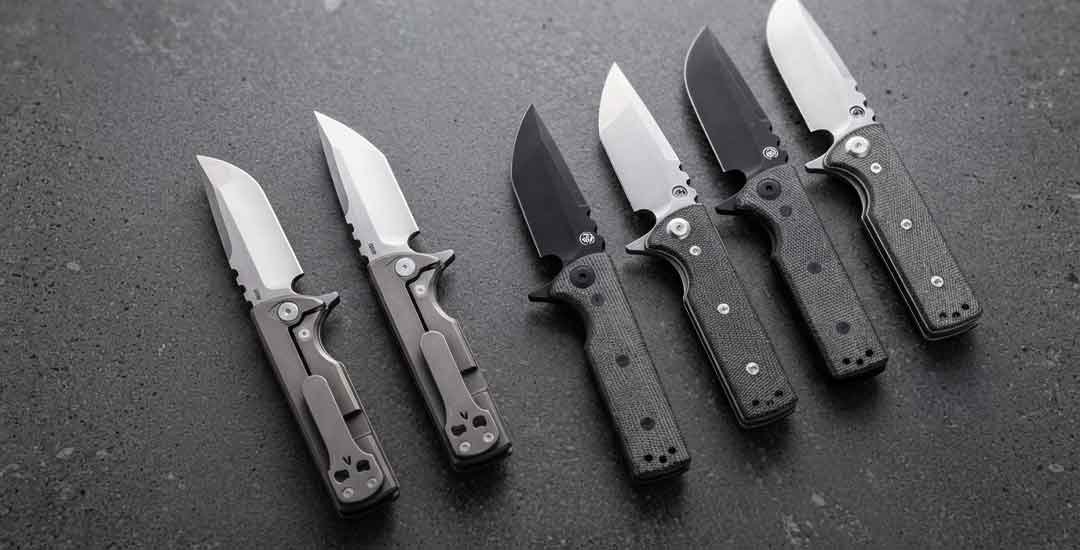
The history of Chaves Knives begins with one maker, basic
![Rated: 15 Best OTF Knives of 2026 [By Category]](https://americanknifedepot.com/wp-content/uploads/2026/09/Featured-Image-7.jpg)
Finding the best OTF knife is less about chasing the
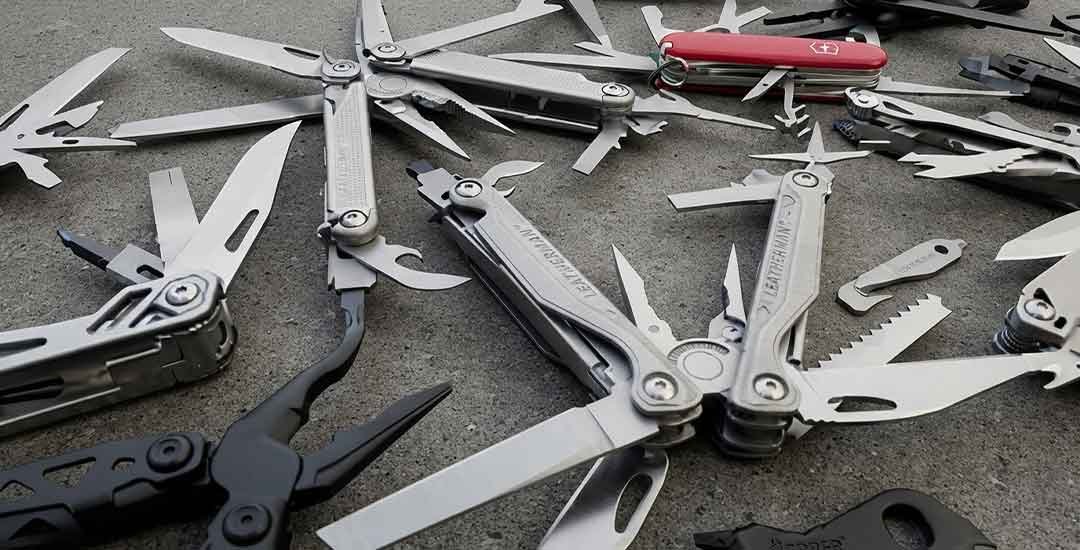
The Leatherman ARC multitool promises premium materials, 20 tools, and



















Civivi nails everyday carry. Smooth action, perfect balance, and clean design. Easily one of the best EDC knives I’ve owned at this price point.