
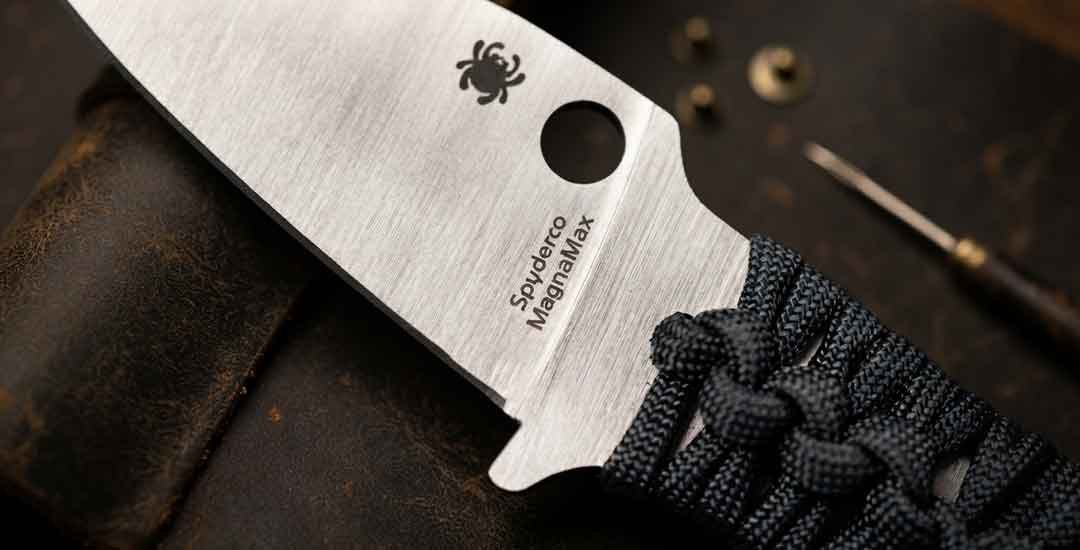
MagnaMax Steel – Everything You Need to Know
MagnaMax is a notable new knife steel that has been

Picking a knife feels straightforward — until you’re staring at a spec sheet that reads “CPM S35VN, 60 HRC, powder metallurgy construction.” Suddenly, it’s less about the blade and more about decoding a chemistry exam.
Here’s what nobody tells you upfront: the steel in your blade determines everything. Edge retention, toughness, corrosion resistance, sharpening difficulty — it all traces back to steel composition and how the manufacturer treats it. Pick the wrong steel for your use case, and you’ll either be resharpening every week or watching rust creep across a blade you paid serious money for.
This knife steel guide covers every major steel type — from budget-friendly 420HC to elite super steels like CPM MagnaCut — ranked, compared, and explained in plain language. By the end, you’ll know exactly which blade steel fits your needs and why.
Every knife steel is a compromise. Understanding that upfront saves enormous frustration.
The fundamental tension is hardness vs. toughness. Hard steel holds a sharp edge longer but chips under heavy impact. Tough steel survives brutal use but dulls faster. Throw corrosion resistance into the equation, and it gets even trickier — the chromium content that fights rust also bonds with carbon to form carbides, reducing the free chromium available to protect the blade surface.
Two other factors matter just as much as steel composition:
“The steel is the ingredient. Heat treatment is the cooking. Get either wrong and the dish fails.”
This is why brands like Kershaw, Ka-Bar, and Zero Tolerance invest so heavily in proprietary hardening and quenching protocols — the steel alone doesn’t tell the whole story.
Hardness measures a steel’s resistance to deformation under stress. The knife industry uses the Rockwell C scale — expressed as an HRC rating — as the standard. Most quality production knives land between 57–65 HRC on the knife hardness scale.
Higher HRC means better edge retention and wear resistance. But push past 65–66 HRC and brittleness becomes a real problem. ZDP-189, which regularly hits 66 HRC, holds a stunning edge but demands careful handling — drop it wrong, and you’re chipping the tip.
Toughness is a steel’s ability to absorb impact without cracking or chipping. Labs measure it using the Charpy test and Izod test, though neither is perfectly standardized for knife applications. In practical terms, toughness equals chipping resistance — a knife’s worst failure Mode because it’s nearly impossible to fix at home.
Carbon steel and tool steel dominate here. Survival knives and fixed blades prioritize toughness above everything else because they face chopping, batoning, and prying — abuse that would destroy a harder, more brittle blade.
Two types of wear degrade a cutting edge. Abrasive wear happens when harder particles scrape across the blade surface. Adhesive wear occurs when material transfers between surfaces during cutting. Together, they dull your edge over time.
Carbides — microscopic hard particles within the steel — are your defense. The distribution of chromium carbides and vanadium carbides through the steel’s grain structure directly determines how well an edge survives extended use. Finer carbide particles, characteristic of powder metallurgy steel, produce more consistent wear resistance across the entire edge.
Chromium is the element that fights rust. To qualify as true stainless steel, a blade needs at least 13% chromium content. But here’s the chemistry most buyers miss — carbon in the steel bonds with chromium during carbide formation, reducing free chromium available to protect the surface.
That’s why stain resistance and rust resistance aren’t interchangeable terms. Even high-chromium steels can corrode under the right conditions. No blade steel is completely immune — some just resist much longer than others.
Edge retention measures how long your blade stays sharp under real cutting conditions. It’s a product of wear resistance, hardness, and resistance to microdeformation at the edge. It’s also the property most directly tied to sharpening difficulty — the steels with the best edge-holding ability are typically the hardest to bring back to a sharp edge once dull.
CPM S90V holds an edge almost indefinitely. Sharpening it, however, requires diamond abrasives and genuine patience. For most everyday users, a slightly lower-performing steel that sharpens easily delivers a better real-world experience.
High carbon steel trades corrosion resistance for exceptional toughness and cutting performance. Low chromium content makes it vulnerable to rust, but these steels sharpen quickly and take an incredibly sharp edge.
1095 steel — the most popular 10-series carbon steel — has been the backbone of American Survival knives for generations. It chips less than harder steels, responds to a basic whetstone, and costs manufacturers less to work with. The trade-off is real: skip the blade coating or regular oiling, and rust develops fast. A natural blade patina will form over time regardless.
Best for: Survival knives, fixed blades, machetes, hard-use outdoor knives, knifemaking steel for beginners.
Stainless knife steel dominates the folding knife and EDC market for good reason. Adding chromium content dramatically improves corrosion resistance, while modern alloying elements compensate for the toughness trade-off.
Nearly every knife blade material in production today is martensitic steel — high carbon content, magnetic, and capable of achieving hardness through rapid quenching. Austenitic steel, by contrast, contains high nickel content, stays non-magnetic, and remains too soft for practical knife use. It’s the steel in your kitchen sink, not your pocket knife.
The 400-series steel family covers the budget end — 420HC at the bottom, 440C at the top. Japanese AUS-8 and VG-10 represent solid mid-range choices. Premium options like CPM S30V and CPM S35VN dominate the high-end pocket knife market.
Tool steel knives sacrifice rust resistance for extreme hardness and wear resistance. D2 steel is the most widely used — often called semi-stainless steel because its chromium content sits just below the 13% stainless threshold. It’s harder than most stainless options and holds an edge longer, but it demands a skilled sharpener and regular maintenance to prevent corrosion.
High-speed steel variants like CPM M4 steel push cutting performance to the extreme. Exceptional abrasion resistance, brutal sharpening difficulty, and zero rust resistance define this category. These are working knives for serious users — not weekend carry pieces.
| Steel | Origin | Edge Retention | Corrosion Resistance | Sharpening Ease |
| 420HC | American | Low | Very High | Very Easy |
| 440C | American | Moderate | High | Easy |
| AUS-8 | Japanese | Low-Moderate | Moderate | Very Easy |
| 8Cr13MoV | Chinese | Low-Moderate | Moderate | Very Easy |
| 14C28N | Swedish | Moderate | High | Easy |
14C28N from Sandvik (Allemia) deserves special mention as budget knife steel done right. Kershaw commissioned it specifically as an upgrade to 13C26 — the added nitrogen content dramatically improves corrosion resistance without sacrificing sharpness. It’s the best steel on any knife under $30, full stop.
8Cr13MoV — the dominant Chinese knife steel in the MoV steel series — punches above its price point when manufacturers apply quality heat treatment. Spyderco proved that with their budget Byrd line years ago.
VG-10 is Japan’s standout contribution to mid-range blade steel. This Japanese knife steel balances hardness, toughness, and stain resistance in a way that has made it a Spyderco staple for over a decade. The added vanadium content gives it marginally better toughness than comparable 154CM or ATS-34.
154CM — classic American knife steel from Crucible — is essentially an upgraded 440C with added molybdenum for superior edge retention. Benchmade built much of its reputation on it. CPM 154 is the powder-metallurgy version — finer carbide particles, better toughness, and slightly superior edge retention.
D2 steel sits at the top of this tier — harder than most stainless options, with excellent wear resistance but demanding in maintenance and notoriously difficult to sharpen without the right equipment.
CPM S30V redefined Premium pocket knife steel when Crucible introduced it. The introduction of vanadium carbides into the alloy matrix delivers extreme hardness with solid corrosion resistance — a combination previously unavailable at this price point. CPM S35VN refined it by adding niobium content, improving toughness and machinability for manufacturers. In real-world use, the difference is minimal.
CPM S45VN followed in 2019 with extra chromium for improved corrosion resistance — a meaningful upgrade for users in humid or wet environments.
Elmax from Bohler stands out as the most balanced high-end option available. It combines superb edge holding, the best ease of sharpening among true super steels, and strong rust resistance. Many experienced knife users call it the finest all-around Premium knife steel for practical use.
N680 and H1 steel serve specialized roles. N680 — a Bohler steel with over 17% chromium and added nitrogen — excels in saltwater environments. H1 steel from Japan’s Myodo Metals essentially doesn’t rust, making it the definitive choice for diving knife steel. Edge retention suffers significantly in both, which rules them out for hard-use applications.
| Steel | Edge Retention | Corrosion Resistance | Sharpening Difficulty | Best For |
| CPM S90V | Exceptional | Good | Very Hard | Premium EDC, collectors |
| CPM S110V | Best in Class | Good | Brutal | Maximum edge retention |
| M390 | Exceptional | Very High | Moderate-Hard | All-around Premium use |
| CPM 20CV | Exceptional | Very High | Moderate-Hard | Premium folding knives |
| ZDP-189 | Very High | Moderate | Brutal | Collectors, patient users |
| CPM MagnaCut | Very High | Exceptional | Moderate | Best all-around modern steel |
| Maxamet | Best in Class | Poor | Brutal | Maximum edge retention |
| Cru-Wear | High | Low | Hard | Hard-use tool knives |
M390 from Bohler and CPM 20CV from Crucible are functionally near-identical — both produced through third-generation powder metal technology, both delivering exceptional wear resistance paired with very high corrosion resistance. Benchmade actually claims its M390 is marginally tougher, while CPM 20CV edges ahead in edge-holding ability. The difference is academic for most users.
CPM MagnaCut is the most significant development in modern knife steels in years. Metallurgist Larrin Thomas designed it from scratch specifically for knife blades — eliminating chromium carbides to maximize free chromium while maintaining toughness and edge retention that rivals CPM CruWear. It matches CPM S45VN and CPM S110V in corrosion resistance while delivering toughness closer to CPM 4V. It’s genuinely the best all-around knife steel produced today.
Maxamet from Carpenter is the edge-retention extremist’s choice — matching CPM S110V in edge retention while falling short in corrosion resistance. Both are brutally difficult to sharpen. Neither belongs in the hands of someone who doesn’t own diamond stones.
Crucible Particle Metallurgy is a manufacturing process exclusive to American Crucible Industries. Molten steel alloy gets forced through a small nozzle where high-pressure gas atomizes it into fine droplets. Those droplets cool and solidify into powder, which then undergoes hot isostatic pressing — the HIP process — in which the powder is compacted into a dense, uniform billet.
The result is a dramatically finer steel grain structure with no alloy segregation. Every section of the billet has identical alloy composition and carbide distribution. That uniformity improves toughness, grindability, and the steel’s response to heat treatment. It’s why CPM steel knives consistently outperform conventionally manufactured equivalents even when the raw steel composition looks similar on paper.
| Element | Primary Contribution |
| Carbon | Hardness, edge retention |
| Chromium | Corrosion resistance, hardness |
| Vanadium | Wear resistance, hardenability |
| Molybdenum | Toughness, hardenability |
| Tungsten | Toughness, wear resistance |
| Niobium | Toughness, corrosion resistance |
| Nitrogen | Hardness, corrosion resistance |
| Manganese | Hardenability, strength |
| Silicon | Hardenability, strength |
| Cobalt | Hardness |
| Sulfur/Selenium | Machinability |
| Tantalum | Ductility, hardness |
| Zirconium | Toughness, ductility |
| Aluminum/Copper | Deoxidation |
Understanding these alloying elements explains why steels with similar carbon content perform so differently. Vanadium content drives wear resistance in CPM steels. Tungsten content underpins the toughness in CPM M4. The molybdenum content is why 154CM outperforms 440C despite its lower chromium content. Chemistry matters at every level.
| Property | Martensitic | Austenitic |
| Carbon Content | High | Low |
| Magnetic | Yes | No |
| Hardenable | Yes | No |
| Knife Use | Standard | Rare (H1 only) |
| Corrosion Resistance | Moderate-High | Very High |
Martensite forms when austenite — the high-temperature phase of steel — cools rapidly through rapid quenching. That transformation is what makes knife steel hard. Slow cooling produces softer, tougher structures. Fast cooling locks in the hard martensitic structure that gives knife blades their edge-holding capability. Manufacturers control this process precisely — it’s the core of heat treating and why hardening protocols vary so dramatically between brands.
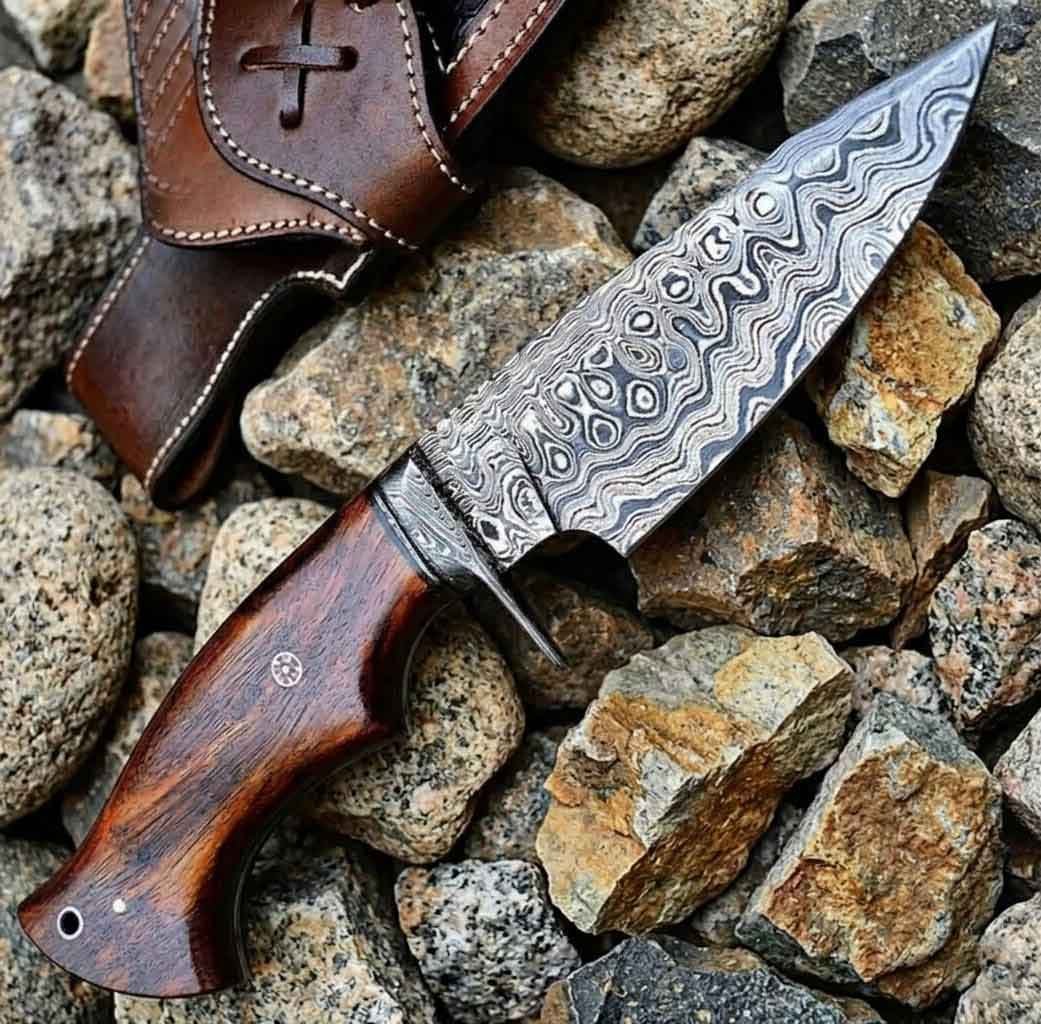
Damascus steel is one of the most misunderstood terms in the knife world. The swirling patterns come from forge-welding two different steels together — technically called pattern-welded steel. Historical Wootz steel from India and Pakistan is a completely different material that simply looks similar.
Modern Damascus is genuinely beautiful. A well-crafted Damascus blade also develops a distinctive blade patina over time that collectors love. But for pure cutting performance, Damascus doesn’t outperform quality monosteel. Buy Damascus for the artistry. Buy CPM MagnaCut or M390 for edge performance.
CPM S30V wins on corrosion resistance and ease of sharpening. D2 steel edges ahead on raw hardness and wear resistance. For EDC, S30V is the better everyday choice. For heavy-duty cutting where rust isn’t a concern, D2 delivers.
M390 is the clear winner — better edge retention, higher corrosion resistance, and superior overall performance. The price difference reflects it.
Closer than most expect. CPM S30V leads on edge retention and toughness. 154CM is more widely available and slightly easier to work with. Both are excellent mid-to-high-end choices.
CPM S30V wins outright on edge retention. But 14C28N is a fraction of the cost and performs remarkably well for budget-conscious buyers. For knives under $50, 14C28N is the smarter choice.
VG-10 offers better corrosion resistance and easier sharpening. D2 delivers superior edge retention and hardness. Your environment determines which wins — wet conditions favor VG-10, dry hard use favors D2.
Understanding steel is one thing — finding the right knife that uses it is another challenge entirely. American Knife Depot carries over 13,000 knives and outdoor gear products across 60+ categories, featuring trusted brands like Kershaw, Gerber, Ka-Bar, Civivi, Zero Tolerance, and Bradford Knives — all in one place.
Whether you need a CPM S35VN EDC folder, a 1095 fixed-blade Survival knife, or a Premium M390 collector’s piece, American Knife Depot has it at competitive prices with free shipping on orders over $300.
Shop knives by steel type at American Knife Depot →
What is the best knife steel overall?
CPM MagnaCut delivers the best all-around package today — exceptional toughness, strong edge retention, and outstanding corrosion resistance in one modern steel.
What is the best steel for EDC knives?
CPM S35VN and M390 are the top choices — both offer excellent edge retention, solid corrosion resistance, and manageable sharpening difficulty for daily carry.
Is high-carbon steel good for knives?
Absolutely — especially for Survival knives and fixed blades where toughness matters most. Expect to maintain it with oil or a blade coating to prevent rust.
What is the toughest knife steel?
CPM 3V and 1095 lead in raw toughness. Among super steels, Cru-Wear offers the best toughness-to-edge-retention balance.
What knife steel is easiest to sharpen?
420HC, AUS-8, and 8Cr13MoV sharpen quickly on basic equipment. Among Premium steels, CPM S35VN and Elmax are the most forgiving to bring back.
Is M390 steel good for knives?
M390 is one of the finest Premium knife steels available — exceptional edge retention, very high corrosion resistance, and moderate sharpening difficulty make it a near-perfect everyday steel.
Is CPM MagnaCut the best knife steel?
For all-around performance, yes — it’s the most complete modern knife steel currently in production. Availability is still limited but growing fast.
What’s the difference between Damascus steel and pattern-welded steel?
They’re the same thing in modern usage. Pattern-welded steel is the technically accurate term — two steels forge-welded together to create the distinctive swirling pattern. True historical Damascus (Wootz steel) is an entirely separate material.
What steel does Benchmade use?
Benchmade uses multiple steels across their lineup — CPM S30V, CPM S90V, M390, CPM 20CV, and 154CM appear most frequently depending on the model and price point.
What is a knife steel used for?
A honing steel realigns a blade’s edge between sharpenings — it doesn’t remove material like a whetstone. Regular use significantly extends the interval between full sharpening sessions.
Choosing knife steel isn’t about finding the highest number on a hardness chart. It’s about matching steel performance to how you actually use your blade. A weekend fisherman needs completely different steel than a tactical professional or a home chef — and now you know why.
From budget knife steel that punches above its price point to elite super steels that hold an edge through extreme use, the options have never been better. The key is knowing your use case, respecting the trade-offs, and buying from a source you can trust.
American Knife Depot carries the full spectrum — from affordable 8Cr13MoV folders to elite CPM S110V collector pieces — backed by brands like Gerber, Kershaw, Ka-Bar, and Zero Tolerance, with competitive pricing, free shipping on orders over $300, and 13,700+ verified five-star customer reviews.
Sharp gear. Real value. Built for those who demand the best.
MagnaMax is a notable new knife steel that has been
The history of Chaves Knives begins with one maker, basic
![Rated: 15 Best OTF Knives of 2026 [By Category]](https://americanknifedepot.com/wp-content/uploads/2026/09/Featured-Image-7.jpg)
Finding the best OTF knife is less about chasing the
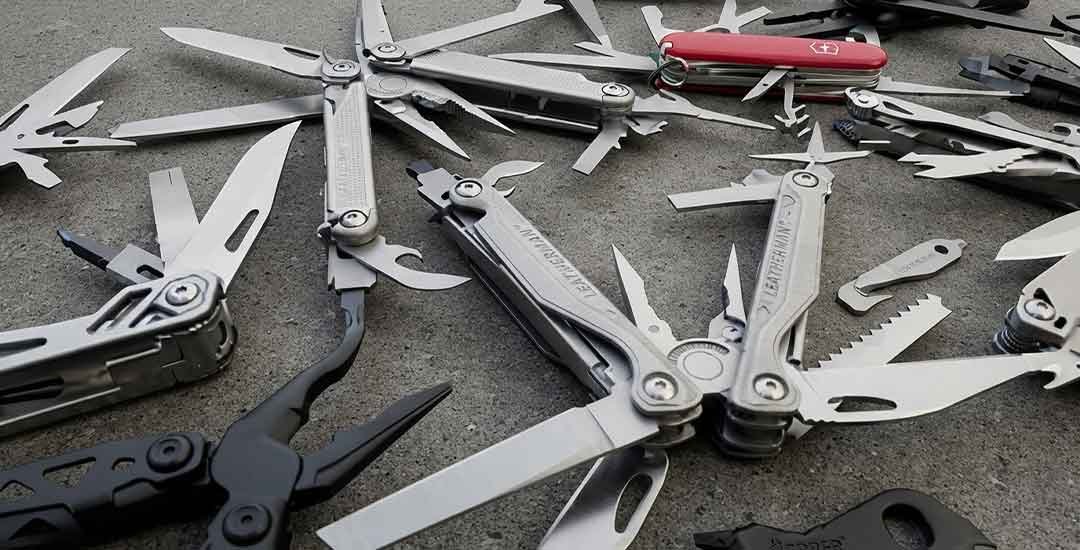
The Leatherman ARC multitool promises premium materials, 20 tools, and


















Civivi nails everyday carry. Smooth action, perfect balance, and clean design. Easily one of the best EDC knives I’ve owned at this price point.