
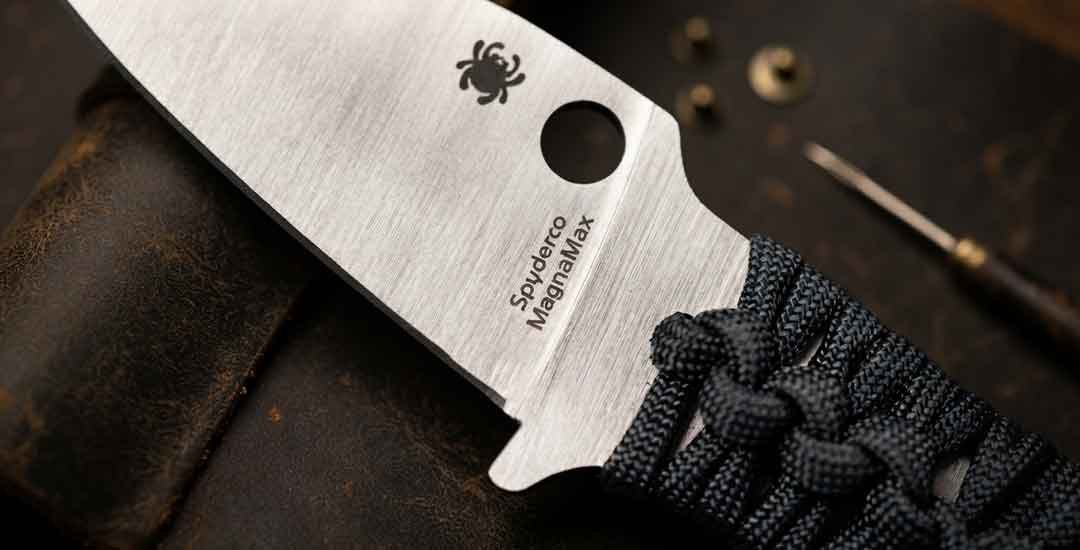
MagnaMax Steel – Everything You Need to Know
MagnaMax is a notable new knife steel that has been

A dull knife isn’t just frustrating — it’s genuinely dangerous. Most cutting accidents happen when people force a blade through material that it should slice cleanly. The fix isn’t buying a new knife. It’s about knife-sharpening, about owning the right knife-sharpening system.
Browse any outdoors store or knife retailer, and you’ll find dozens of options claiming to be the best. Whetstones, pull-through gadgets, electric grinders, guided systems — the choices are overwhelming. So let’s cut through the noise.
This guide covers the best guided knife sharpening systems available today — ranked by performance, value, and real-world usability. Whether you’re a weekend hunter, an EDC enthusiast, or a professional who demands a hair-popping edge, there’s a system here built for you.
Freehand sharpening on a traditional whetstone produces incredible results — in experienced hands. For everyone else, holding a consistent blade angle without mechanical help is genuinely difficult. That’s exactly where a guided sharpener earns its place.
A guided system locks your blade into position and precisely controls the sharpening angle on every stroke. No guesswork. No wasted passes. The system handles what would otherwise take years of knife sharpening practice to master.
Here’s what that translates to in real use:
Even experienced sharpeners reach for guided systems when knife sharpening precision matters most. Think of it as the difference between eyeballing a measurement and using a ruler. Both work — but one is always more accurate.
Before spending a dollar, understand what separates a great sharpening system from a mediocre one. These are the features that actually matter.
Most knives sharpen best somewhere between 15 and 30 degrees per side. Japanese blades typically require a 15-degree knife-sharpening setting. Western kitchen knives prefer 20–25 degrees. Hunting knives and outdoor blades often work best at a 25 or 30-degree sharpening angle.
An adjustable knife sharpener that covers the full range handles virtually any blade you own. A fixed-angle sharpener works perfectly for specific knives — but limits flexibility across a varied collection of knives.
| Angle | Best For | Edge Type |
| 15° | Japanese knives, razors | Ultra-thin, precise |
| 20° | EDC blades, pocket knives | Balanced sharpness |
| 25° | Hunting knives, outdoor blades | Durable working edge |
| 30° | Camp axes, heavy tools | Maximum durability |
Sharpening stone grits determine how aggressively the abrasive removes steel. Here’s what each level does:
The best knife sharpening kits include multiple grits so you can work through the full sharpening process from rough repair to final polish.
Diamond sharpening stones cut faster and handle harder steel types without loading up. Ceramic sharpening stones are gentler — ideal for honing and final edge refinement once the main sharpening work is done. The strongest systems include both.
A solid knife clamp system holds the blade completely stationary throughout sharpening. Paired with guide arms or guide rods, it delivers the same blade angle on every stroke — session after session. This mechanical consistency is what separates precision systems from basic pull-through gadgets.
Quality sharpening guide rods should move smoothly without any wobble or play. Even small inconsistencies in rod movement translate to uneven bevels on the finished edge.
A compact knife sharpener under 5 ounces handles field use perfectly. Desktop systems offer more sharpening system adjustability but aren’t built for the trail. Match the system to where you actually sharpen — not just the best-case scenario.
Sharpening durability matters too. Cheap plastic components wear out fast. Look for metal guide rods, quality stone holders, and robust clamp mechanisms — especially on systems you’ll use regularly. A durable sharpening system saves money in the long term by outlasting cheaper alternatives that require frequent replacement.
| System | Best For | Angle Range | Grit Options | Price |
| Spyderco Tri-Angle Sharpmaker | Overall/Daily Use | 15–20° | Medium + Fine Ceramic | $ |
| Lansky Universal System | Budget Pick | 17–30° | Coarse to Fine | $ |
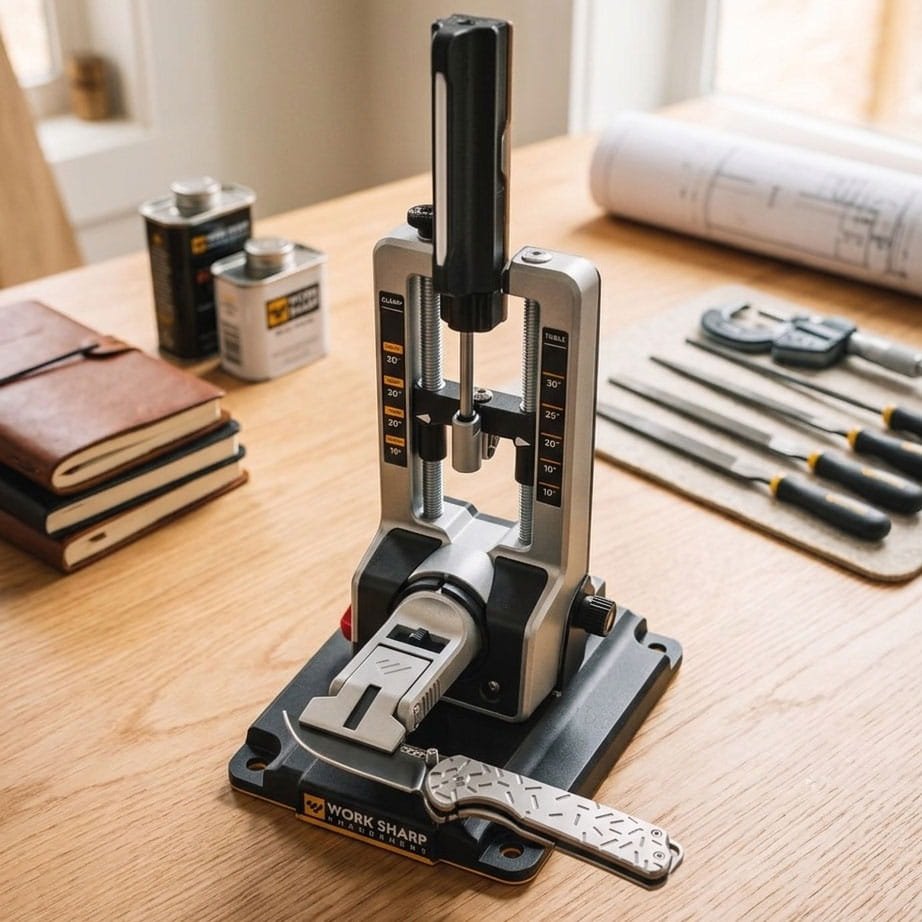
| Work Sharp Guided Field Sharpener | Pocket Knives/EDC | 20–25° | Diamond + Ceramic + Strop | $ |
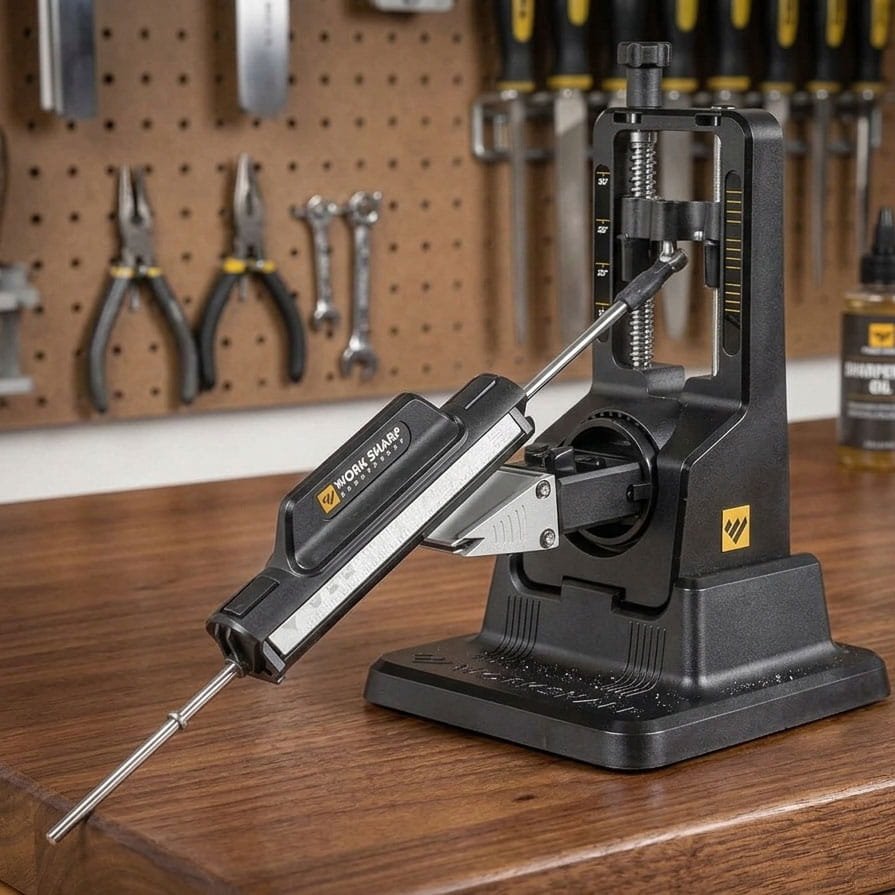
| Work Sharp Precision Adjust | Beginners | 15–30° | Diamond + Ceramic | $ |
| Wicked Edge Gen 4 | Professionals | 12–28° | 6 Diamond Grits | $$$$ |
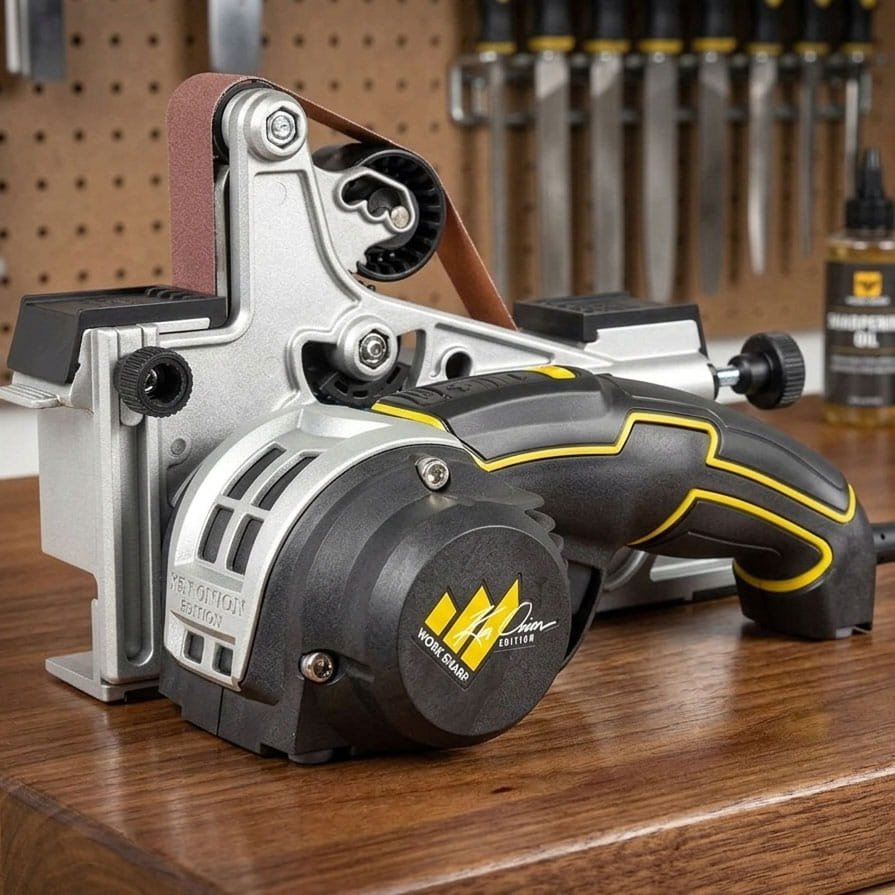
| Work Sharp Ken Onion Elite Mk.2 | Electric/Versatile | 10–35° | 4 Belts (XC to XF) | $$$ |
The Spyderco Sharpmaker has been a bestseller since 1976. That kind of longevity doesn’t happen by accident — it happens because the system genuinely works.
Setup takes under 30 seconds. Pop the ceramic sharpening stones into the base, add the hand guards, hold your blade vertically, and pull downward. The triangular stones automatically control the angle — 15 or 20 degrees, depending on which slot you use. No complicated adjustments. No learning curve worth mentioning.
What makes it stand out:
The one limitation: It only accepts Spyderco-compatible replacement stones. Two fixed angles also mean less flexibility than a fully adjustable knimeanarpening system.
Still — for everyday blade maintenance across a wide variety of blade types, nothing beats the Sharpmaker’s combination of simplicity and consistent knife sharpening performance.
“Some designs never go out of style — the Tri-Angle Sharpmaker is one of them.”
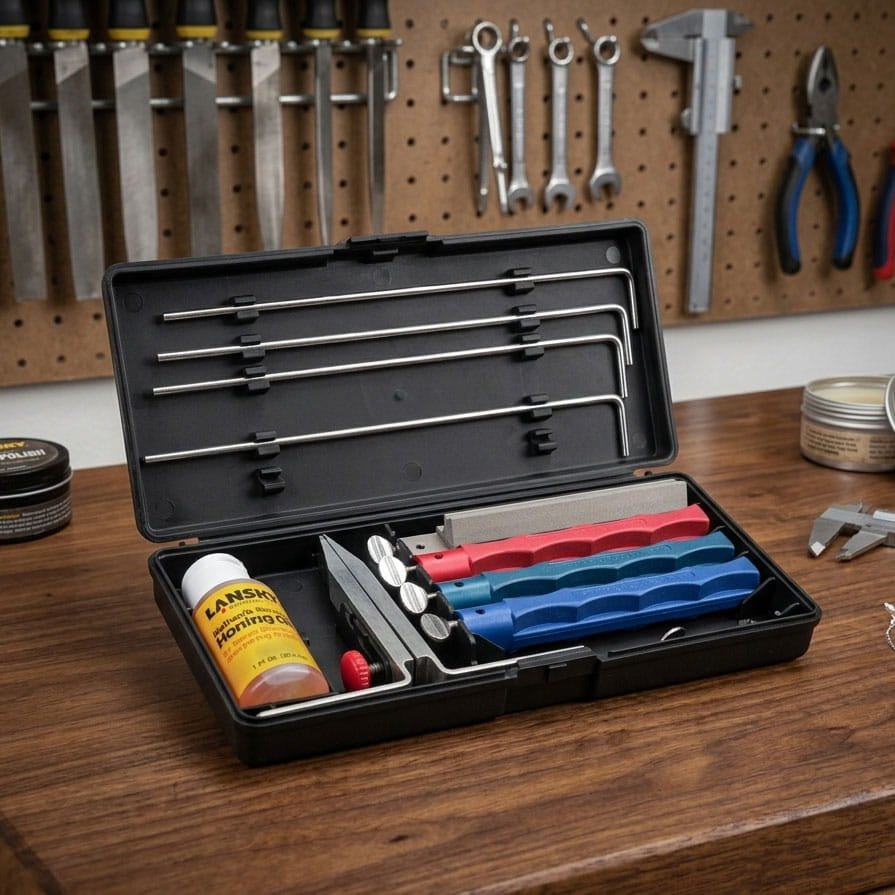
The Lansky Universal Sharpening System proves you don’t need to spend big to sharpen well. It’s a genuinely affordable sharpening system that eliminates angle guesswork through a physical knife clamp and angle-guide slots at 17, 20, 25, and 30 degrees.
Clamp the blade, select the angle, and run the stone across the edge. Four grits come standard — coarse ceramic, 280, 600, and 800 — covering everything from aggressive edge restoration on a neglected blade to final edge refinement. As your knife-sharpening skills advance, Lansky sells additional stones at very affordable prices. The system grows with you.
Where it excels:
The clamp takes patience with smaller blades like pen knives. Setup runs slightly longer than simpler systems. But as a budget knife sharpener with genuine knife sharpening quality — the Lansky Universal punches well above its weight.
EDC blades and pocket knives take constant daily abuse. They need fast, reliable touch-ups — not a 20-minute workbench session. The Work Sharp Guided Field Sharpener is engineered exactly for that reality.
Weighing under 5 ounces, it’s the most portable knife sharpener on this list. The 20 and 25-degree angle guides cover most pocket knives and EDC blades perfectly. Work through the sequence: coarse diamond for initial burr formation, ceramic rod for refinement, fine diamond for sharpening, then the leather strop for knives to finish and remove any remaining burr.
It also handles:
This field knife sharpener won’t produce a competition-quality edge. But for hunters, hikers, and everyday carry users who need a reliable working blade edge fast — it’s the right tool. Durable, dead simple, and built to last years of hard field use. That’s genuine sharpening durability in a package smaller than a granola bar.
The hardest part of learning knife sharpening is maintaining a consistent angle stroke after stroke. The Work Sharp Precision Adjust eliminates that problem. Set the adjustable angle guide anywhere from 15 to 30 degrees, lock the blade in the clamp, and every stroke hits the same angle automatically.
Two diamond sharpening stones — 320- and 600-grit — restore even badly neglected blades quickly. The dedicated upgrade kit adds a leather strop, additional grits, and a guide for serrations. Beginners grow into the system rather than outgrow it — which is exactly what good knife sharpening tools should allow.
Why it works so well for beginners:
It won’t deliver a hair-popping edge straight out of the box. But it rescues dull blades and builds the foundational skills that lead to genuinely sharp results over time. For any beginner knife sharpener starting their journey, this is the right place to begin.
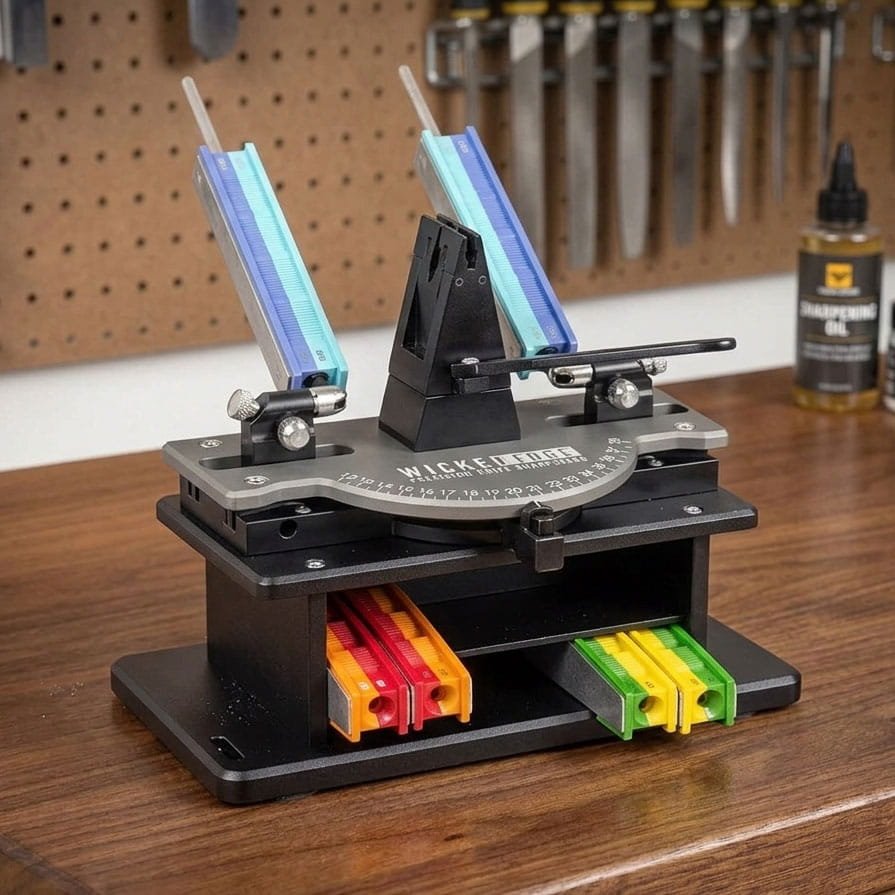
When knife sharpening precision isn’t optional, the Wicked Edge Gen 4 operates in a different league entirely. This is the best professional sharpening system for anyone who demands perfection from every blade — every single time.
Micro-adjustments down to 0.05 degrees. Angle range spanning 12 to 28 degrees. Six diamond sharpening stones from 100 to 1000 grit. The redesigned guide rods move more smoothly and hold more tightly than the Gen 3 Pro — less play, more consistency, dramatically better results across long sharpening sessions.
The ultra-secure knife clamp system handles everything from small pen knives to long hunting blades without slipping. The sharpening system’s capability for long blades here is genuinely impressive — nothing wobbles, regardless of blade length.
The honest tradeoffs:
For knife collectors, professional chefs, and serious blade enthusiasts — the Wicked Edge Gen 4 justifies every dollar. Nothing on the market delivers more consistent precision knife-sharpening results. That’s not a claim — it’s what the micro-adjustable sharpener design mathematically guarantees.
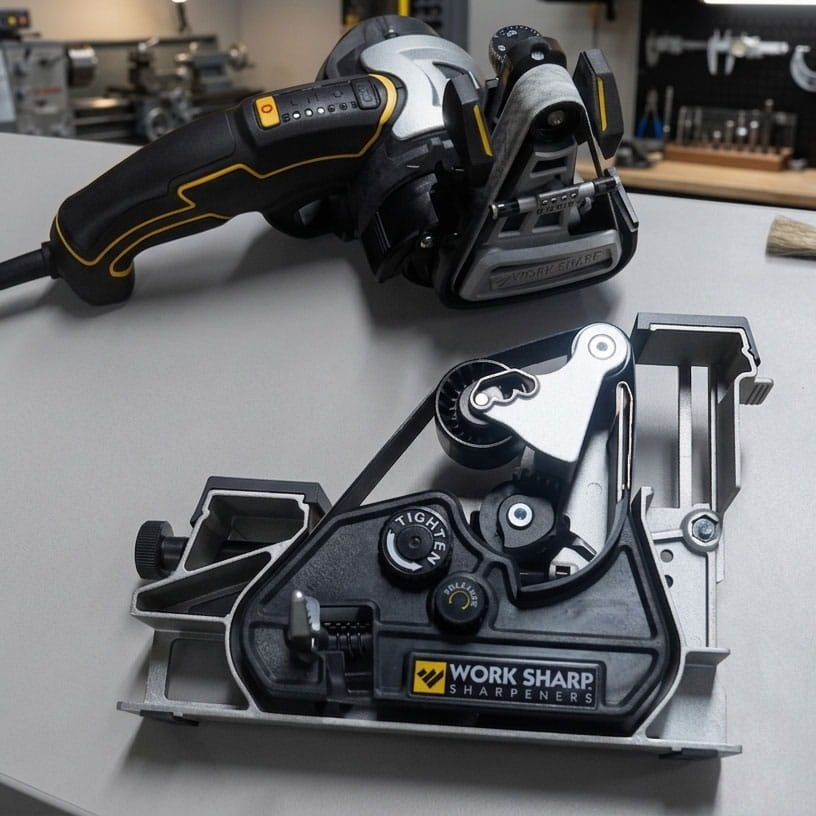
The Work Sharp Ken Onion Elite Mk.2 functions as two complete sharpeners in one unit. The cassette system delivers a guided belt-knife-sharpening experience — set the angle, pull the blade across the sharpening belts, done. Fast, clean, repeatable. The separate blade grinding attachment adds raw power for aggressive edge restoration on seriously neglected blades.
Four belts cover the full sharpening process: an extra-coarse sharpening belt for heavy material removal, a medium belt for refinement, a fine belt for sharpening, and an extra-fine belt for a polished working edge. The angle range runs from 10 to 35 degrees, covering nearly every blade type, including scissors and camp axes.
What to know before buying:
For anyone sharpening multiple knives regularly — or dealing with heavy blade maintenance across different blade types — the Ken Onion Elite is the most versatile electric knife sharpener available today. It’s a USA-made knife sharpener that consistently earns its place at the workbench.
These three terms get confused constantly. Here’s the clear breakdown:
| Process | What It Does | Tool Used | How Often |
| Honing | Realigns the edge without removing steel | Ceramic honing rod | Every few uses |
| Sharpening | Removes steel to create a fresh edge | Sharpening stones/belts | When the blade is genuinely dull |
| Stropping | Polishes and removes the burr | Leather strop | After every sharpening session |
Burr removal is the single most overlooked step in the entire sharpening process. A burr — a thin wire of steel — forms on the opposite side of the edge as you sharpen. Skip the leather strop for knives at the end, and that burr will fold over with use, ruining the edge you just worked to create. Always finish on the strop. Always.
The ceramic honing rod keeps edges performing between full sharpening sessions. Use it regularly, and you’ll sharpen far less often — extending both blade life and the life of your sharpening stones.
Dull knives are dangerous — and that isn’t just an adage. A blade that won’t cut cleanly forces you to apply pressure, and pressure causes slips. Here’s what else matters:
The knife sharpening system itself needs care to perform consistently:
Good maintenance directly impacts the durability of knife sharpening and ensures consistent results every session.
Great sharpening starts with great knives worth maintaining. American Knife Depot carries a fully curated selection of Premium blades from Gerber, Kershaw, Ka-Bar, Civivi, Zero Tolerance, Bradford Knives, and more — alongside top-rated knife sharpening tools, stones, and knife sharpening accessories for every budget and skill level.
With over 13,000 products, a 4.8-star rating, and 13,700+ verified customer reviews, American Knife Depot is America’s most trusted online destination for knives and outdoor gear—free shipping on orders over $300.
👉 Browse knives and sharpening gear at americanknifedepot.com
What is the best guided knife sharpening system for beginners?
The Work Sharp Precision Adjust is the top pick. It removes angle guesswork completely, protects the blade from damage, and expands through an upgrade kit as skills develop.
What sharpening angle should I use for a pocket knife?
Most pocket knives sharpen best at 20 to 25 degrees per side. Japanese-style EDC blades often prefer 15–17 degrees for a thinner, more precise edge.
Are pull-through knife sharpeners any good?
Generally, no. They restore a temporary working edge but, over time, remove excessive steel and damage the blade geometry. Any guided knife sharpening system produces better, longer-lasting results.
How often should I sharpen my EDC blade?
Hone it every few uses with a ceramic honing rod. Full sharpening frequency depends on use — a heavily used EDC knife might need it monthly. Lighter users can go several months between full sessions.
What’s the difference between a diamond stone and a ceramic stone?
Diamond sharpening stones cut faster and handle harder steel types without clogging. Ceramic stones are gentler — better suited for honing and final edge refinement after primary sharpening work.
Can I sharpen serrated knives with a guided sharpening system?
Yes. Systems like the Spyderco Sharpmaker and Work Sharp Precision Adjust upgrade kit include dedicated settings specifically for serrations and gut hooks.
What grit should I start with on a dull knife?
Start with a coarse grit sharpening stone (120–200) for very dull or chipped blades. Move to medium, then fine for edge restoration and final polishing.
How do I know when my knife has a proper edge?
The classic test — slicing paper cleanly or shaving arm hair — works reliably. A properly sharpened blade catches and cuts without tearing. Any snagging means the burr isn’t fully removed.
Can sharpening ruin a knife?
Yes — over-sharpening removes steel unnecessarily and gradually shortens the blade. Using too coarse a grit for routine touch-ups also damages the edge geometry. Match the grit to the task.
Where can I buy the best knife sharpening systems in the USA?
American Knife Depot stocks a full range of sharpening systems, stones, belts, and accessories — all shipped fast across the United States.
👉 Shop the full sharpening collection at americanknifedepot.com
MagnaMax is a notable new knife steel that has been
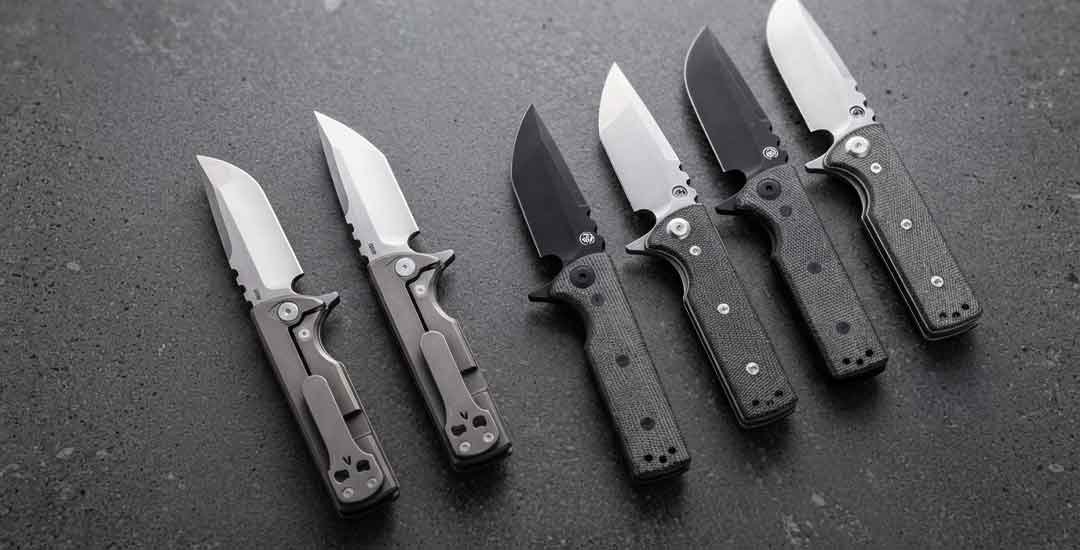
The history of Chaves Knives begins with one maker, basic
![Rated: 15 Best OTF Knives of 2026 [By Category]](https://americanknifedepot.com/wp-content/uploads/2026/09/Featured-Image-7.jpg)
Finding the best OTF knife is less about chasing the
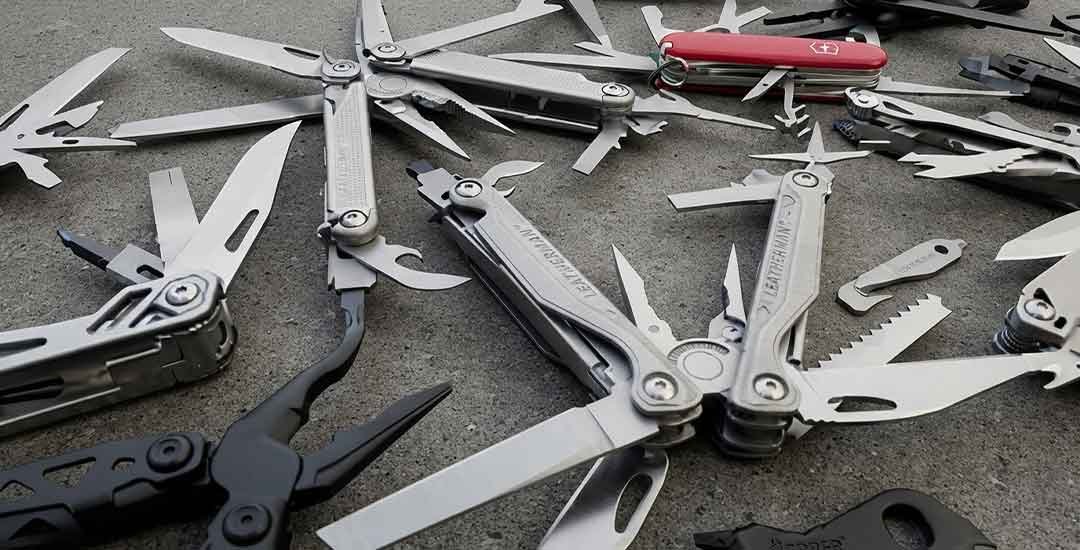
The Leatherman ARC multitool promises premium materials, 20 tools, and

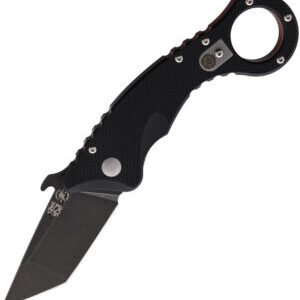

















Civivi nails everyday carry. Smooth action, perfect balance, and clean design. Easily one of the best EDC knives I’ve owned at this price point.