



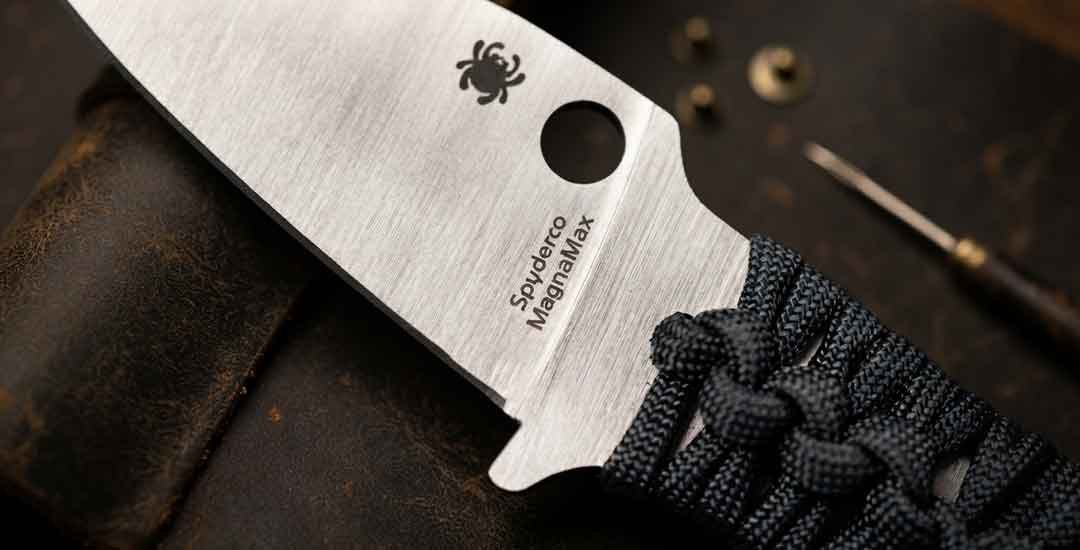
MagnaMax Steel – Everything You Need to Know
MagnaMax is a notable new knife steel that has been

Few names carry as much weight in American knife collecting as Remington. The Remington Bullet Knife isn’t just a pocketknife — it’s a living piece of American cutlery history. From the Bridgeport, Connecticut, plant floors of 1919 to the 2026 release of the Remington Bullet Knife, this series has outlasted economic crashes, world wars, and shifting manufacturing landscapes.
Whether you’re a seasoned collector hunting a vintage Remington Bullet Knife, researching the complete Remington knife catalog, or simply curious about what makes these bullet knives so special — this guide covers everything worth knowing.
Most people associate Remington with firearms. But in 1919, the company made a bold move into cutlery, setting up a large-scale operation at its Bridgeport, Connecticut, plant. This wasn’t a side project. Remington invested heavily — hiring hundreds of skilled workers, building dedicated facilities, and launching one of the most ambitious cutlery catalogs any American manufacturer had ever produced.
By the mid-1920s, the Remington cutlery division was turning out millions of knives annually. The Remington knife catalog covered patterns for farmers, hunters, tradespeople, and everyday users. Traditional pocketknives, folding knives, sporting knives — the range was staggering.
The Bridgeport production operation was genuinely impressive for its era. Hundreds of workers produced knives across dozens of patterns simultaneously. In sheer output and variety, Remington’s cutlery operation rivaled any American maker of the period — including long-established names that had been in the business for decades.
The early Remington pocketknives served working America. Farmers needed reliable barn knives. Hunters wanted durable field blades. Tradesmen carried everyday utility knives built to last. Remington’s knife manufacturing answered every one of those needs with purpose-built patterns that combined high-quality carbon steel with traditional handle materials.
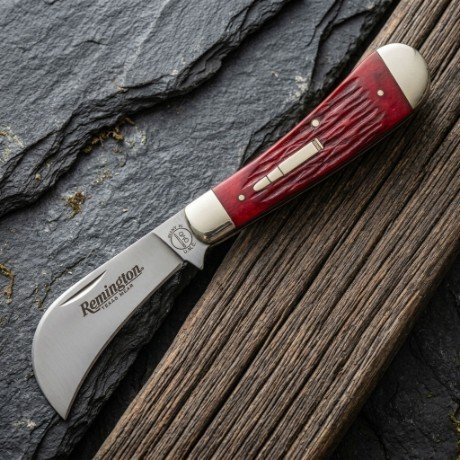
Within Remington’s broad lineup, certain Premium sporting knives carried something distinctive — a small shield shaped like a rifle cartridge. That cartridge shield became the defining mark of what collectors now call Bullet Knives. It wasn’t purely decorative. The bullet shield signaled higher-grade construction, better materials, and knives built to perform under demanding real-world conditions.
The Remington Bullet Knifeshield’s meaning runs deeper than aesthetics. It connected these knives directly to Remington’s firearms heritage — a subtle but powerful statement about quality and purpose.
Introduced in 1922, the R1123 Jumbo Trapper was the first true knife Remington collectors consider a genuine Bullet Knife. This large-frame, two-blade jack knife carried a clip-point master blade and a spey blade — exactly what hunters and outdoorspeople needed for field dressing, barnyard chores, and general outdoor work.
What made the R1123 Jumbo Trapper stand out:
That combination of rugged construction and recognizable knife line made the Jumbo Trapper an instant classic in the American knife world.
Remington didn’t cut corners on their Bridgeport-made knives. The high-quality carbon steel blades held a sharp edge and responded well to field sharpening. Traditional handle materials ranged from jigged bone and cocobolo to various woods that aged beautifully with use. The solid spring tension gave these knives a satisfying, confident snap — something working users and collectors still talk about today.
Through the late 1920s and into the 1930s, Remington expanded the bullet shield across new knife patterns. Lockback knives, smaller trappers, muskrat knives, camp knives, and a long toothpick pattern all carried the Premium knife shield at various points.
Each pattern served a distinct purpose:
These classic American knives from the golden era of Remington cutlery production remain among the most sought-after pieces in traditional knife collecting today. The Bridgeport-made knives in his window represent authentic American knife-making craftsmanship at its absolute peak.
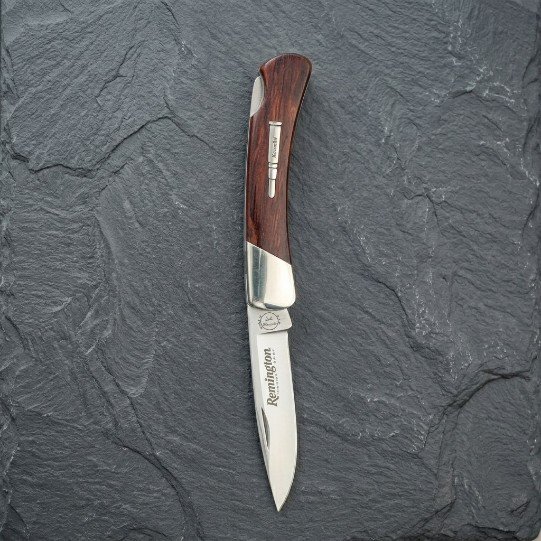
The Great Depression hit American manufacturing hard. Remington’s cutlery operation, despite its scale and reputation, couldn’t survive the prolonged economic pressure. In 1940, Remington sold its cutlery machinery and remaining components to Pal Cutlery — effectively ending the Reraof production at the Remingtonport plant.
Pal Cutlery assembled a small number of knives from leftover Remington parts, but these transitional pieces marked the end of an era. The original Remington cutlery division was permanently closed.
Among serious collectors, “true Remington production” refers specifically to Bridgeport-made knives produced between 1919 and 1940. The Remington 1919 to 1940 knives represent the gold standard in vintage Remington knife collecting. Here’s why:
“A genuine pre-1940 Remington Bullet Knife isn’t just a collectible — it’s irreplaceable American manufacturing history.”
The value of Remington Bullet Knives climbs sharply for original Remington Bullet Knives from the Bridgeport era. Condition matters enormously. An unused vintage Remington Bullet Knife with original packaging can fetch multiples of what a used example commands. Remington Bullet Knife rarity increases with age — these knives are over 80 years old, and genuinely pristine examples grow scarcer every year.
Decades passed. Then, in 1982, Remington brought the Bullet Knife back through a licensed knife-production model — partnering with established American knife manufacturers to produce annual releases honoring the original Bridgeport patterns.
The Remington 1982 Bullet Knife series launched with the R1123 Trapper — a deliberate callback to the original 1922 design. That choice set the tone for everything that followed. The annual Bullet Knife series became a genuine tradition in American knife collecting, continuing through today’s 2026 Remington Bullet Knife release.
Camillus Remington Bullet Knives defined the series’ modern era. Camillus handled production for over two decades — the longest run of any manufacturer — and established the collector rhythm that still drives the series today.
Complete Camillus era highlights:
| Year | Model | Knife Name | Edition |
| 1982 | R1123 | Trapper | Standard |
| 1983 | R1173 | Baby Bullet | Standard |
| 1984 | R173 / R1303 | Baby Bullet Lockback / Bullet Lockback | Standard |
| 1985 | R4353 | Woodsman | Standard |
| 1986 | R1263 | Hunter | Standard |
| 1987 | R1613 | Fisherman | Standard |
| 1988 | R4466 | Muskrat | Standard + Silver Bullet debut |
| 1989 | R1128 | Trapper | Standard + Silver |
| 1990 | R1306 | Tracker | Standard + Silver |
| 1991 | R1178 | Mini-Trapper | Standard + Silver |
| 1992 | R1253 | Guide | Standard + Silver + 10th Anniversary |
| 1993 | R4356 | Bush Pilot | Standard + Silver |
| 1994 | R4243 | Camp | Standard + Silver |
| 1995 | R1273 | Master Guide | Standard + Silver |
| 1996 | R2843 / R3843 | Bullet Shield / Round Shield | Standard |
| 1997 | R4468 | Lumberjack | Standard + 15th Anniversary |
| 1998 | R293 | Hunter-Trader-Trapper | Standard + Silver |
| 1999 | R103 | Ranch Hand | Standard + Silver |
| 2000 | R1630 | Navigator | Standard + Silver + Anniversary |
| 2001 | R1615 | Mariner | Standard |
| 2002 | R295T | Apprentice | Standard + Silver + 20th Anniversary |
| 2003 | R1178C | Pioneer | Standard |
| 2004 | R103B | Old Reliable | Standard |
| 2005 | R4353 | Maverick | Standard |
The Remington Silver Bullet Knife series launched in 1988 alongside the standard annual release — giving collectors two distinct versions each year. The R4466 Muskrat kicked off that tradition, and it hasn’t stopped since.
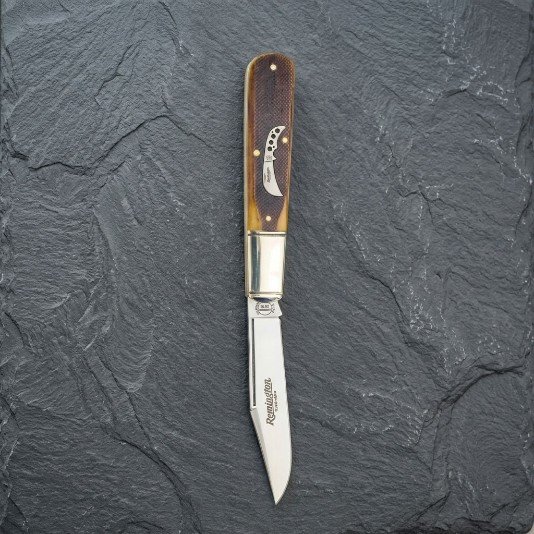
Bear & Son Remington Bullet Knives took the series in a bold new direction starting in 2006. New patterns, richer handle materials, and the introduction of Damascus blade options significantly elevated collector appeal.
Full Bear & Son release list:
| Year | Model | Knife Name | Notable Feature |
| 2006 | R1273SB | Trail Boss | First Bear & Son release |
| 2007 | R1373 | Renegade | 25th Anniversary edition |
| 2008 | R473 | Veteran | Classic two-blade pattern |
| 2009 | R18986 | Big Daddy Barlow | Fan-favorite Barlow pattern |
| 2010 | R18995 | Double Strike Copperhead | Distinctive copperhead pattern |
| 2011 | R18965 | Lock, Stock & Barrel | Lockback pattern |
| 2012 | R18948 | Old Faithful | 30th Anniversary edition |
| 2013 | R19145 | Forester | Traditional outdoor pattern |
| 2014 | R19148 | Forester Jr. | Compact Forester variant |
| 2015 | R11000/R11001/R11002 | The Cliffhanger | Amber Jig Bone, Damascus, India Stag Horn |
| 2016 | R11035/R11039/R11040 | The Boss | Amber Jig Bone, Damascus, India Stag Horn |
| 2016 | R11036 | Ranch Hand | 200th Anniversary edition |
| 2017 | R11041/R11042/R11043 | Small Texas Toothpick | Brown Sawcut Bone, Powderhorn, Indian Stag Horn |
| 2017 | R11044 | Hunter-Trader-Trapper | 35th Anniversary edition |
The Bear & Son years introduced Amber Jig Bone, Brown Sawcut Bone, India Stag Horn, and Damascus blade variants that gave collectors genuinely Premium handle and blade options. These bone- and stag-handled knives from this era are particularly desirable in today’s collectible knife market.
Buck Remington Bullet Knives brought precision manufacturing and distinctive material choices to the series during their three-year run:
| Year | Model | Knife Name | Handle Material |
| 2018 | R50013 | Bay Mustang | Standard |
| 2018 | R50014 | Sterling Elk | Silver Bullet edition |
| 2019 | R50032 | Green Wood | Green Wood handle |
| 2019 | R50033 | Ivory Paper Micarta | Ivory Paper Micarta handle |
| 2020 | R50036 | Stockman | Green Wood handle |
| 2020 | R50037 | Stockman | Ivory Paper Micarta handle |
The Micarta-handled knives and wood-handled knives from the Buck era bring a distinctly modern feel to classic Remington knife patterns. The Stockman knife pattern in particular introduced a three-blade option that expanded the series beyond its traditional two-blade roots.
Great Eastern Cutlery Remington Knives represent the current gold standard for the series. GEC is one of America’s most respected traditional pocketknife manufacturers — their reputation for craftsmanship makes every GEC Remington Bullet Knife release a genuine collector event.
Complete GEC releases:
| Year | Model | Knife Name | Edition |
| 2021 | R7352 | Prospector Baby Bullet | Standard |
| 2022 | RERB44 | Bullet Barlow | Standard |
| 2022 | R9511 | The Cowboy Granddaddy Barlow | 40th Anniversary |
| 2023 | R693 | The One That Got Away Hawkbill | Standard |
| 2023 | R693SB | The One That Got Away Hawkbill | Silver Bullet |
| 2024 | R15696 | The Waterfowler | Standard |
| 2025 | R15697 | Ole Granddad | Standard |
| 2026 | R15698 | King of the Mountain | Standard |
| 2026 | R1342SB | In The Hunt | Silver Bullet |
The Prospector Baby Bullet, Bullet Barlow, and Granddaddy Barlow patterns showcase GEC’s deep respect for traditional American pocketknives. The Hawkbill knife in 2023 was a particularly bold pattern choice — and collectors responded enthusiastically.
The 2026 Remington Bullet Knife continues the GEC era with two strong offerings that uphold everything the series stands for.
Built by Great Eastern Cutlery, the King of the Mountain carries the traditional pocketknife DNA collectors expect. Solid construction, quality blade steel, and that unmistakable cartridge shield — this is exactly what a Remington Bullet Knife should feel like in hand.
The 2026 Remington Silver Bullet Knife, dubbed “In The Hunt”, delivers the Premium companion piece that the Silver Bullet Knife series has always represented. Together, these two 2026 releases make a compelling case for why the annual series continues to attract both new collectors and long-time followers.
“The 2026 Remington Bullet Knife release proves that after more than four decades of modern production, the series hasn’t lost a single step.”
The Remington Silver Bullet Knives series launched in 1988 alongside the standard annual release. Here’s what sets Silver editions apart:
The most sought-after Remington Silver Bullet Knife models among serious collectors include the early Camillus-era releases from 1988 through 1995 — particularly the R4466SB Muskrat, R1128SB Trapper, and R1253SB Guide.
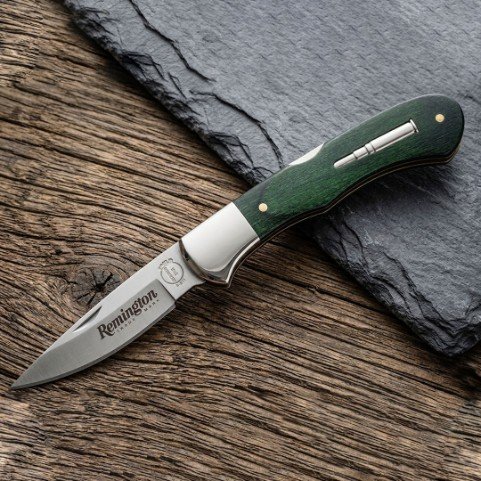
Anniversary editions add a meaningful layer to Remington Bullet Knife collecting. Here’s every milestone release:
| Anniversary | Year | Knife | Manufacturer |
| 10th | 1992 | R1123-A Trapper | Camillus |
| 15th | 1997 | R4468 Lumberjack | Camillus |
| 20th | 2002 | R1123G Trapper | Camillus |
| 25th | 2007 | R1123 + R1128 Trapper | Bear & Son |
| 30th | 2012 | R1123 + R1128 Trapper | Bear & Son |
| 35th | 2017 | R11044 Hunter-Trader-Trapper | Bear & Son |
| 40th | 2022 | R9511 Granddaddy Barlow | GEC |
| 200th | 2016 | R11036 Ranch Hand | Bear & Son |
Remington anniversary Bullet Knife editions consistently outperform standard releases in long-term collector value. The Remington 40th Anniversary Bullet Knife — the Granddaddy Barlow — is already drawing serious attention in the secondary market.
Spotting a true pre-1940 Remington knife requires attention to detail. Key identification markers:
Handle material tells a story. Here’s a quick reference:
| Handle Material | Era | Collector Desirability |
| Jigged Bone | 1919–1940 + modern | Very High |
| Cocobolo Wood | 1919–1940 | Extremely High |
| Amber Jig Bone | Bear & Son era | High |
| Brown Sawcut Bone | Bear & Son era | High |
| India Stag Horn | Bear & Son era | Very High |
| Indian Stag Horn | Bear & Son era | Very High |
| Ivory Paper Micarta | Buck era | Moderate-High |
| Green Wood | Buck era | Moderate |
| Damascus | Bear & Son era | Very High |
Several factors determine the Remington Bullet Knife collector value:
Looking to start or expand your Remington collection? American Knife Depot carries collector-grade knives across 60+ categories with over 13,000 products and free shipping on orders over $300.
| Manufacturer | Years | Strengths | Collector Appeal |
| Camillus | 1982–2005 | Consistency, pattern variety, longest run | Strong — early releases especially |
| Bear & Son | 2006–2017 | Material variety, Damascus options, bold patterns | Very Strong |
| Buck | 2018–2020 | Precision manufacturing, Micarta options | Moderate-Strong |
| GEC | 2021–Present | Traditional craftsmanship, authentic feel | Extremely Strong |
Beyond the year, look for:
Absolutely. GEC Remington Bullet Knives currently command the strongest premiums among modern releases. Early Camillus-made Remington knives from 1982 through 1988 also hold exceptional value — especially in uncarried condition with original packaging.
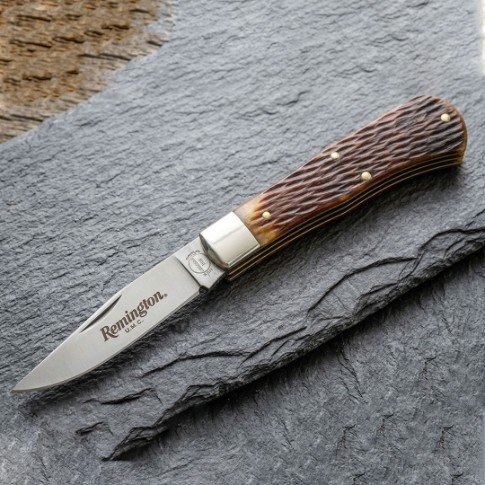
Here’s the truth — the Remington Bullet Knife series has survived over a century because it earns its place in every serious collection. It bridges the gap between field-ready pocketknife and genuine collector-valued knife without compromising either identity.
Hunters carry them afield. Collectors display them proudly. Knife historians study them for what they reveal about American cutlery history. The annual knife release model has created a living tradition that connects today’s collectors directly to the Remington production era of the 1920s and 1930s.
Whether you’re chasing a vintage Remington Bullet Knife from the Bridgeport era or following each modern Remington Bullet Knife release from GEC — you’re participating in one of America’s finest and most enduring knife traditions.
What is the most valuable Remington Bullet Knife?
Pre-1940 Bridgeport-made knives in near-mint condition command the highest prices. Among modern Remington Bullet Knives, early Camillus-era releases and Damascus editions from Bear & Son attract serious collector premiums.
How many Remington Bullet Knives have been made?
The annual Bullet Knife series has produced releases every year since 1982 — that’s over 40 standard releases plus Silver Bullet editions, anniversary editions, and handle variants. Including all variations, well over 80 distinct Remington Bullet Knife models exist in the modern series alone.
What’s the difference between a Bullet Knife and a Silver Bullet Knife?
The Remington Silver Bullet Knife is the Premium companion release — typically featuring upgraded handle materials, enhanced finishes, or lower production numbers compared to the standard annual release.
Are modern licensed Remington knives worth collecting?
Absolutely — especially GEC Remington Bullet Knives. Great Eastern Cutlery’s reputation for traditional American pocketknives makes every release genuinely collectible and historically significant.
Who makes the 2026 Remington Bullet Knife?
Both the R15698 King of the Mountain and the R1342SB In The Hunt Silver Bullet edition come from Great Eastern Cutlery — continuing the GEC era that began in 2021.
What does the cartridge shield mean on a Remington knife?
The Remington Bullet Knife shield’s meaning connects directly to Remington’s firearms heritage. The rifle cartridge shield shape originally signified premium-grade construction — higher-quality steel, better handle materials, and superior craftsmanship within Remington’s broader lineup.
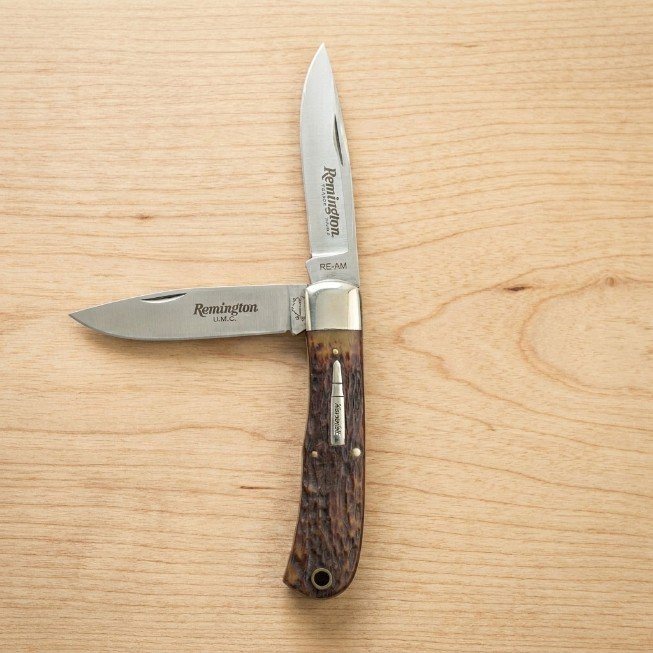
From the Remington Bridgeport plant floors of 1919 to the GEC workshop producing the 2026 Remington Bullet Knife, this series tells a story no other American pocketknife line can match. The cartridge shield has represented quality, tradition, and genuine craftsmanship through every decade it’s appeared — surviving a world war, economic depression, manufacturing upheaval, and changing collector tastes without losing its identity.
The Remington Bullet Knife timeline runs from the original R1123 Jumbo Trapper of 1922 through today’s King of the Mountain — over a century of classic American knives built for people who use and appreciate real blades.
For collectors ready to explore Remington knives alongside thousands of other Premium American-made pocketknives and collector-grade pieces, American Knife Depot is your go-to source. With over 13,700 verified customer reviews, a 4.8-star rating, competitive pricing, and a curated selection across 60+ knife categories — it’s the most trusted online destination for serious knife buyers across the United States.
Ready to add a Remington Bullet Knife to your collection? Shop American Knife Depot today — sharp gear, real value, built for those who demand the best—free shipping on orders over $300.
MagnaMax is a notable new knife steel that has been
The history of Chaves Knives begins with one maker, basic
![Rated: 15 Best OTF Knives of 2026 [By Category]](https://americanknifedepot.com/wp-content/uploads/2026/09/Featured-Image-7.jpg)
Finding the best OTF knife is less about chasing the
The Leatherman ARC multitool promises premium materials, 20 tools, and



















Civivi nails everyday carry. Smooth action, perfect balance, and clean design. Easily one of the best EDC knives I’ve owned at this price point.