
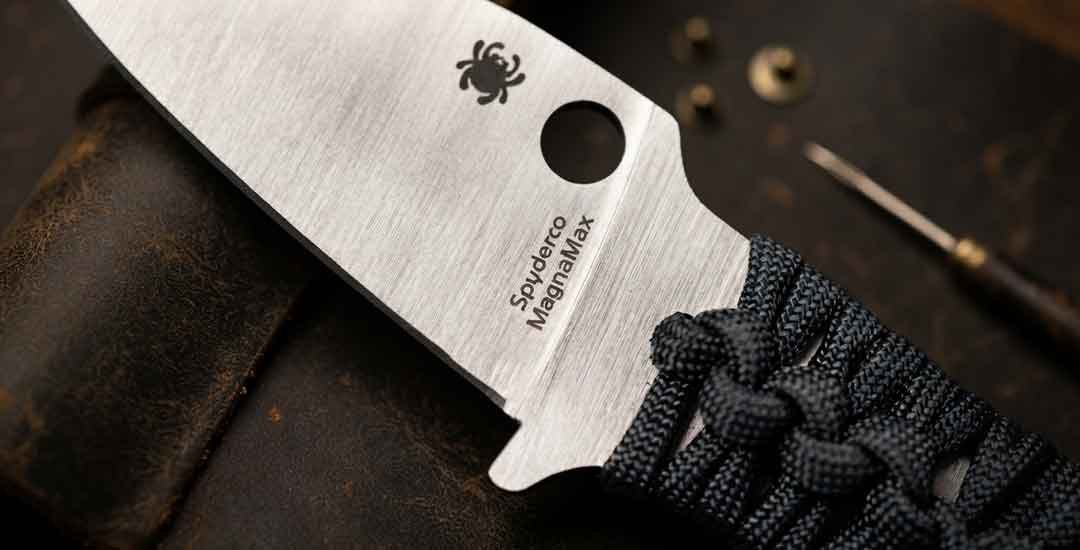
MagnaMax Steel – Everything You Need to Know
MagnaMax is a notable new knife steel that has been
If you’ve ever shopped for an affordable EDC knife, chances are you’ve already held a blade made from 8Cr13MoV steel — you just didn’t know it. This Chinese stainless steel quietly powers some of the best budget knives on the market. Brands like Kershaw, Spyderco, and CRKT trust it. Beginners love it. Even seasoned collectors keep at least one 8Cr13MoV blade in rotation.
So is 8Cr13MoV good steel? Absolutely — when you understand what it’s built for.
Before 8Cr13MoV arrived on the scene, budget knife steel was a genuine gamble. You’d either get something embarrassingly soft or a blade that chipped under moderate pressure. This Chinese stainless steel changed that entirely.
Developed in China and modelled closely after Japan’s AUS-8, 8Cr13MoV delivers a surprisingly balanced performance profile at a fraction of the cost of Premium steels. It sits firmly in the entry-level knife steel category — but “entry-level” doesn’t mean inferior. It means accessible, practical, and genuinely useful for daily tasks.
The name itself tells you everything about the alloy:
It’s a naming convention built on transparency. Every alloying element earns its place in this steel alloy composition.
Short answer: yes. For everyday carry tasks — opening packages, cutting rope, light food prep, cardboard cutting — 8Cr13MoV knife steel performs reliably without demanding constant maintenance. It won’t outperform S30V or VG-10, but it won’t drain your wallet either.
Understanding blade steel properties starts at the molecular level. Here’s the complete steel composition chart for 8Cr13MoV stainless steel:
| Element | Percentage | Role |
| Carbon | 0.7–0.8% | Hardness & strength |
| Chromium | 13–14.5% | Corrosion resistance |
| Molybdenum | 0.1–0.3% | Toughness & grain refinement |
| Vanadium | 0.1–0.25% | Wear resistance |
| Manganese | 1% | Hardenability |
This high-carbon stainless steel features a chromium-rich composition — enough chromium to earn its stainless designation while maintaining respectable hardness across a broad range of applications.
At 0.7–0.8% carbon, this steel hits the sweet spot for affordable blade steel. Enough carbon for hardness and edge stability, but not so much that toughness suffers. Compare this to 1095 steel at ~0.95% carbon — 1095 is harder but far more prone to rust without diligent maintenance.
The 13–14.5% chromium content earns 8Cr13MoV its stainless designation. Chromium forms a passive oxide layer on the blade surface, delivering solid corrosion protection against everyday moisture and humidity. Worth noting — stainless doesn’t mean rustproof. Neglect it in saltwater environments, and surface rust will appear.
Molybdenum enhances toughness and significantly refines the grain structure. Vanadium further enhances wear resistance and promotes chromium carbide formation — microscopic hard particles that improve edge-holding ability and overall cutting geometry. Together, these alloying elements elevate 8Cr13MoV well above basicCr133 steel grades.
Quick Fact: 3Cr13MoV steel contains roughly half the carbon of 8Cr13MoV steel — making it noticeably softer, less capable of holding a sharp edge, and a significant step down in overall knife steel performance.
Many budget knives use 3Cr13MoV steel instead of 8Cr13MoV. The difference matters:
| Property | 8Cr13MoV | 3Cr13MoV |
| Carbon Content | 0.7–0.8% | 0.25–0.35% |
| Hardness (HRC) | 56–59 | 48–52 |
| Edge Retention | Moderate | Poor |
| Sharpening Ease | Excellent | Very Easy |
| Overall Quality | Good budget steel | Entry-level only |
8Cr13MoV wins decisively. 3Cr13MoV steel is best suited to inexpensive novelty knives — not reliable daily carriers.
After proper heat treatment, 8Cr13MoV lands between 56–59 HRC on the Rockwell Hardness Scale. That’s moderate hardness — firm enough to hold a sharp edge through daily tasks, soft enough to resharpen quickly with basic tools.
Breaking it down further:
For reference:
Honestly? 8Cr13MoV edge retention is decent — not exceptional. Expect solid sharpness retention through light to medium-duty cutting tasks before needing a touch-up. Heavy daily users sharpening weekly shouldn’t be surprised.
The upside? Resharpening is genuinely effortless. A simple ceramic rod or budget whetstone brings the edge back fast. That’s a significant advantage for anyone who values sharpening convenience over marathon edge-holding sessions.
Yes — within reason. 8Cr13MoV toughness handles everyday stress confidently. It resists chipping under normal use, withstands moderate impacts, and offers solid break resistance compared to harder steels rated at 61+ HRC. It’s not a batoning steel — but for pocket knives and EDC blades, the impact resistance is more than adequate for household and outdoor cutting tasks.
This question tops every 8Cr13MoV search query — and the answer surprises people. 8Cr13MoV corrosion resistance is genuinely solid for a budget-friendly knife steel. It handles humidity, light moisture, and everyday exposure without issues.
However, saltwater exposure, prolonged moisture contact, or storage in humid environments without maintenance will produce surface rust. Simple blade maintenance eliminates this risk. Wipe it dry. Apply light oil occasionally. Done.
This is where 8Cr13MoV truly separates itself from the competition. Easy-to-sharpen steel at this price point is genuinely rare. You don’t need expensive equipment or specialised skills. A basic whetstone, ceramic rod, or quality pocket sharpener all work beautifully. Field sharpening during a camping trip? Completely effortless.
The balance between corrosion resistance and sharpenability makes this steel a compelling choice for beginner-friendly knife applications.
| Property | Rating (1–10) | Notes |
| Edge Retention | 6/10 | Good for budget tier |
| Toughness | 7/10 | Handles daily stress well |
| Corrosion Resistance | 7/10 | Stainless — not rustproof |
| Sharpening Ease | 9/10 | Beginner-friendly |
| Hardness | 6.5/10 | 56–59 HRC |
| Wear Resistance | 6/10 | Moderate |
8Cr13MoV originates from Chinese steel mills — primarily produced to deliver an affordable alternative to Premium steels without sacrificing the fundamental performance properties that knife users demand. The result is a mid-range knife steel that punches well above its price bracket when manufactured correctly.
Here’s something most budget steel guides completely skip: heat treatment quality matters more than composition alone. Two knives made from identical 8Cr13MoV blade steel can perform completely differently depending on how the heat treatment is executed.
Reputable brands like Kershaw and Spyderco invest in precise heat-treatment protocols, consistently achieving 57–59 HRC. Cheaper unbranded knives made from the same steel often end up at 54–56 HRC due to inconsistent processes. That hardness gap directly impacts edge retention, wear resistance, and long-term blade performance.
Always buy 8Cr13MoV from established brands. Heat treatment quality separates a reliable folding knife from a genuinely frustrating one.
Quality 8Cr13MoV features a fine-grain structure supported by chromium carbides distributed evenly throughout the blade. This carbide structure directly influences both edge stability and cutting geometry. Inconsistent manufacturing disrupts this distribution — producing soft spots, uneven hardness, and unpredictable edge behaviour.
These two steels are practically twins. Both share nearly identical knife steel composition, similar HRC ratings, and comparable real-world performance. Key differences:
| Property | 8Cr13MoV | AUS-8 |
| Origin | China | Japan |
| Carbon | 0.7–0.8% | 0.7–0.75% |
| Chromium | 13–14.5% | 13–14.5% |
| Nickel | None | 0.49% |
| Edge Retention | Good | Slightly better |
| Sharpening Ease | Excellent | Excellent |
| Cost | Lower | Slightly higher |
AUS-8 edges ahead marginally in edge retention thanks to nickel content. But as an AUS-8 alternative for budget buyers, 8Cr13MoV delivers exceptional value that’s hard to argue against.
| Steel | Edge Retention | Toughness | Corrosion Resistance | Sharpenability | Cost |
| 8Cr13MoV | Moderate | Good | Good | Excellent | Low |
| D2 | Very Good | Moderate | Fair | Difficult | Medium |
| S30V | Excellent | Good | Excellent | Moderate | High |
| VG-10 | Very Good | Moderate | Very Good | Good | Medium-High |
| 420HC | Moderate | Good | Very Good | Excellent | Low |
| 440C | Good | Moderate | Good | Good | Medium |
| AUS-8 | Good | Good | Good | Excellent | Low-Medium |
| 1095 | Good | Excellent | Poor | Easy | Low |
| 5160 | Moderate | Excellent | Poor | Easy | Low |
D2 sits at 60–62 HRC — a semi-stainless tool steel that holds an edge significantly longer. However, it’s harder to sharpen, more brittle under lateral stress, and noticeably lesscorrosion-resistantt. For heavy-duty cutting, D2 wins. For everyday carry convenience and low-maintenance daily use, 8Cr13MoV wins decisively.
420HC is a direct competitor — similar hardness, similar ease of sharpening, comparable corrosion resistance. 440C edges ahead in edge retention and hardness but costs more. For pure value, 8Cr13MoV matches or beats both in budget knife applications.
For casual users handling everyday cutting tasks — no. For serious collectors, professional users, or anyone demanding elite edge retention — yes. The price gap between 8Cr13MoV and Premium steels like S30V is substantial. Know your needs before upgrading.
This steel thrives in specific roles. Here’s where it genuinely excels:
Avoid using 8Cr13MoV for batoning wood, heavy prying, or Survival tasks demanding extreme toughness. That’s where 5160 steel or 1095 steel genuinely earns its reputation.
The Kershaw Natrix XL is a standout everyday carry knife built around a 3.75-inch 8Cr13MoV blade with a black oxide finish for enhanced durability. KVT ball bearings deliver buttery-smooth deployment via the flipper tab. The 3D-machined black G-10 handle provides a slip-resistant grip that holds firm under hard use. At 4.1 ounces with a deep-carry reversible pocket clip and sub-frame lock, this is a serious daily carrier at a genuinely budget-friendly price.
Key Specs:
Best for: Daily carry, utility cutting, value-focused buyers
Shop the Kershaw Natrix XL at American Knife Depot
The Spyderco Persistence proves that 8Cr13MoV Spyderco builds are zero compromise. A 2.77-inch drop-point blade with a clean satin finish, Spyderco’s signature thumb hole for smooth one-handed opening, and a four-position stainless steel pocket clip make this a premium-feeling knife at a budget price. The liner lock and black G-10 handle complete a package weighing just 3.7 ounces.
Key Specs:
Best for: Compact EDC, beginners, Spyderco fans on a budget
Designed by renowned knifemaker Alan Folts, the CRKT S.P.I.T. (Small Pocket Inverted Tanto) delivers an inverted tanto blade with dual stonewash and satin finish in a 5.48-inch package weighing just 1.9 ounces. The orange G-10 handle ensures high visibility and a confident, slip-resistant grip, while full-tang construction adds durability that belies its compact size. The thermoplastic sheath makes daily carrying effortless.
Key Specs:
Best for: Compact fixed blade carry, outdoor tasks, minimalist users
Proper blade maintenance dramatically extends both performance and lifespan. Follow these straightforward steps:
Here’s the straight answer: yes, 8Cr13MoV is genuinely good steel — for the right applications and the right buyer.
It won’t dethrone S30V or VG-10 in a performance shootout. But for everyday carry, kitchen use, folding knives, and casual outdoor tasks, this affordable blade steel delivers real value that beginners and budget-conscious buyers genuinely appreciate. The balance of hardness, toughness, corrosion resistance, and ease of sharpening makes it one of the most practical knife steels available today.
The real secret? Buy from reputable brands that invest in proper heat treatment. A well-executed 8Cr13MoV blade from Kershaw or Spyderco outperforms a poorly heat-treated Premium steel every single time.
Whether you’re buying your first EDC knife or adding a dependable workhorse to your collection, American Knife Depot carries an extensive selection of 8Cr13MoV knives across the industry’s most trusted brands — all backed by competitive pricing, 13,700+ verified customer reviews, and free shipping on orders over $300.
Explore the full knife collection at American Knife Depot — Sharp Gear, Real Value.
Absolutely. Its ease of sharpening, moderate hardness, and affordable price make it the ideal entry-level knife steel for anyone new to collecting or to everyday carry.
Not under normal conditions. Routine blade maintenance — keeping it dry and lightly oiled — effectively prevents rust, even in moderately humid environments.
3Cr13MoV steel contains significantly less carbon, making it softer and far less capable of holding a sharp edge. 8Cr13MoV is the clear, decisive upgrade for anyone serious about knife performance.
Typically 56–59 HRC after proper heat treatment — with 57–58 HRC representing the ideal performance sweet spot for most applications.
Kershaw, Spyderco, CRKT, and Cold Steel all produce highly regarded 8Cr13MoV knives trusted by EDC enthusiasts across the United States.
Yes. With 13–14.5% chromium content, it fully qualifies as stainless — though proper maintenance remains essential for long-term corrosion protection and peak blade performance.
420HC closely matches 8Cr13MoV in corrosion resistance and ease of sharpening. 440C edges ahead in hardness and edge retention but costs more. For pure budget value, 8Cr13MoV holds its own confidently against both.
Looking for the best 8Cr13MoV knives from trusted brands? Browse American Knife Depot’s full selection at americanknifedepot.com — over 13,000 products, competitive pricing, and free shipping on orders over $300
MagnaMax is a notable new knife steel that has been
The history of Chaves Knives begins with one maker, basic
![Rated: 15 Best OTF Knives of 2026 [By Category]](https://americanknifedepot.com/wp-content/uploads/2026/09/Featured-Image-7.jpg)
Finding the best OTF knife is less about chasing the
The Leatherman ARC multitool promises premium materials, 20 tools, and











Civivi nails everyday carry. Smooth action, perfect balance, and clean design. Easily one of the best EDC knives I’ve owned at this price point.