
MagnaMax Steel – Everything You Need to Know
MagnaMax is a notable new knife steel that has been

If you’ve spent any serious time in the knife community, you’ve probably heard whispers about CPM-15V. Maybe someone mentioned it in a forum thread about extreme edge retention. Maybe you spotted a Spyderco Sprint Run listing and wondered what makes this steel worth chasing. Either way, you’re in the right place.
This isn’t your average steel overview. We’re going deep — composition, real-world performance, heat treatment, comparisons, and exactly which knives carry this remarkable alloy. By the end, you’ll know precisely whether a CPM-15V knife belongs in your collection.
CPM-15V is a high-vanadium tool steel developed by Crucible Industries — one of America’s most respected speciality steel manufacturers. It sits at the absolute end of the wear resistance spectrum. Nothing in commercial knife steel territory quite matches it.
Crucible developed CPM-15V in the late 1970s as a direct evolution of CPM-10V steel. The goal was straightforward — push wear resistance further than anyone had managed before. However, it didn’t hit the commercial market until around 1990. For years, cold-work tool steel applications in the plastics and wood industries were its only home. Knife makers largely ignored it. The steel was simply too demanding.
So what is CPM steel, exactly? CPM stands for Crucible Particle Metallurgy — a powder metallurgy process that fundamentally changes how steel behaves at the microstructure level.
Here’s the short version. Conventional casting creates uneven carbide distribution — large, irregular clusters that weaken the steel. The CPM process atomises molten steel into fine powder, then compresses and sinters it into a solid billet. The result? A remarkably fine carbide distribution throughout the entire steel matrix.
This matters enormously for CPM15V. Without particle metallurgy, you simply couldn’t add 14.5% vanadium without the steel becoming brittle and unusable. The CPM process makes the impossible possible.
Understanding the properties of CPM-15V steel starts with its chemical composition. Every element plays a specific role.
| Element | Percentage | Primary Role |
| Carbon | 3.4% | Hardness, carbide formation |
| Chromium | 5.25% | Wear resistance, mild corrosion protection |
| Molybdenum | 1.3% | Hardenability, strength |
| Tungsten | 0.4% | Wear resistance, carbide stability |
| Vanadium | 14.5–14.9% | Extreme wear resistance via vanadium carbides |
| Manganese | 0.5% | Hardenability |
| Silicon | 0.9% | Deoxidation, strength |
That vanadium number is staggering. Most high-performance knife steels sit between 3–9% vanadium. CPM-15V nearly doubles that. The result is an enormous carbide volume dominated by vanadium carbides — particles that rank around 2,800 HV on the Vickers hardness scale. For context, chromium carbides sit around 1,600 HV. Vanadium carbides are almost twice as hard. That’s precisely why CPM 15V fine edge holding is in a class of its own.
Thanks to the CPM process, those vanadium carbides distribute evenly throughout the steel microstructure—no weak spots. No clusters. Every section of the blade performs identically. That consistency translates directly into predictable, long-lasting edge stability during abrasive cutting tasks.
Wear resistance is where this blade steel simply dominates. Whether you’re cutting cardboard, rope, or hardwood — materials that devour lesser steels — CPM-15V keeps cutting long after competitors tap out. Industrial tool-life data from the plastics and wood industries consistently confirm this. Tools made from CPM15V outlast conventional alternatives by significant margins in abrasive environments.
15V fine edge holding is arguably the best among commercially available knife steels today. In controlled cutting tests with abrasive materials, 15V consistently outperforms steels such as 90V, S110V, and even M390. For users who prioritise a long-lasting edge over everything else, this is the steel for them. Full stop.
Here’s where honesty matters. CPM-15V has low toughness by knife steel standards. That massive carbide volume, which delivers extreme edge retention, also creates more potential fracture points under lateral stress. Compared to CPM-3V or CPM-M4, the impact toughness is noticeably lower. Tasks involving prying, batoning, or heavy chopping carry real chipping risk. Know your use case before committing.
With only 5.25% chromium content, CPM-15V is firmly a non-stainless knife steel. Stainless steel classification requires a minimum of 13% chromium. This steel will rust in humid environments without proper care. It’s more prone to rust than steels like MagnaCut or M390. That said, regular blade maintenance in dry environments makes it entirely manageable.
Don’t even attempt sharpening this with conventional whetstones. Those vanadium carbides will laugh at aluminium oxide abrasives. You need diamond sharpening stones or CBN sharpening stones exclusively. The grinding difficulty is real — even professional sharpeners find CPM-15V demanding. Budget extra time and use proper equipment.
Pro Tip: Start with a coarse diamond stone around 200–400 grit to reset the edge, then refine with progressively finer grits. Patience pays off massively with this steel.
Heat treatment separates a good CPM-15V knife from a great one. Get it wrong, and you waste the steel’s potential entirely.
Crucible recommends an austenitizing temperature between 1,850 and 1,950°F for CPM-15V. This dissolves sufficient carbon and vanadium into the austenite matrix, setting up the hardness potential. Too low and you leave performance on the table. Too high and you risk grain growth that hurts toughness.
After quenching, cryogenic treatment is non-negotiable for CPM-15V. Subzero treatment converts retained austenite — an unstable microstructure that reduces hardness and edge stability — into martensite. Skipping cryo treatment measurably hurts final Rockwell hardness and edge wear resistance. Don’t skip it.
Tempering temperature typically falls between 400 and 500°F. This relieves internal stress from quenching while preserving hardness. The result is improved structural stability without sacrificing the wear resistance you’re chasing.
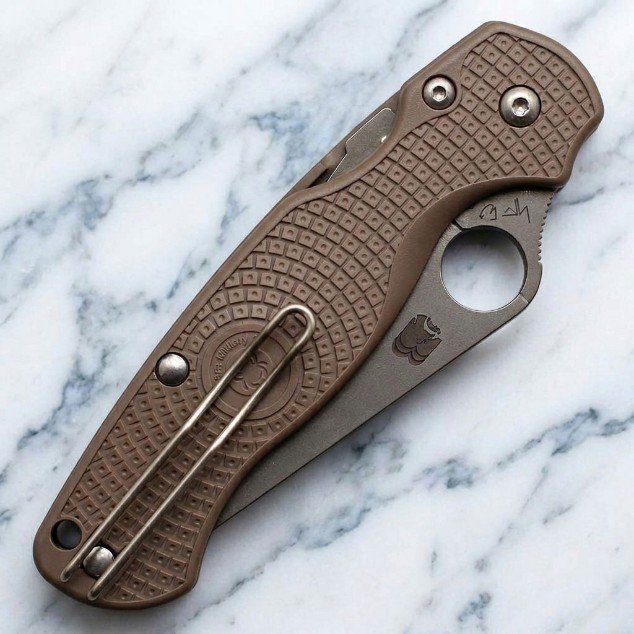
This is where CPM-15V gets genuinely exciting. Shawn Houston — widely known as BBB or Big Brown Bear — developed specialised heat-treat protocols specifically for CPM-15V that push Rockwell hardness levels above 66 HRC. Most production knife steels run between 58–62 HRC. Running 15V at 66+ HRC with the BBB heat treat protocol is extraordinary. Spyderco consistently partners with Houston for their 15V Sprint Run releases, and the results speak for themselves.
| Steel | Edge Retention | Toughness | Corrosion Resistance | Sharpening Difficulty |
| CPM-15V | ★★★★★ | ★★☆☆☆ | ★★☆☆☆ | Very Hard |
| CPM-10V | ★★★★☆ | ★★★☆☆ | ★★☆☆☆ | Hard |
| Bohler K390 | ★★★★☆ | ★★★☆☆ | ★★★☆☆ | Hard |
| Maxamet | ★★★★★ | ★★☆☆☆ | ★☆☆☆☆ | Very Hard |
| Rex 121 | ★★★★★ | ★★☆☆☆ | ★★☆☆☆ | Very Hard |
| Vanadis 8 | ★★★★☆ | ★★★☆☆ | ★★★☆☆ | Hard |
| CPM-M4 | ★★★★☆ | ★★★★☆ | ★★☆☆☆ | Hard |
| CPM-3V | ★★★☆☆ | ★★★★★ | ★★☆☆☆ | Moderate |
| S90V | ★★★★☆ | ★★★☆☆ | ★★★★☆ | Hard |
| S110V | ★★★★☆ | ★★★☆☆ | ★★★★☆ | Hard |
| D2 Tool Steel | ★★★☆☆ | ★★★☆☆ | ★★★☆☆ | Moderate |
CPM-10V steel was the direct predecessor. CPM-15V pushes vanadium content from roughly 9.75% to nearly 14.9% — a substantial jump that translates into meaningfully better abrasion resistance and edge retention. The tradeoff is slightly lower toughness and even greater sharpening difficulty. If 10V steel already challenges your sharpening setup, 15V will test your patience further.
K390 vs 15V is a fascinating matchup. K390 offers slightly greater toughness and marginally improved corrosion resistance thanks to its higher chromium content. However, in pure edge retention, 15V vs K390 decisively ffavoursCPM-15y. K390 is arguably the more practical choice for a daily user. CPM-15V is the dedicated specialist.
Maxamet, Rex 121, and Vanadis 8 steel are CPM-15V’s closest rivals in the extreme-wear-resistance category. All demand diamond abrasives for sharpening. All carry low toughness tradeoffs. The differences at the cutting-edge level are genuinely marginal. What separates CPM-15V from the pack is availability — Spyderco’s consistent use gives it the strongest presence in production knife form by a wide margin.
If corrosion resistance is important for your use case, S90V and S110V deserve consideration. Both deliver excellent edge retention with meaningfully better rust resistance than CPM-15V. However, neither matches CPM-15V’s raw wear resistance at the cutting edge. It’s a tradeoff between edge longevity and maintenance convenience.
D2 tool steel is a popular semi-stainless workhorse. Compared to CPM-15V, it’s a completely different league. D2 offers balanced toughness and decent wear resistance for everyday tasks. CPM-15V absolutely dominates D2 in edge retention. If you’re debating between them for abrasive cutting work, CPM-15V wins without question.
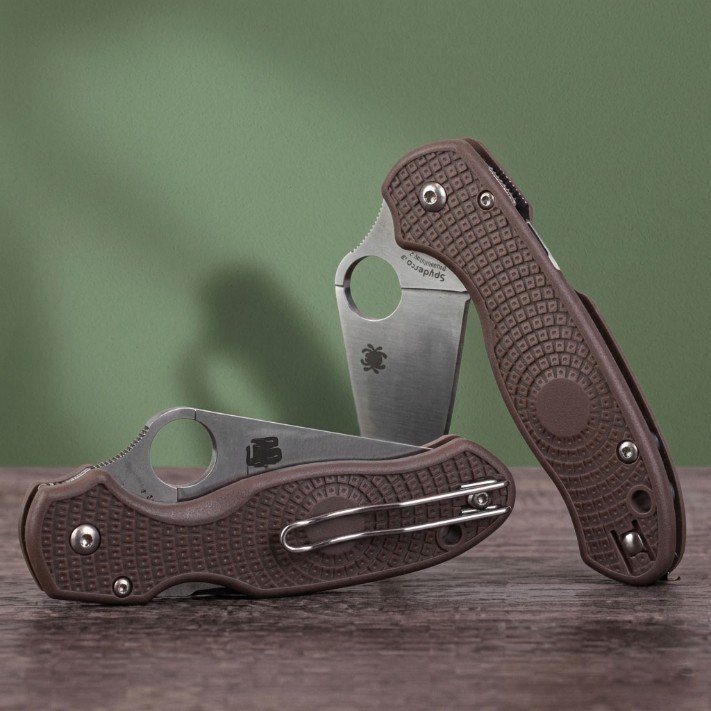
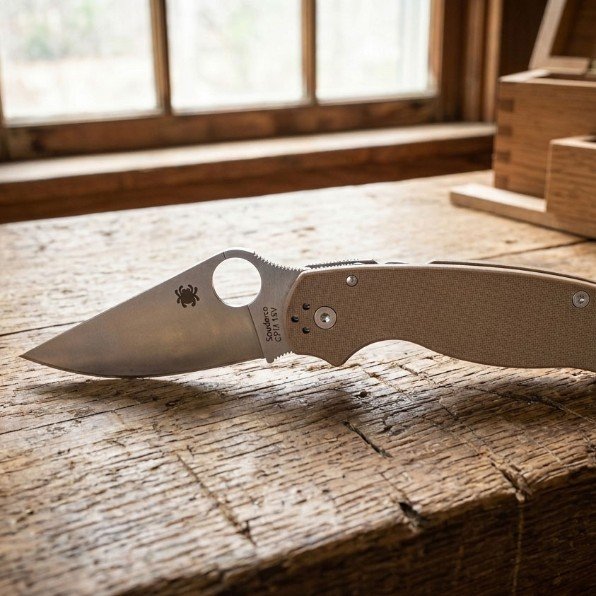
No conversation about CPM 15V knives is complete without Spyderco. They championed this steel before anyone else in the knife world took it seriously.
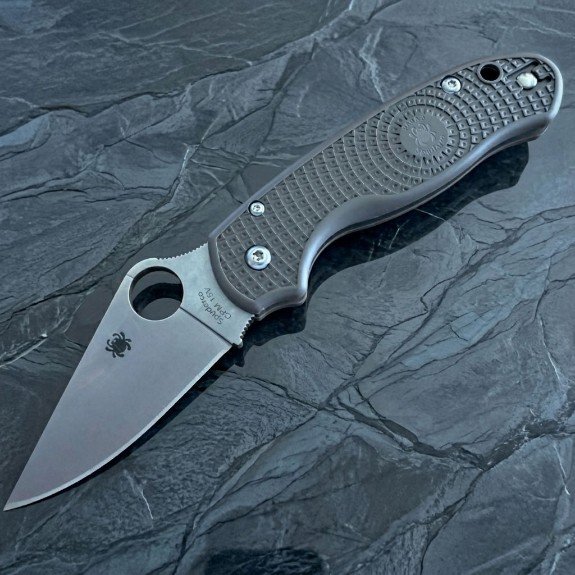
Spyderco Sprint Run knives exist specifically to explore speciality steels outside the standard production lineup. CPM-15V fits that mission perfectly — extreme performance for users who understand exactly what they’re getting. Paired with BBB’s heat treatment protocols, Spyderco CPM-15V releases consistently generate serious excitement among collectors and performance-focused users alike.
Spyderco 15V HRC hardness on these Sprint Runs frequently exceeds 66 HRC thanks to the BBB heat treatment — a number that would be remarkable in any production knife steel context.
Hunting for Spyderco CPM-15V Sprint Run knives? American Knife Depot carries a curated selection of Premium speciality knives, including hard-to-find sprint run models. Browse over 13,000 products from America’s most trusted brands — with competitive pricing and free shipping on orders over $300.
CPM-15V excels in specific, demanding scenarios:
Be honest with yourself here. Skip CPM-15V if you:
For most people? No. It’s too demanding to maintain and too punishing when misused. However, for the experienced EDC enthusiast who primarily slices — and who owns proper diamond abrasives — a 15V knife as a dedicated cutting tool is genuinely spectacular.
Since CPM-15V isn’t stainless, blade rust prevention is entirely your responsibility. A few simple habits make all the difference:
CPM-15V is a specialist’s steel. It doesn’t pretend to be balanced or versatile. What it does — extreme edge retention for abrasive cutting tasks in dry environments — it does better than almost anything else commercially available. The combination of Crucible’s particle metallurgy process, massive vanadium carbide volume, and Shawn Houston’s BBB heat treatment protocols produces something genuinely remarkable in the knife steel world.
If you cut abrasive materials constantly, own diamond sharpening tools, and can commit to basic rust prevention — a CPM-15V knife will reward you with an edge that simply outlasts everything else in your collection.
Ready to add a Premium CPM-15V knife to your collection? American Knife Depot is America’s most trusted online knife retailer — with over 13,000 products, a 4.8-star rating from 13,700+ verified customers, and free shipping on orders over $300 — sharp gear. Real value. Built for those who demand the best.
What makes CPM-15V different from other CPM steels?
Its vanadium content — nearly 14.9% — is the highest of any commercial CPM steel, producing extreme wear resistance through massive vanadium carbide volume that no other commercially available steel matches.
Can you sharpen CPM-15V at home?
Yes, but only with diamond or CBN abrasives. Conventional whetstones simply won’t cut through those hard vanadium carbides effectively.
Why is CPM-15V only used in limited-run knives?
Its difficulty to grind and machine makes large-scale production impractical and expensive for most manufacturers.
What HRC does Spyderco run CPM-15V at?
With BBB heat treatment, Spyderco 15V HRC hardness frequently exceeds 66 HRC — exceptional by any production knife standard.
Is CPM-15V worth the price Premium?
For dedicated abrasive cutters who understand its limitations — absolutely yes. For general-purpose users, a more balanced steel like CPM-M4 or K390 is likely preferable.How does CPM-15V compare to D2 tool steel?
There’s no real comparison for abrasive cutting tasks. CPM-15V’s vanadium carbide volume gives it dramatically superior edge retention over D2 in demanding cutting applications.
MagnaMax is a notable new knife steel that has been
The history of Chaves Knives begins with one maker, basic
![Rated: 15 Best OTF Knives of 2026 [By Category]](https://americanknifedepot.com/wp-content/uploads/2026/09/Featured-Image-7.jpg)
Finding the best OTF knife is less about chasing the
The Leatherman ARC multitool promises premium materials, 20 tools, and


















Civivi nails everyday carry. Smooth action, perfect balance, and clean design. Easily one of the best EDC knives I’ve owned at this price point.