
MagnaMax Steel – Everything You Need to Know
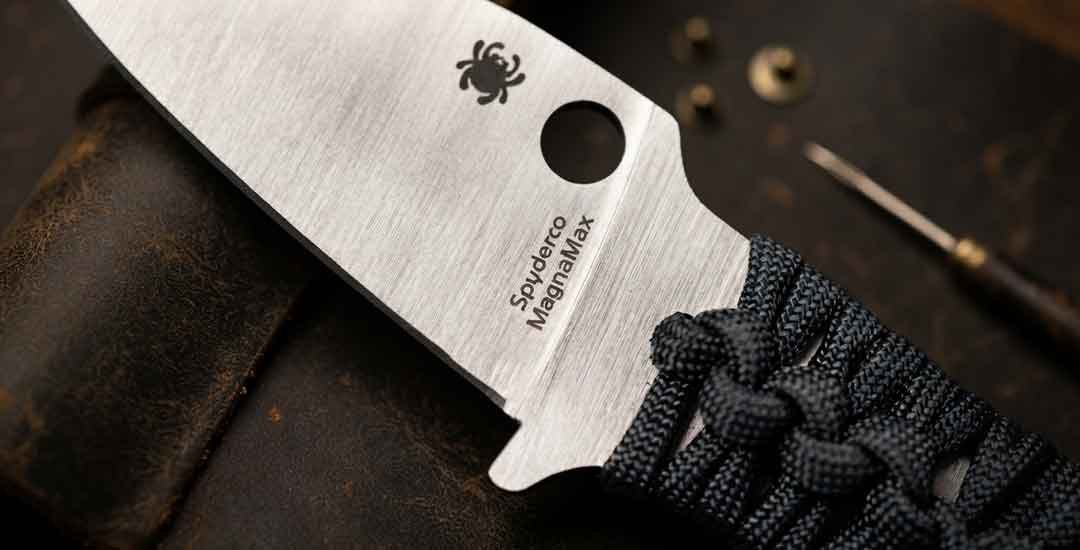
MagnaMax is a notable new knife steel that has been
Have you ever tried to break down a chicken with a flimsy blade? It’s a fight you won’t win. The blade slips. It bends. It might even chip the second it hits a bone. That’s why German chef knives exist. They don’t bend. They don’t quit halfway through a tough cut. They just work, shift after shift, cut after cut.
We tested a stack of German-made chef knives over the years. These four kept earning their spot back in the knife block. Here’s why they made the cut, and why they might earn a spot in your kitchen too.
A German chef’s knife has one job. Take a beating and stay sharp enough to keep going. That’s the whole philosophy behind German cutlery. It’s why so many home cooks and professional chefs reach for one first, whether they’re prepping a weeknight dinner or running a full shift in a restaurant kitchen.
At American Knife Depot, German-style chef knives sit alongside more than 13,000 products. That includes premium kitchen cutlery, EDC blades, hunting gear, and tactical equipment. So when we say “tested,” we mean it. We put these knives to work on real cutting boards with real food, not just a spec sheet.
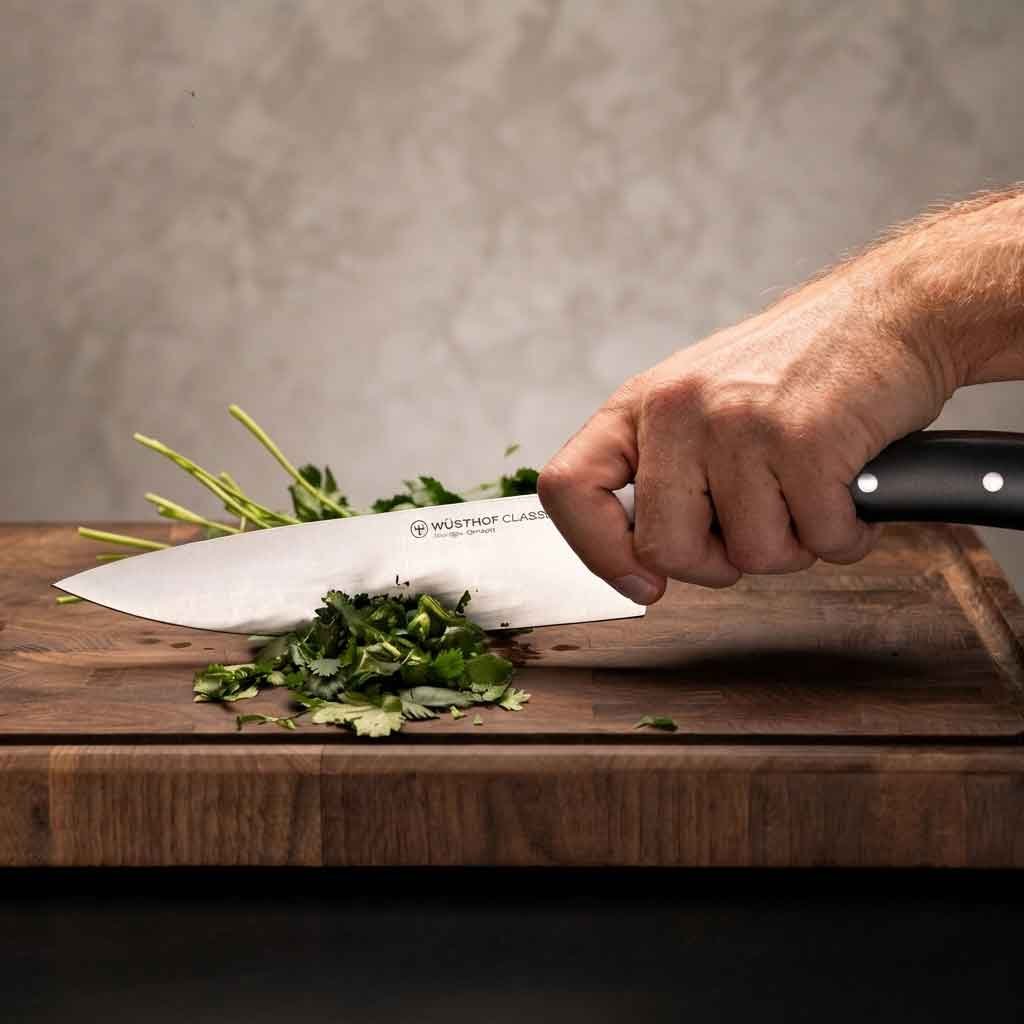
A German-style knife has a few clear tells. The blade runs tall, usually around two inches. It carries a pronounced curve along the cutting edge. The spine sits thick near the handle and tapers toward the tip. This blade geometry gives the knife its signature rocker profile, perfect for a rocking motion through herbs and vegetables.
The steel leans softer than what you’d find on a Japanese blade. That sounds like a downside at first. But it’s exactly what lets a German chef knife survive squash, bone, and everything messy in between.
Compare that to a French Sabatier knife. It trades the curve for a straighter edge and a tip closer to the centre. Or think about a Japanese gyuto knife, which runs thinner and harder for precision cutting. German knives give up a little finesse. In return, you get serious durability and edge stability that holds up under daily kitchen abuse.
Here’s the short version of why so many cooks trust this style:
| Knife | Best For | Steel | Handle | Weight |
| Zwilling Pro | Best Overall | Friodur stainless steel | POM | 9.4 oz |
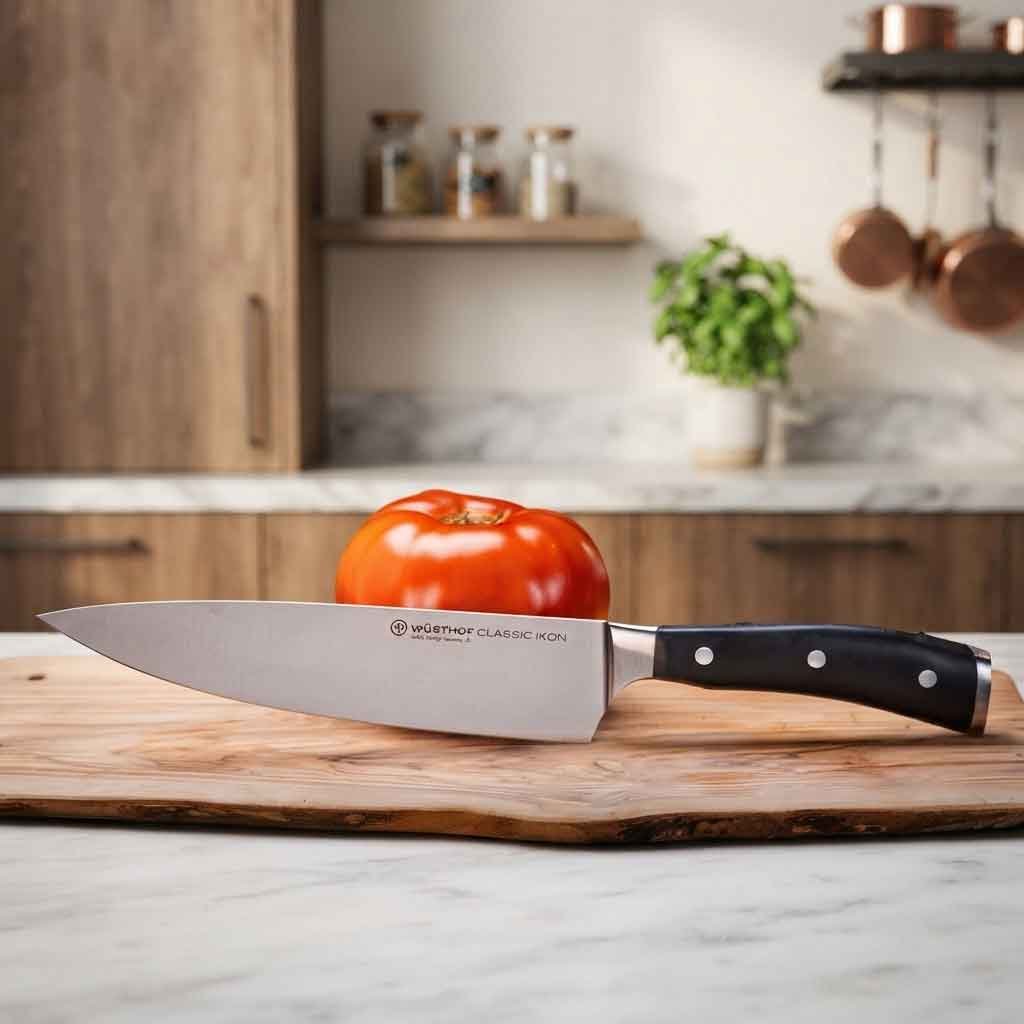
| Wusthof Classic Ikon | Most Comfortable Handle | X50CrMoV15 stainless steel | POM | 9.6 oz |
| Messermeister Meridian Elite | Toughest Blade | X50CrMoV15 / 1.4116 steel | POM | 9.9 oz |
| Güde Alpha Series | Big Hands & Heavy-Duty Cutting | Chrome vanadium molybdenum steel | Olive wood | 10.8 oz |
Every knife here counts as a forged chef knife made entirely in Germany. Most come from Solingen, a city synonymous with fine cutlery and German craftsmanship for centuries.
The Zwilling Pro is the knife we measure everything else against. It’s a classic example of a German knife. It has a big-bellied edge. It has a boxy western handle. It has a semi-bolster sloped just right for an easy pinch grip.
Here’s the interesting part about the steel. Zwilling treats their version of 1.4116 steel with a proprietary process called Friodur. That process noticeably improves edge stability and wear resistance. We can’t explain the exact metallurgy behind it. But we can tell you the edge holds a razor-sharp bite longer than most knives in its class.
Cutting performance stays smooth from the first slice to the hundredth. Whether you’re breaking down herbs or pushing through a dense potato, this knife delivers clean cuts without much resistance.
Who it’s for: Anyone who wants one dependable, professional-grade knife that handles 90% of the kitchen’s work without fuss.
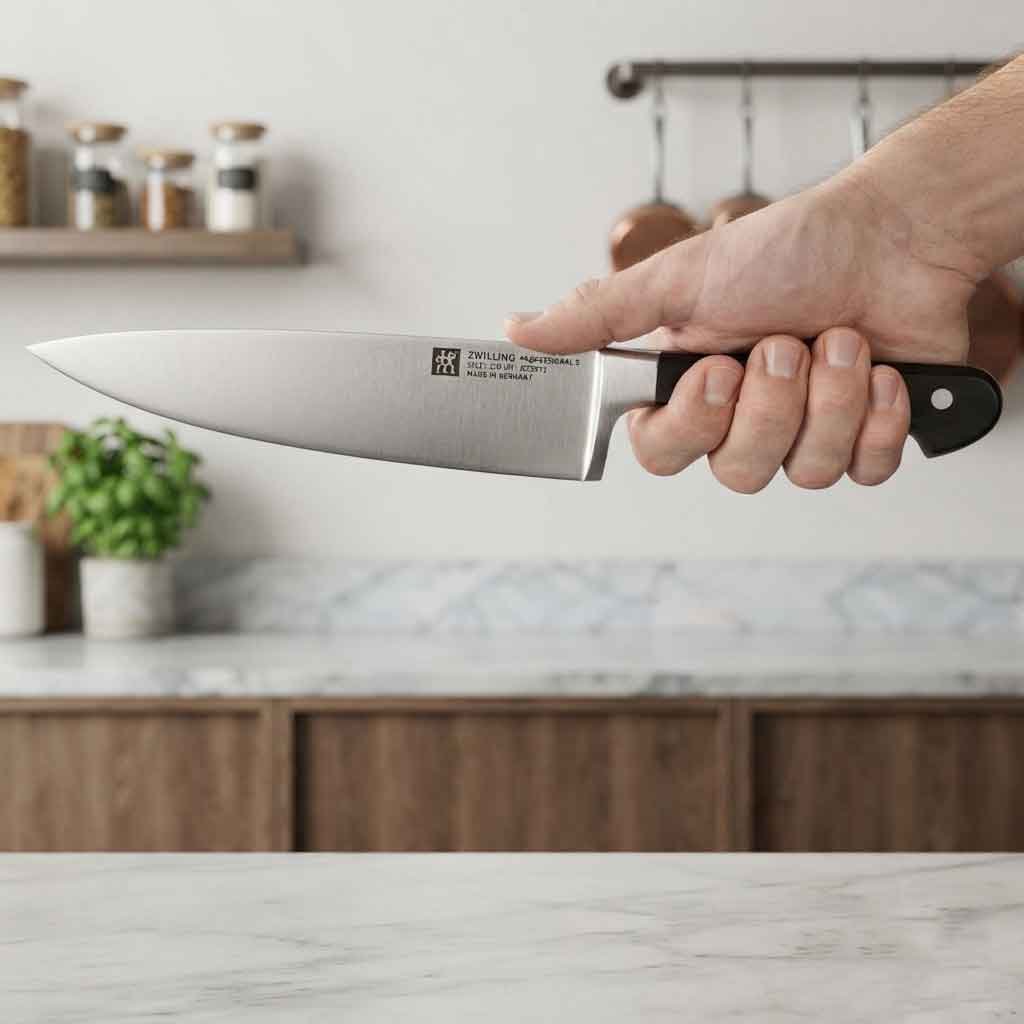
If comfort in the handle tops your list, stop here. The Classic Ikon curves inward. Most of its weight sits toward the pommel. That gives it a surprisingly nimble feel, even though it’s actually a heavy knife.
The blade doesn’t bite as aggressively out of the box as the Zwilling Pro does. It’s sturdy, though, and it’s easy to sharpen. We’d rank its raw cutting performance a step below the Pro. But it wins where it counts most: mincing herbs and rock chopping onions feel almost effortless, thanks to that handle weight.
“The handle weight makes the blade feel more nimble, even though it’s objectively a heavy knife.”
This knife also shines on an end-grain cutting board, where the softer wood surface pairs nicely with its smooth slicing motion.
Who it’s for: Cooks who want comfortable handling during long chopping sessions, even if it costs a little raw speed.
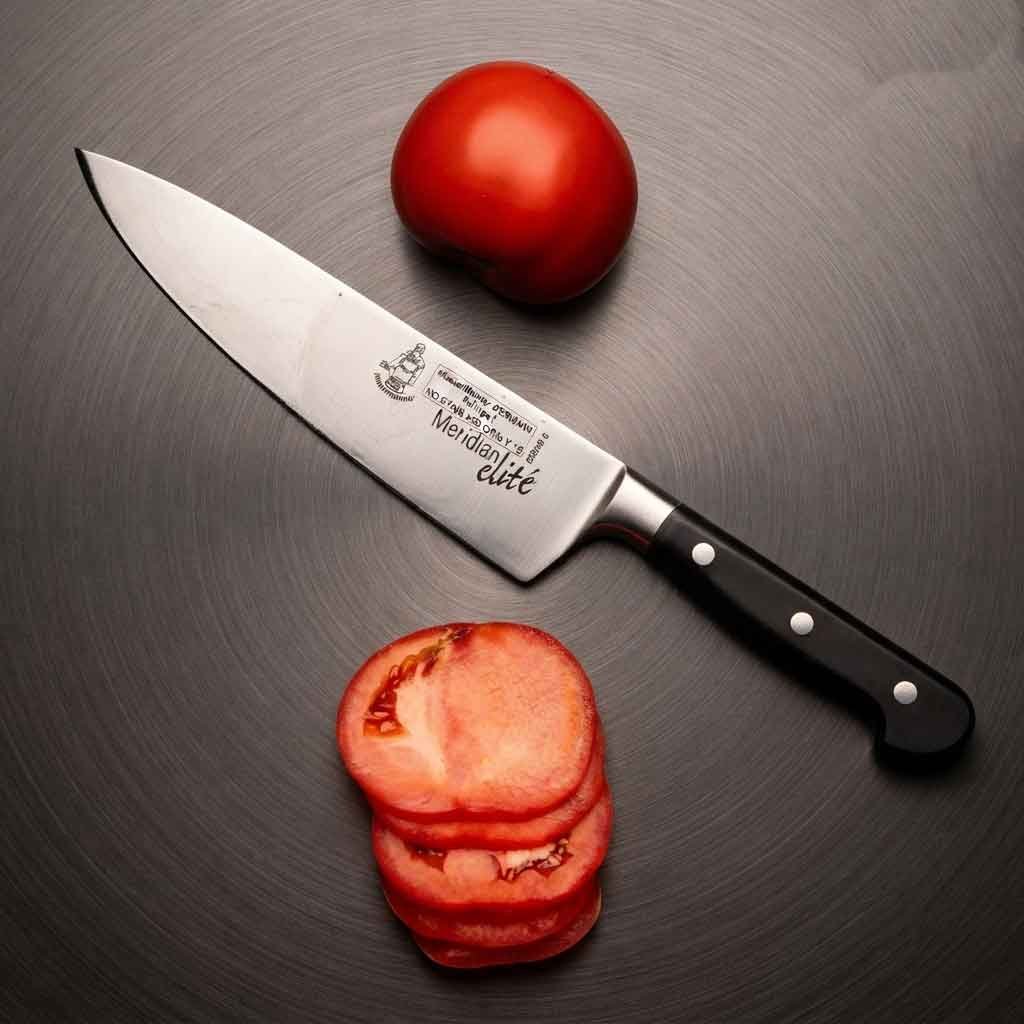
Messermeister is technically a California company. But the Meridian Elite line comes out of Germany, and it shows in every cut. This is the thickest blade stock on our list. That extra mass shifts the balance toward the blade rather than the handle, which is unusual for this style of chef’s knife.
That thickness costs a little in finesse. It feels clunkier through a ripe tomato than the Zwilling Pro. But for tough kitchen tasks, that same weight becomes a real asset. Out of everything we tested, this is the one we’d trust with a chicken carcass or a stubborn butternut squash.
The rounded handle also reduces hot spots. Honestly, we find it more comfortable than the Wusthof Ikon over long stretches of meat preparation.
Who it’s for: Anyone who regularly breaks down meat, poultry, or works through dense produce on a wooden cutting board.
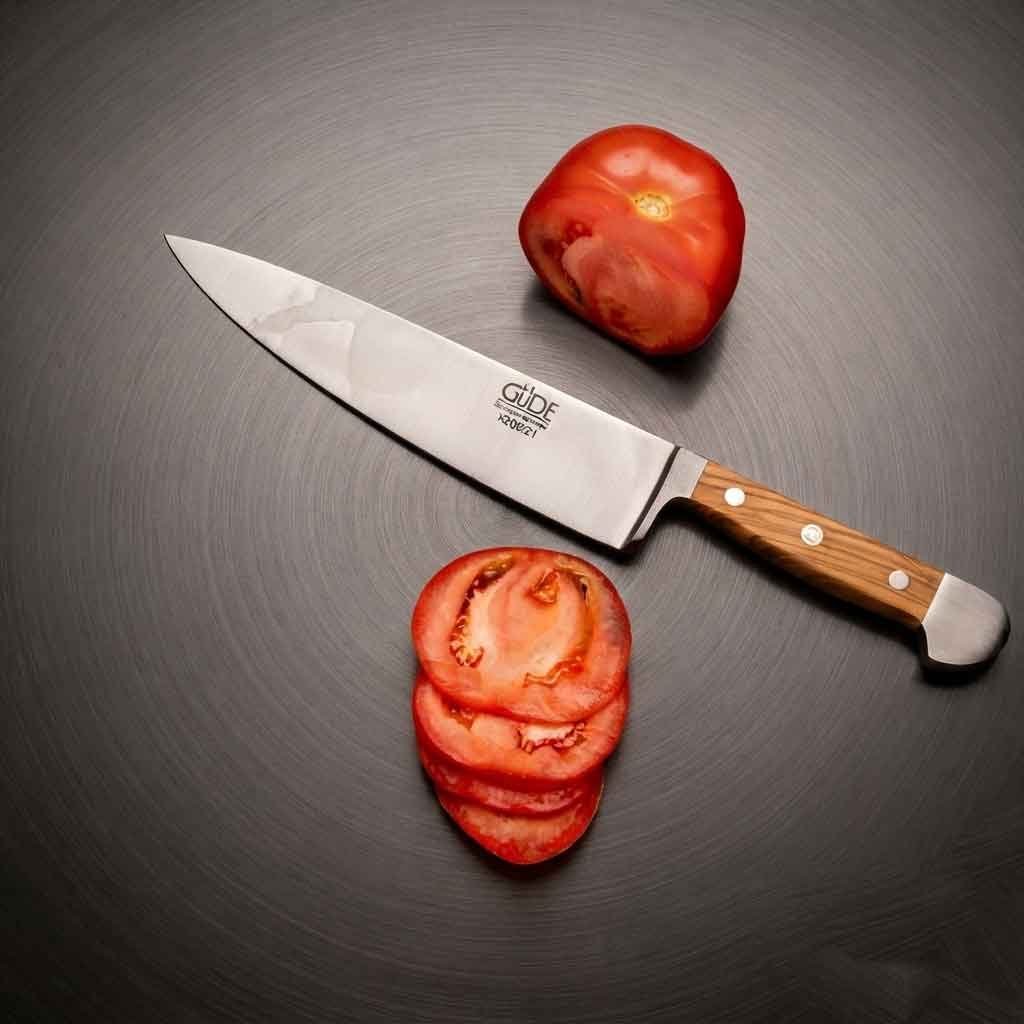
The Güde Alpha is the heaviest knife in this lineup, and it cuts like it. The edge runs toothier than most kitchen knives. It tears through red onion skin or tomato skin with almost no resistance, no matter how firm the produce feels.
We’re not usually fans of full bolsters. But Güde angled theirs away from the cutting edge. That keeps future sharpening sessions from grinding into the bolster itself, which extends the knife’s lifetime durability.
The handle runs wide and boxy. It’s softened just enough at the edges that it won’t bite into your palm during heavy-duty cutting. Between the olive wood handle and the weight, this knife feels closer to a workhorse than a scalpel.
Who it’s for: Cooks with larger hands, or anyone who wants serious heft behind every cut.
A German chef’s knife rewards a little routine care. Good news: the upkeep is genuinely simple. Here’s what keeps these blades in top shape:
Because German steel runs softer, it forgives small mistakes better than harder Japanese steel does. That’s a real advantage if you’re still building your knife skills or just want one less thing to worry about during meal prep.
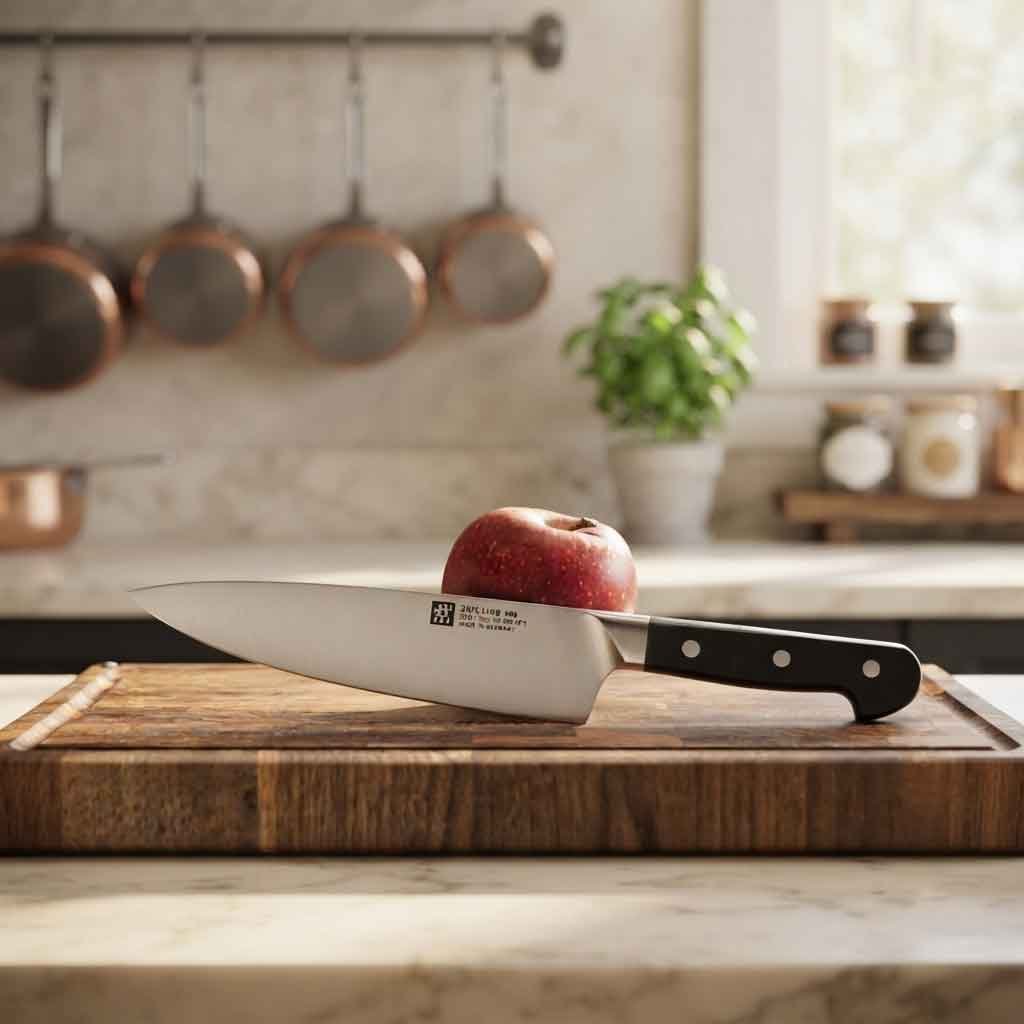
Neither one is strictly necessary. A full bolster runs the length of the heel. It shifts more weight into your hand, which some cooks like for balance. It also lowers the risk of nicking your fingers on the heel of the edge.
Here’s the tradeoff. A full bolster gets in the way when you sharpen, since the steel blocks access to the full edge. A semi-bolster skips that problem entirely. That’s one reason it’s become more common on newer knife designs.
Yes, and here’s the honest reasoning behind it. Harder steel holds an edge longer. But it’s also more brittle. A thin, hard Japanese gyuto with a 64 HRC will chip if it hits a chicken bone the wrong way.
German steels typically fall in the 58-60 HRc range. That’s soft enough that the edge rolls rather than chips. In one sentence, that’s the entire tradeoff: German steel gives up a little edge retention in exchange for durability you can fix at home with a honing rod, instead of a trip to a professional sharpener.
None of these is objectively better. It comes down to what you’re cutting and how you like to cut it.
A pinch grip means holding the blade itself between your thumb and index finger, just above the bolster. Most professional cooks use this grip because it aligns the blade with your forearm. That gives you more knife control and a more secure grip overall.
The bolster sits where the blade meets the handle. A crowned spine is a spine that’s been rounded off. That detail matters more than you’d think after a few hours of dicing onions. A sharp spine edge digs into your index finger fast, and it’s a small design choice that makes a big difference in hand fatigue reduction.
Distal taper refers to how the blade thins from the heel to the tip. A strong taper keeps the heel thick and tough for hard cuts. Meanwhile, the tip stays light enough for delicate work like herb mincing or fine garnish work.
A toothy edge, sharpened on a coarser stone, tears through skins like tomato or onion with ease. It works well even when the produce isn’t fully ripe. A polished edge, sharpened on a finer stone, makes cleaner cuts. It also holds up longer before it needs attention again.
Most kitchen knives benefit from a polished edge for everyday cooking. It’s gentler on food, and it lasts longer between sharpenings. If you do a lot of rough prep work, though, a slightly toothier edge might serve you better.
All four of these knives are made in Germany. All four will outlast much of the disposable cutlery in most kitchen drawers. The right pick really depends on what you need most.
Want one reliable chef’s knife that does it all? Go with the Zwilling Pro. Care most about handle comfort during long prep sessions? The Wusthof Classic Ikon won’t disappoint. Need something tough enough for meat and produce alike? The Messermeister Meridian Elite earns its keep every time. Got bigger hands, or want serious weight behind every cut? The Güde Alpha Series delivers exactly that.
Whichever one you choose, you’re investing in a tool built for real kitchen work. Basic care, a little honing, and an occasional trip to the whetstone will keep any of these knives performing for years.
Ready to upgrade your kitchen? Browse the full lineup of German-style chef knives and other premium kitchen essentials at American Knife Depot—every blade ships alongside a 4.8-star reputation, backed by more than 13,700 verified customer reviews.
Shopping for more than the kitchen? American Knife Depot also carries EDC blades, hunting gear, tactical lighting, and outdoor equipment from trusted knife brands like Gerber, Kershaw, and Ka-Bar. Orders above $300 ship free.
MagnaMax is a notable new knife steel that has been
The history of Chaves Knives begins with one maker, basic
![Rated: 15 Best OTF Knives of 2026 [By Category]](https://americanknifedepot.com/wp-content/uploads/2026/09/Featured-Image-7.jpg)
Finding the best OTF knife is less about chasing the
The Leatherman ARC multitool promises premium materials, 20 tools, and
















Civivi nails everyday carry. Smooth action, perfect balance, and clean design. Easily one of the best EDC knives I’ve owned at this price point.