


MagnaMax Steel – Everything You Need to Know
MagnaMax is a notable new knife steel that has been

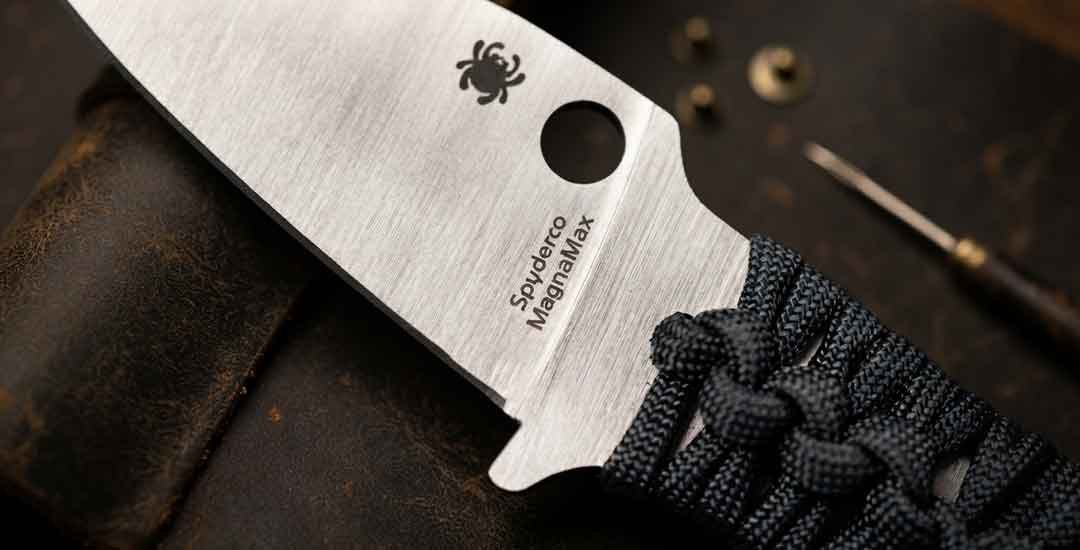
MagnaMax is a notable new knife steel that has been in development for years. Developed by metallurgist Dr. Larrin Thomas, CPM MagnaMax targets a difficult combination: high edge retention, toughness, hardness potential, and excellent corrosion resistance.
Think of MagnaMax as a wear-focused relative of MagnaCut, not a replacement. MagnaCut remains the balanced steel. MagnaMax pushes harder toward abrasive wear resistance and long-lasting cutting performance.
That difference matters for EDC knives, folders, and small fixed blades. A blade that keeps slicing cardboard, rope, packaging, and other abrasive material longer needs fewer sharpening sessions. Still, steel chemistry never works alone. Heat treatment, blade geometry, edge geometry, sharpening angle, and knife artistry can dramatically change real-world results.
For buyers, the useful question isn’t whether MagnaMax is “best.” It is whether MagnaMax matches the work your knife actually does.
MagnaMax knife steel is a high-performance stainless powder steel created for exceptional wear resistance and edge retention without sacrificing the corrosion resistance expected from premium stainless blade steel. It uses powder metallurgy to distribute hard carbides more evenly throughout the material.
Dr. Thomas describes MagnaMax as a higher-edge-retention companion to CPM MagnaCut. The steel was developed around the idea of creating a “stainless 10V,” meaning performance similar to high-wear steels such as CPM 10V, K390, and Vanadis 8 while maintaining excellent stainless properties.
Dr. Larrin Thomas first proposed the concept alongside MagnaCut in 2019. The project went through several prototype heats before commercial material became available. His goal was straightforward: increase wear resistance and edge retention significantly while keeping useful toughness and MagnaCut-like corrosion performance.
Compare premium knife steel options at American Knife Depot before choosing a blade by steel name alone.
MagnaMax is not “MagnaCut 2.0” in the sense of making MagnaCut obsolete.
What is MagnaCut? CPM MagnaCut is a balanced stainless steel designed around toughness, corrosion resistance, and useful edge retention. What is CPM MagnaCut best known for? It gives knife makers room to use thinner edges because its toughness remains unusually strong for stainless steel.
MagnaMax shifts that balance. It trades some MagnaCut toughness for much more wear resistance and edge retention.
So, MagnaCut vs MagnaMax comes down to priorities. MagnaCut favors balance. MagnaMax favors longer cutting life.
MagnaMax composition follows the same broad metallurgical strategy as MagnaCut, but with higher carbon, vanadium, and niobium. Those elements support harder carbide formation and greater abrasive wear resistance.
The key idea is carbide design. Hard vanadium and niobium carbides resist wear at the cutting edge. A fine, well-distributed carbide population can improve edge durability without creating the oversized chromium carbide structures found in some conventional stainless steels.
Powder steel production supports that consistency. Powder metallurgy steel starts from atomized material rather than one large conventional ingot. The resulting microstructure can distribute alloying elements and carbides more evenly.
| Property | Practical Meaning |
| Edge retention | Excellent for repeated slicing |
| Toughness | Strong for a high-wear stainless steel |
| Corrosion resistance | Excellent stainless performance |
| Hardness | High potential with proper heat treatment |
| Wear resistance | Very high |
| Sharpenability | More demanding than MagnaCut |
| Edge stability | Strong when geometry suits the task |
| Best applications | EDC, folders, utility knives, small fixed blades |
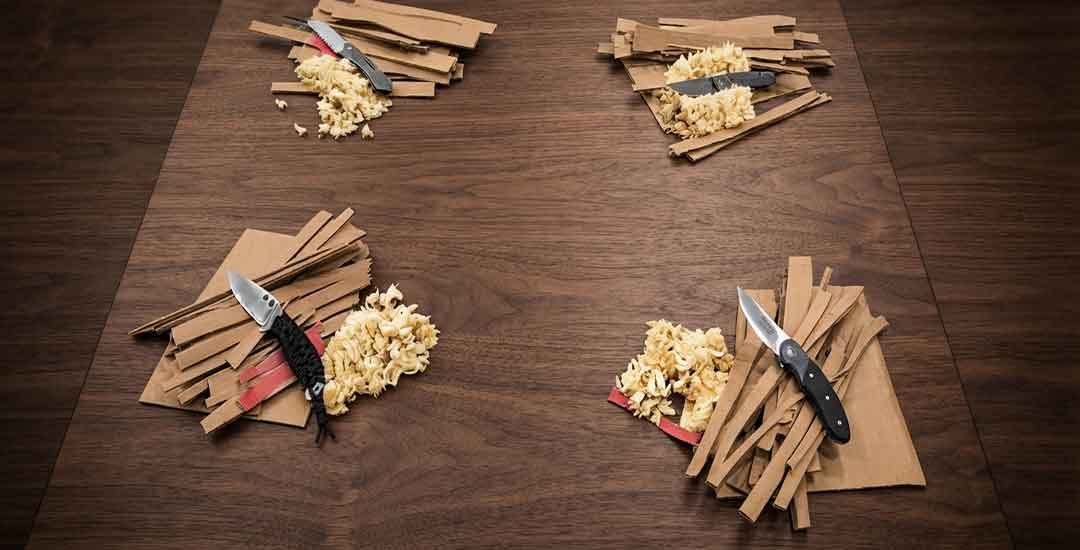
MagnaMax edge retention is its headline feature. Thomas reports CATRA performance in the same general range as K390, Vanadis 8, CPM 10V, and CPM S110V. It also tests above steels such as M390, S30V, and CPM M4 for slicing edge retention.
Why? Abrasive wear gradually removes material from a cutting edge. MagnaMax uses harder carbides to slow that process.
However, edge retention data needs context. A thin blade with excellent edge geometry can outcut a thicker blade made from a more wear-resistant steel. Sharpening grit, edge angle, hardness, and cutting medium also matter.
Thomas’s testing places MagnaMax around the toughness of K390 and Vanadis 8 and above CPM 10V. It also compares favorably with several respected powder metallurgy stainless steels.
MagnaMax corrosion resistance is another standout property. In Thomas’s 1% saltwater testing, MagnaMax showed no rust spots while M390 and S110V developed small spots and S90V showed more corrosion.
Still, stainless does not mean rust-proof. Sweat, saltwater, food acids, and trapped moisture can challenge any stainless blade. Clean and dry your knife after exposure.
Browse high-performance EDC knives at American Knife Depot and compare edge retention and corrosion resistance.
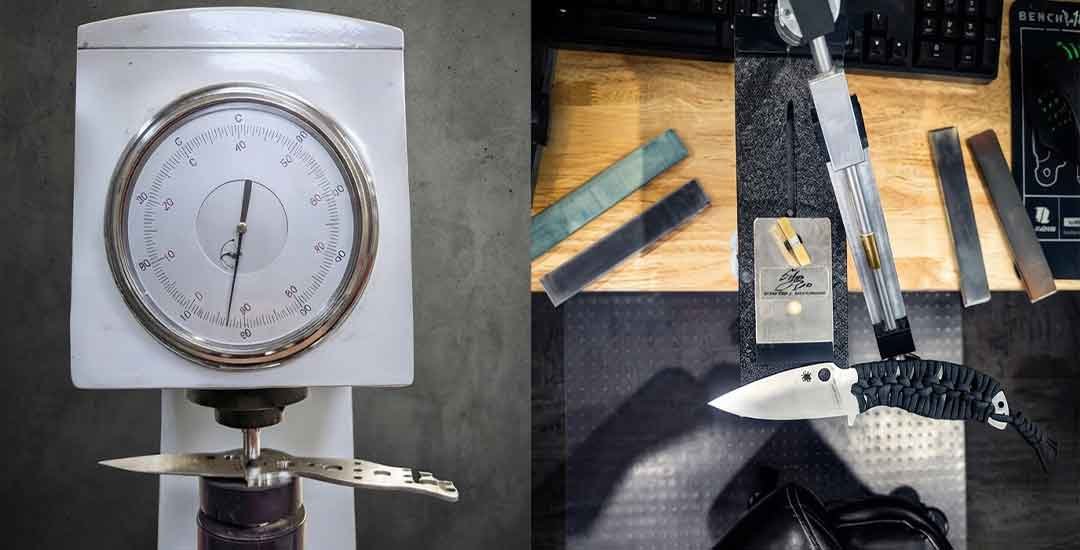
MagnaMax hardness depends on heat treatment. Rockwell hardness, usually expressed as HRC, measures resistance to permanent indentation. It does not measure toughness, cutting ability, or overall knife quality.
Thomas’s heat-treatment work shows that MagnaMax can reach high hardness while maintaining useful toughness. Higher hardness generally improves edge retention within the same steel, although overly aggressive treatment can reduce toughness.
Austenitizing prepares the steel for hardening. Quenching transforms the microstructure. Cryogenic treatment can reduce retained austenite. Tempering then adjusts hardness and toughness.
Thomas recommends a baseline austenitizing temperature around 2150°F, with rapid plate quenching, cryogenic treatment, and low-temperature tempering around 350°F, as a strong starting point. He also warns that high-temperature tempering can reduce corrosion resistance.
Production heat treatment and custom heat treatment may produce different outcomes. Furnace design, batch size, quench speed, temperature control, and target HRC all influence heat treatment performance.
Shop trusted knife manufacturers at American Knife Depot and compare heat treatment, geometry, materials, and intended use together.
MagnaCut vs MagnaMax is one of the most useful comparisons because both steels share a design philosophy but target different users.
| Category | MagnaMax | MagnaCut |
| Edge retention | Higher | High |
| Toughness | Lower | Higher |
| Corrosion resistance | Excellent | Excellent |
| Wear resistance | Much higher | Moderate to high |
| Sharpenability | Harder | Easier |
| EDC slicing | Exceptional | Excellent |
| Impact-heavy work | Good | Better suited |
What is MagnaCut steel in practical terms? It is a tough, corrosion-resistant, balanced blade steel. A MagnaCut blade makes sense when edge stability, field use, and toughness matter strongly.
CPM-MagnaCut steel is therefore not inferior. It simply sits at another point on the performance triangle.
Current testing shows MagnaMax offering more edge retention and toughness than M390 and CPM 20CV while maintaining excellent corrosion resistance.
CPM 10V provides exceptional abrasive wear resistance but lacks stainless corrosion resistance. MagnaMax was designed to match that toughness and edge retention while adding strong rust resistance.
Cru-Wear and M4 steel remain excellent choices for hard-use knives. They offer strong toughness and edge stability, but users must take more care to prevent corrosion.
ELMAX steel knives remain popular because ELMAX balances corrosion resistance, wear resistance, and toughness well. Searches for ELMAX vs MagnaCut or ELMAX steel vs MagnaCut usually involve buyers who want balanced stainless performance.
Compare MagnaMax knives, MagnaCut knives, and proven premium steels at American Knife Depot before buying.
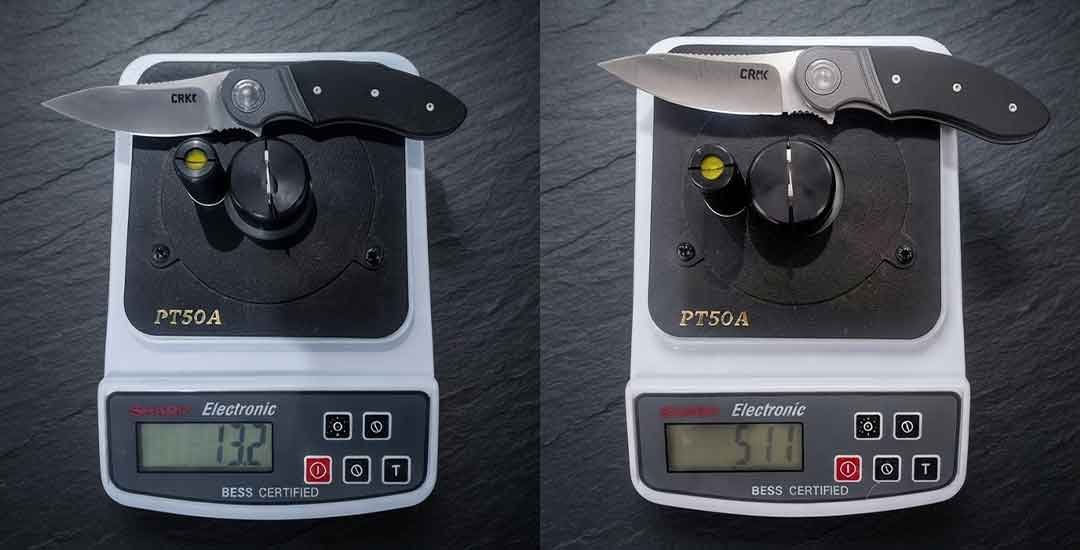
An edge retention test should control sharpening angle, sharpening grit, edge geometry, cutting pressure, test media, starting sharpness, and the edge section being tested.
A BESS tester can quantify sharpness by measuring the force needed to cut standardized media. Testers may record V1 sharpness before cut testing and V2 sharpness afterward. A percentage change formula can then describe edge degradation.
Cardboard cutting, rope cutting, sisal rope, and sandpaper testing all create abrasive wear. Yet pressure, sawing motion, handle angle, cutting board hardness, and blade geometry can distort test results.
Laboratory testing gives tighter control. Real-world knife testing adds practical context. Good steel testing uses both rather than pretending one cutting test settles everything.
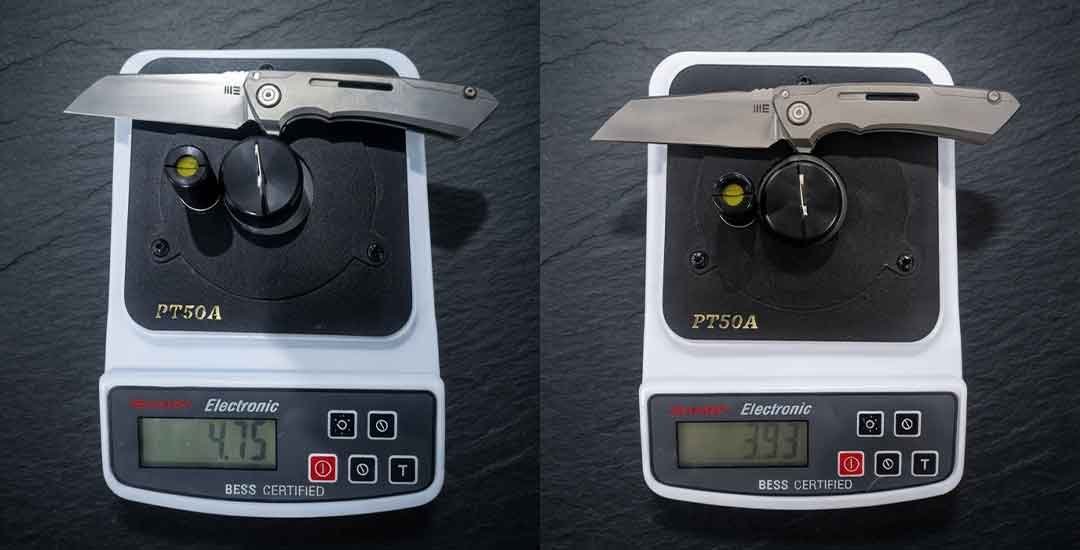
Its hard carbides resist abrasion, which helps sharpness retention but slows material removal. Traditional whetstones can work, yet softer sharpening stones may feel painfully slow during reprofiling.
Diamond sharpening stones are generally better suited to this kind of high-wear blade steel. They cut hard carbides efficiently and reduce grinding time.
For normal blade sharpening, maintain the cutting edge before it becomes severely dull. Light touch-ups require less steel removal.
Add suitable knife sharpening equipment from American Knife Depot to keep premium blades performing at their best.
MagnaMax EDC knives are an obvious match. Daily cardboard, packaging, rope, plastic, and general utility work reward a long-lasting edge.
Folding knives and folders also benefit because most folders perform more slicing than heavy impact work. A MagnaMax knife can therefore provide outstanding practical cutting performance.
Large camping knives, survival knives, and hard-use folders create a different calculation. Chopping, batoning, impact, and lateral stress can reward a tougher steel such as MagnaCut or Cru-Wear.
Match your EDC knife, folding knife, or fixed blade to its real job at American Knife Depot.
Advantages
Disadvantages
When you find a MagnaMax knife for sale, look beyond the steel stamp.
Check the maker’s heat treatment, target HRC, blade geometry, edge geometry, grind, lock construction, handle ergonomics, warranty, and manufacturing reputation. These details can matter more than small differences between premium steels.
A MagnaMax steel for sale listing matters to custom makers too, but raw steel is only the starting material. Heat treatment and grinding skill determine whether the finished knife reaches the alloy’s potential.
Explore premium knives at American Knife Depot and compare complete specifications before choosing your next blade.
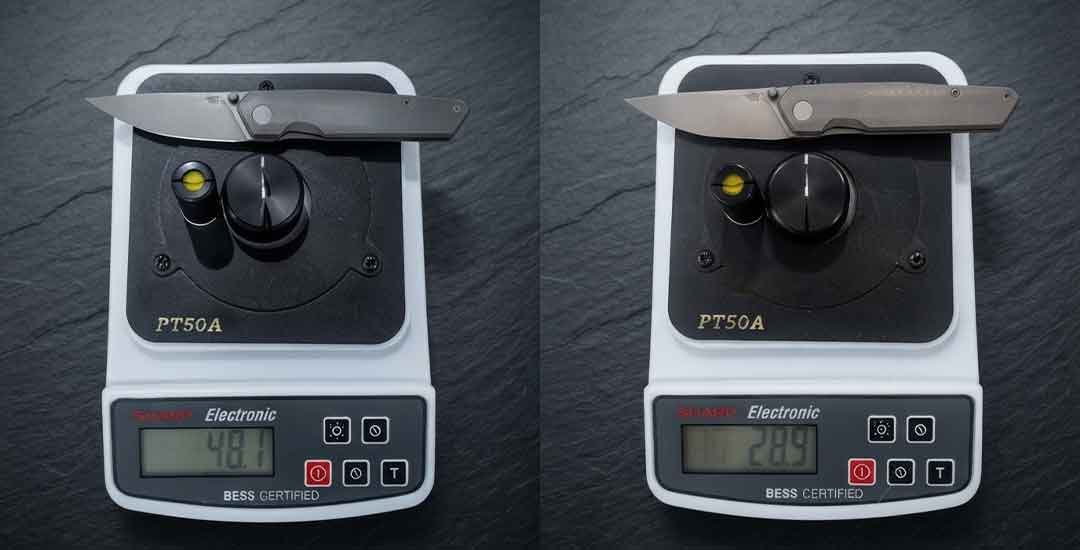
MagnaCut is a powder metallurgy stainless knife steel designed by Dr. Larrin Thomas for an unusually balanced mix of toughness, corrosion resistance, and edge retention.
CPM MagnaCut refers to the original Crucible Particle Metallurgy version of MagnaCut. Current MagnaCut production can involve other powder metallurgy producers, so buyers should focus on the knife maker’s heat treatment and specification rather than the acronym alone.
A MagnaCut blade is simply a knife blade made from MagnaCut steel. Its real performance depends on hardness, geometry, heat treatment, and edge finish.
Not universally. MagnaMax offers much higher edge retention and wear resistance. MagnaCut offers greater toughness and easier sharpening.
Yes. MagnaMax stainless steel combines high wear resistance with excellent corrosion resistance.
Yes. Frequent slicing and abrasive cutting make MagnaMax especially attractive for EDC knives.
Compared with MagnaCut, S30V, or 8Cr13MoV, yes. Diamond abrasives make the job much easier.
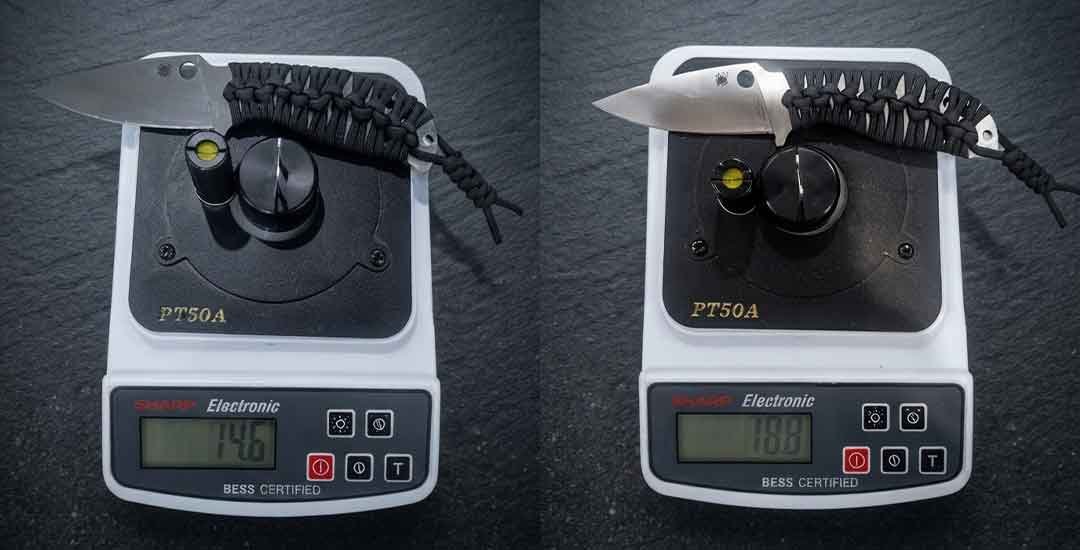
MagnaMax is not magic steel. It is a carefully engineered premium knife steel with a clear purpose.
Its defining strength is the combination of high edge retention, useful toughness, hardness potential, and excellent corrosion resistance. That blend gives knife users something difficult to achieve with older high-wear steels.
MagnaCut remains the better choice when maximum toughness, easier sharpening, and broad balance matter more. MagnaMax makes more sense when you cut abrasive material often and want fewer sharpening sessions.
That is why buyers compare the whole knife instead of treating a premium alloy name as a guaranteed result.
American Knife Depot gives U.S. shoppers a broad place to compare MagnaMax knives, MagnaCut blades, EDC knives, fixed blades, sharpening equipment, and other premium knife materials across trusted brands and price points.
Find the knife that fits your cutting style at American Knife Depot, then let geometry, heat treatment, and real performance make the final decision.
MagnaMax is a notable new knife steel that has been
The history of Chaves Knives begins with one maker, basic
![Rated: 15 Best OTF Knives of 2026 [By Category]](https://americanknifedepot.com/wp-content/uploads/2026/09/Featured-Image-7.jpg)
Finding the best OTF knife is less about chasing the
The Leatherman ARC multitool promises premium materials, 20 tools, and

















Civivi nails everyday carry. Smooth action, perfect balance, and clean design. Easily one of the best EDC knives I’ve owned at this price point.