
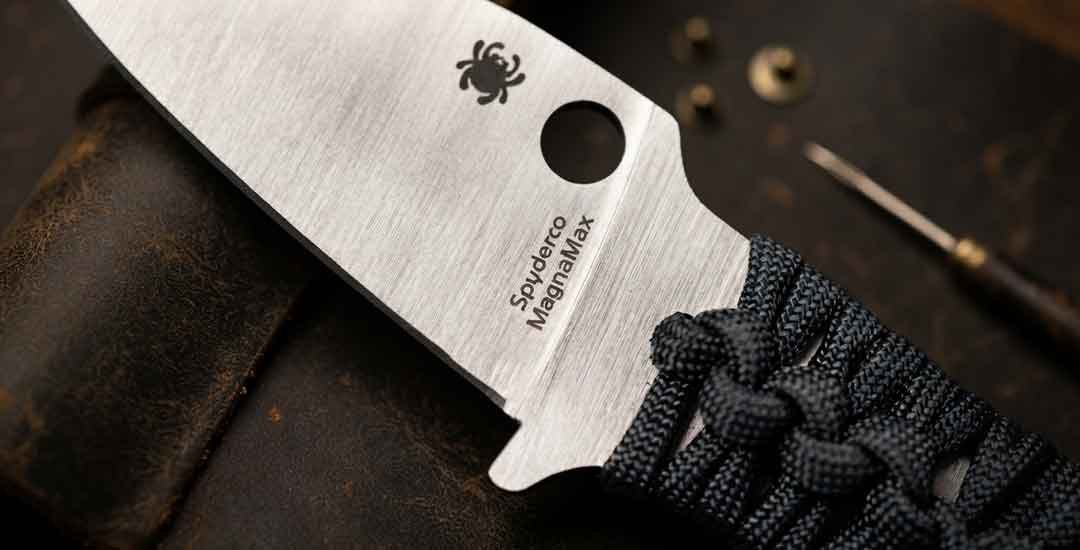
MagnaMax Steel – Everything You Need to Know
MagnaMax is a notable new knife steel that has been

Picking a knife is easy. Picking the right knife steel? That’s where things get genuinely interesting — and occasionally overwhelming.
Walk into any serious knife conversation and you’ll hear names like CPM MagnaCut, M390, D2, and 1095 thrown around like everybody already knows what they mean. Most people don’t. And that’s fine. Steel metallurgy runs deep — professional metallurgists spend entire careers studying blade steel composition, grain structure, and carbide behavior. You don’t need a PhD, though. You just need a solid knife steel guide that cuts through the noise and gives you real answers.
That’s exactly what this is.
Whether you’re hunting for the best EDC knife steel, shopping for a Survival blade, comparing pocket knife steel types, or simply trying to decode that cryptic stamp on your favorite folder — this comprehensive knife steel comparison covers everything. Ratings, rankings, real-world trade-offs, use-case matching, and honest performance profiles for every major steel on the market.
Let’s get into it.
Here’s the uncomfortable truth: two knives with identical blade shapes, identical grinds, and identical handle materials can perform worlds apart — because of steel alone. One holds a razor edge for months of hard use. The other dulls after a single afternoon of camp cooking. One snaps under lateral stress. The other flexes, absorbs, and survives.
Steel composition, grain structure, carbide content, heat treatment quality, and edge geometry all dictate how your blade behaves when it counts. Ignore the steel, and you’re buying blind.
Every steel gets evaluated across four core performance attributes. Think of them as the four corners of blade performance — and understand that improving one almost always costs you something in another.
Edge retention measures how long your blade stays sharp during actual cutting. It’s driven primarily by hardness and carbide content — hard microscopic particles formed between carbon and alloying elements like vanadium or tungsten. High carbide volume delivers outstanding wear resistance and long-lasting blade edge performance. However, that same wear resistance is exactly what makes sharpening more difficult.
Steels with the best edge retention include Maxamet, CPM-S110V, CPM-REX 121, and ZDP-189. These are marathon runners — built for extended knife cutting performance without frequent touch-ups.
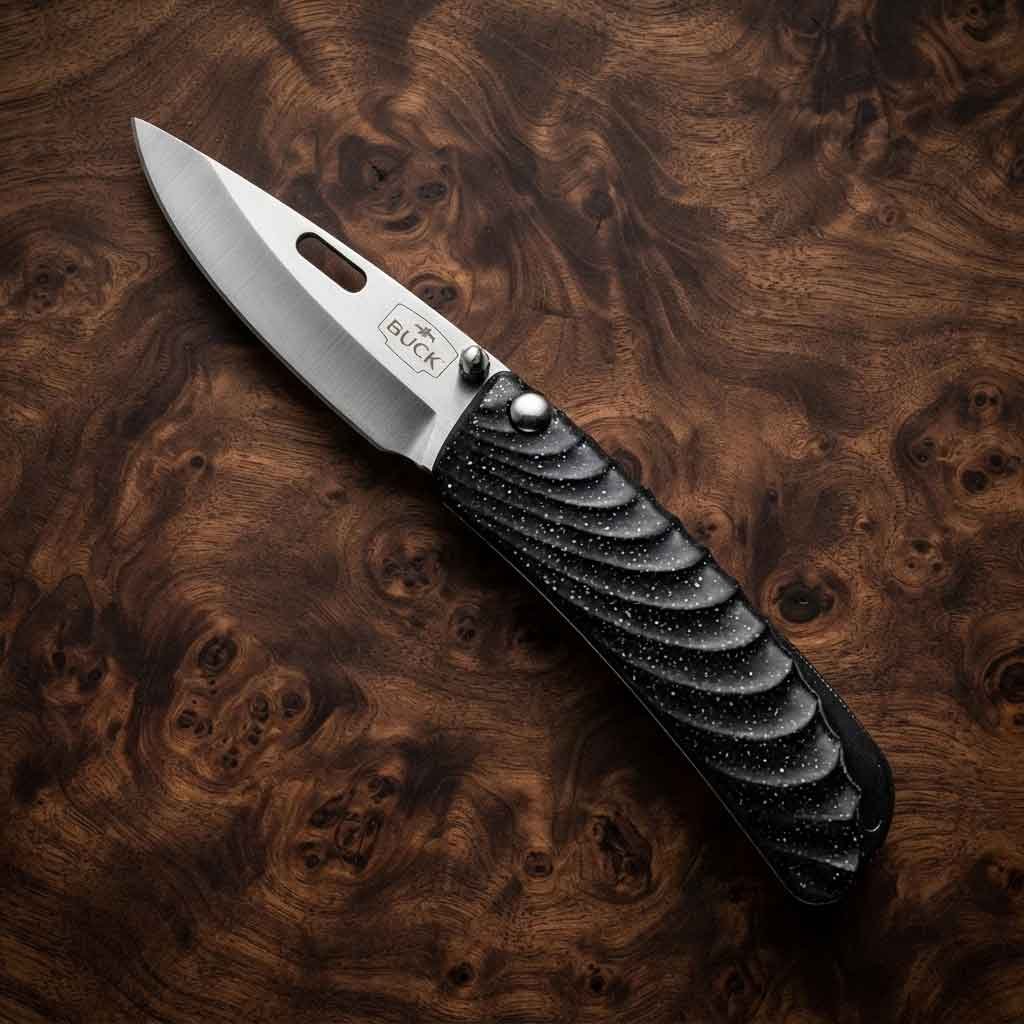
Toughness is a steel’s ability to absorb impacts without chipping, cracking, or snapping at the tip. It’s the direct counterbalance to hardness. Tougher steels resist micro-chipping and blade chipping under lateral stress, prying, and heavy chopping. The tougher the steel, generally the lower its wear resistance — this is one of the most fundamental knife steel tradeoffs in metallurgy.
CPM-3V, H1, 5160, and 420 lead toughness rankings. These steels handle hard impacts, chopping, and demanding outdoor use without complaint. Knife tip strength is exceptional in this category.
Rust isn’t merely cosmetic. It pits your edge, compromises structural integrity, and permanently degrades retention of blade sharpness. Stainless knife steel contains enough chromium — typically 13% or higher — to resist oxidation in most environments. But “stainless” doesn’t mean rust-proof. It means stain-less.
H1, LC200N, and Vanax top the corrosion resistance chart. For saltwater knife steel applications, dive knives, and fishing knives, these are the only steels worth serious consideration.
Here’s the irony of high-performance knife steel: the better it holds an edge, the harder it becomes to restore that edge. Steels with high wear resistance fight back hard against your sharpening stone. Budget-friendly steels like AUS-8, 1095, and 420 are forgiving, fast to touch up, and genuinely beginner-friendly. That easy maintenance knife steel quality is a real advantage for casual users.
Measured on the Rockwell C scale (HRC), hardness determines how resistant a steel is to deformation and wear. Most production knives run between 57–64 HRC. Higher hardness means better edge retention but reduced toughness. Lower hardness means more impact resistance but faster dulling.
No steel dominates every category simultaneously. Understanding these tradeoffs is the entire point of this knife steel guide.
| Tradeoff | Winner | Loser |
| High edge retention | Maxamet, S110V, CPM-REX 121 | Toughness, sharpening ease |
| Maximum toughness | H1, 5160, CPM-3V | Edge retention |
| Corrosion resistance | LC200N, Vanax, H1 | Sometimes edge retention |
| Easy sharpening | 1095, AUS-8, 420 | Wear resistance |
| Balanced performance | CPM MagnaCut, S35VN | Genuinely well-rounded |
| Budget value | 14C28N, 8Cr13MoV | Premium performance ceiling |
Two words: powder metallurgy. Most Premium knife steels undergo a process in which liquid steel is atomized through a nozzle into fine powder. This liquid steel powder process produces an exceptionally uniform particle distribution. That powder gets compressed and sintered into a dense steel ingot with a remarkably fine grain structure and superior carbide distribution. The result is performance that conventional steel manufacturing simply cannot replicate.
Major powder metallurgy producers include:
These particle-metallurgy steels cost more at every stage of production. High-carbide steels can’t be stamped — they require waterjet or laser cutting, which takes longer and costs more. Grinding Premium steel consumes abrasives rapidly. You pay for every step of that precision.
Budget doesn’t mean bad. Some of the most capable everyday-carry steels carry modest price tags and genuinely surprise experienced knife users.
Some steels are virtually identical in composition and performance despite carrying different manufacturer names. The most famous knife steel equivalence example:
M390 (Bohler-Uddeholm) = CPM-20CV (Crucible) = CTS-204P (Carpenter)
In practice, these three steels perform indistinguishably. If your preferred steel is unavailable, its equivalent delivers identical results.
Other notable equivalents:
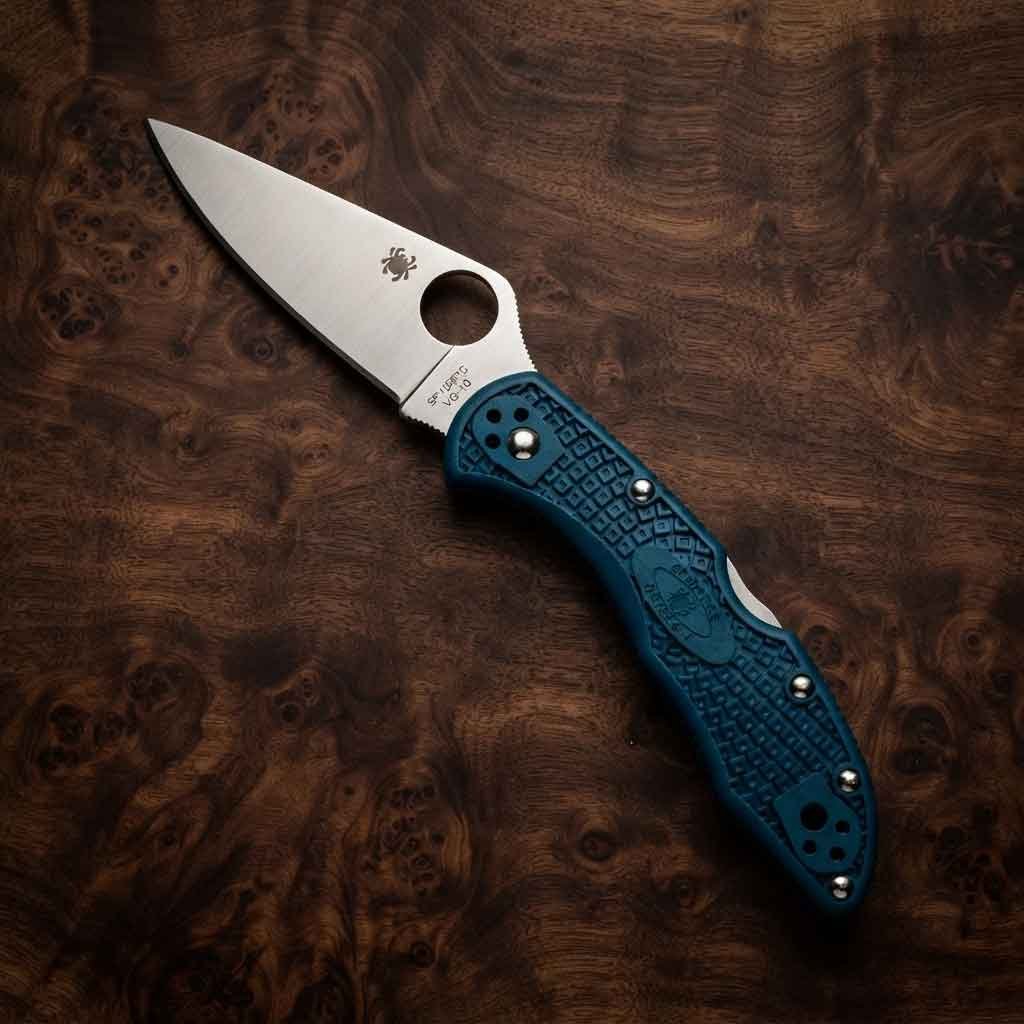
Rated on a 1–10 scale across all four performance categories, with typical Rockwell hardness ranges included:
| Steel | Edge Retention | Toughness | Corrosion Resistance | Ease of Sharpening | Typical HRC | Type |
| Maxamet | 10 | 1.5 | 1 | 1 | 68–70 | PM |
| CPM-REX 121 | 10 | 2 | 2 | 1 | 68–70 | PM Tool |
| CPM-S110V | 9.5 | 3 | 9 | 1.5 | 60–62 | PM Stainless |
| CPM-S90V | 9 | 3.5 | 7.5 | 2 | 59–61 | PM Stainless |
| ZDP-189 | 8.5 | 2 | 5 | 2 | 64–67 | Stainless |
| CPM-10V / K390 | 8.5 | 5 | 2.5 | 1.5 | 60–62 | PM Tool |
| CPM-20CV / M390 / CTS-204P | 7.5 | 3.5 | 9 | 3.5 | 60–62 | PM Stainless |
| CPM MagnaCut | 7 | 9.5 | 6 | 5 | 60–65 | PM Stainless |
| CPM-M4 | 6.5 | 6.5 | 4 | 4 | 62–65 | PM Tool |
| CPM CruWear | 6 | 8 | 5.5 | 5 | 62–65 | PM Tool |
| CPM-4V | 6 | 7 | 4 | 5 | 60–64 | PM Tool |
| CPM-3V | 5.5 | 9 | 5.5 | 4.5 | 58–62 | PM Tool |
| CPM-S35VN | 5.5 | 5 | 7.5 | 5 | 58–61 | PM Stainless |
| CPM-S30V | 5.5 | 4 | 7.5 | 4 | 58–61 | PM Stainless |
| Elmax | 5 | 4 | 8 | 5.5 | 58–62 | PM Stainless |
| CTS-XHP | 5 | 5 | 6.5 | 5.5 | 60–64 | PM Stainless |
| CPM-154 | 5 | 7 | 6.5 | 4.5 | 58–61 | PM Stainless |
| VG-10 | 4.5 | 4 | 7.5 | 4.5 | 60–62 | Stainless |
| D2 | 4.5 | 3.5 | 6 | 5 | 58–62 | Semi-Stainless Tool |
| 154CM | 4 | 3.5 | 7 | 4.5 | 57–61 | Stainless |
| N690 | 4 | 3.5 | 8 | 4.5 | 57–60 | Stainless |
| CTS BD1N | 4 | 3.5 | 8.5 | 4.5 | 58–62 | PM Stainless |
| 440C | 3.5 | 3.5 | 7.5 | 4 | 57–60 | Stainless |
| AEB-L | 3 | 9 | 7 | 3 | 58–64 | Stainless |
| 14C28N | 3 | 9 | 8.5 | 3 | 55–62 | Stainless |
| 8Cr13MoV / AUS-8 | 3 | 6 | 8 | 3 | 56–59 | Stainless |
| LC200N | 3 | 8.5 | 10 | 3 | 59–61 | Nitrogen Stainless |
| Vanax | 4 | 7 | 10 | 3.5 | 59–61 | Nitrogen PM |
| H1 | 1 | 10 | 10 | 1 | 56–58 | Nitrogen Stainless |
| 420 / 420HC | 2 | 10 | 8.5 | 2.5 | 50–57 | Stainless |
| A2 | 3 | 6.5 | 1.5 | 2.5 | 57–62 | Tool |
| 1095 | 2 | 4.5 | 1 | 2 | 56–58 | Carbon |
| 52100 | 2 | 8.5 | 1 | 2 | 58–64 | Carbon |
| O1 | 2 | 4.5 | 1 | 2 | 57–61 | Tool |
| 5160 | 1.5 | 10 | 1 | 2.5 | 54–58 | Carbon |
Shop knives by steel type at American Knife Depot — 13,000+ blades across every steel grade, from trusted brands and at competitive prices for every budget.
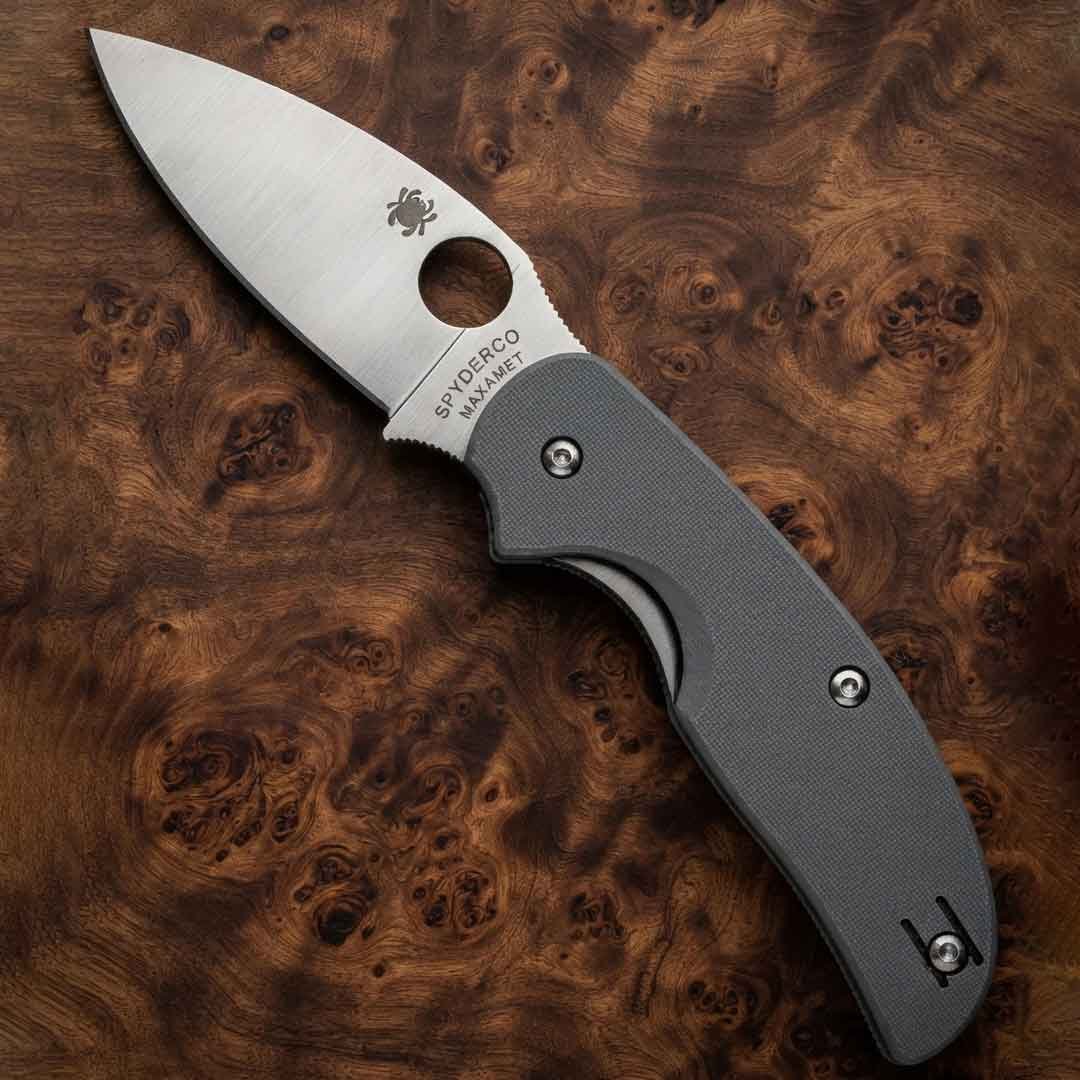
Built by Carpenter Technology through their Micro-Melt powder metallurgy process, Maxamet was engineered for one purpose: maximum edge retention. It delivers the longest-lasting blade edge of any production knife steel. The formula loads the steel with tungsten and vanadium carbides to an extreme degree — giving it unmatched wear resistance and steel edge retention rating at the top of every knife steel ranking guide.
The tradeoffs are significant. Maxamet is brittle under hard impacts, offers virtually zero corrosion resistance, and demands diamond sharpening stones. It ranks dead last in toughness and ease of sharpening.
| Attribute | Rating | Ranking |
| Edge Retention | 10/10 | #1 |
| Toughness | 1.5/10 | #38 |
| Corrosion Resistance | 1/10 | #29 |
| Ease of Sharpening | 1/10 | #38 |
| Typical HRC | 68–70 | — |
Light-duty cutting enthusiasts who prioritize a long-lasting blade edge above all else. Not a hard-use steel. Not a saltwater steel. Purely a precision cutting steel. Spyderco produces the majority of Maxamet knives.
CPM-REX 121 sits alongside Maxamet at the absolute peak of edge-retention steels. A high-speed powder metallurgy tool steel from Crucible Industries, it is loaded with vanadium and cobalt for extraordinary wear resistance. It’s rare in production knives — mostly found in custom and semi-custom blades for serious collectors and enthusiasts who demand the highest-performance knife steel available.
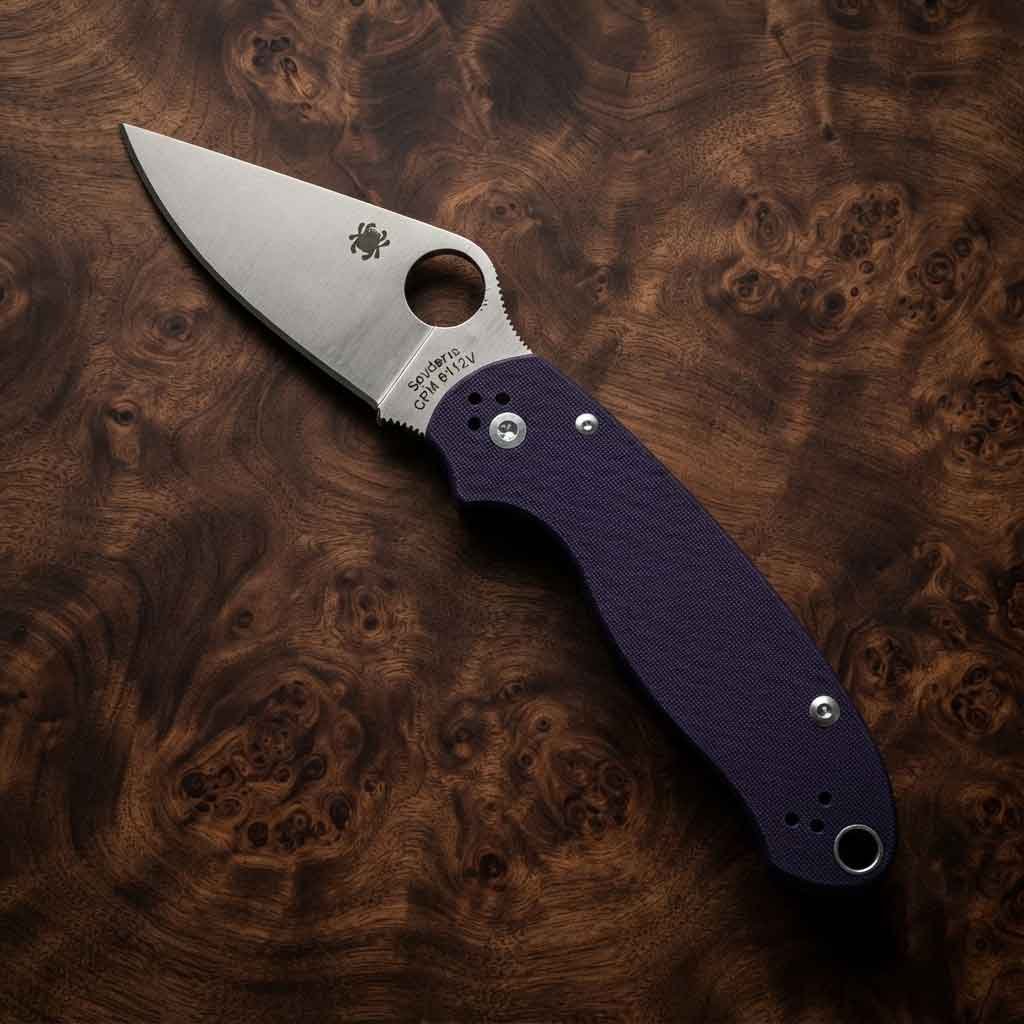
Knife collectors and enthusiasts seeking the absolute ceiling of edge-retention performance. Not practical for everyday carry — more of a benchmark steel for high-performance knife steel enthusiasts.
A Premium powder metallurgy stainless steel from Crucible Industries, CPM-S90V delivers outstanding edge retention paired with solid corrosion resistance. More brittle than contemporaries like CPM-S35VN. Best suited for small- to medium-sized folding knives where thin-edge performance matters more than impact resistance. Benchmade uses it extensively on their higher-end offerings.
| Attribute | Rating | Ranking |
| Edge Retention | 9/10 | #2 |
| Toughness | 3.5/10 | #29 |
| Corrosion Resistance | 7.5/10 | #15 |
| Ease of Sharpening | 2/10 | #37 |
| Typical HRC | 59–61 | — |
CPM-S110V pushes edge retention to the end of the stainless steel spectrum. Combined with genuinely excellent corrosion resistance, it’s a compelling choice for light cutting tasks. However, thick edge durability comes at a cost — S110V is brittle and poorly suited for hard impacts, chopping, or heavy outdoor use. Spyderco leads production with several inline models.
Users who cut a lot, rarely sharpen, and keep their knife away from hard impacts. Outstanding for everyday light-duty slicing tasks where blade sharpness retention is the priority.
These two are functional equivalents — CPM-10V, produced by Crucible Industries in the USA, and K390, produced by Bohler-Uddeholm in Sweden. Both deliver extraordinary edge retention paired with respectable toughness — a rare combination at this performance level. Low stain resistance means carbon steel maintenance matters. Spyderco uses K390 extensively. Kizer offers CPM-10V options.
Hard-use folders and fixed-blade enthusiasts where steel edge-retention rating outweighs rust concerns. Not for saltwater environments without proper coating.
A Japanese high-carbon stainless steel produced by Hitachi Steel, ZDP-189 achieves extraordinary hardness levels — up to 67 HRC — delivering exceptional edge retention and fine-grained steel characteristics. It’s somewhat brittle at peak hardness. More at home in kitchen knife steel applications and precision cutting tools than hard-use outdoor blades.
Kitchen knife enthusiasts and collectors who want razor-sharp, thin-edge performance and are comfortable with careful maintenance.
The holy trinity of Premium stainless knife steel. CPM-20CV from Crucible, M390 from Bohler-Uddeholm, CTS-204P from Carpenter Technology — all three are essentially identical in steel alloy composition and real-world performance. Superb edge retention, excellent corrosion resistance, and a genuinely balanced set of knife steel properties make this group the benchmark for high-end everyday-carry steel.
| Attribute | Rating | Ranking |
| Edge Retention | 7.5/10 | #7 |
| Toughness | 3.5/10 | #26 |
| Corrosion Resistance | 9/10 | #4 |
| Ease of Sharpening | 3.5/10 | #30 |
| Typical HRC | 60–62 | — |
Anyone wanting a Premium stainless knife steel that excels at EDC cutting tasks. Found on knives from Zero Tolerance, Spyderco, Microtech, and WE Knife Co.
Find knives in M390, CPM MagnaCut, and other Premium steels at American Knife Depot — competitive pricing on the world’s finest blade steels.
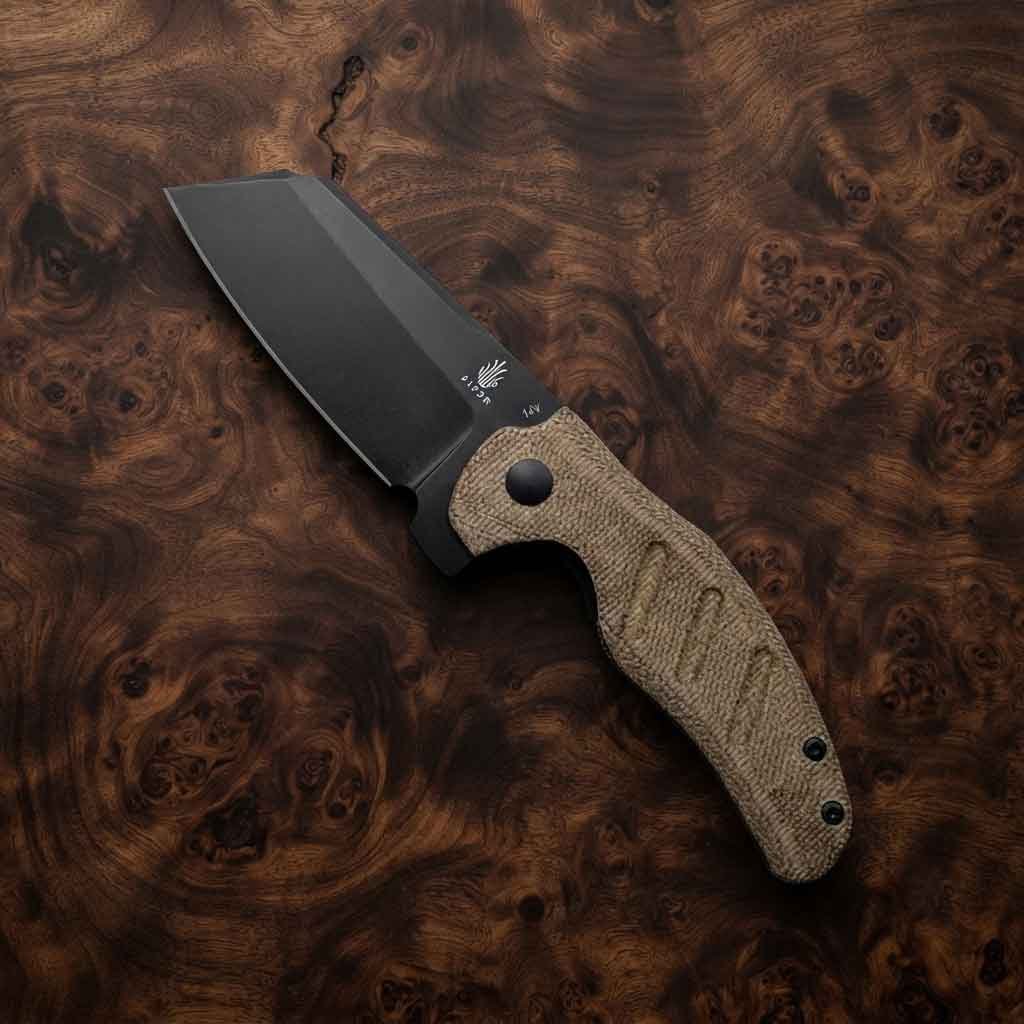
CPM MagnaCut is the most significant development in knife steel in decades. Designed specifically for knives by metallurgist Dr. Larrin Thomas of Knife Steel Nerds and produced by Crucible Industries, MagnaCut achieves something previously considered impossible — combining the edge retention of CPM-20CV with the toughness of CPM-4V while maintaining genuine stainless corrosion resistance. It’s the most balanced all-around knife steel available today.
| Attribute | Rating | Ranking |
| Edge Retention | 7/10 | #14 |
| Toughness | 9.5/10 | #9 |
| Corrosion Resistance | 6/10 | #3 |
| Ease of Sharpening | 5/10 | #21 |
| Typical HRC | 60–65 | — |
CPM-20CV wins on raw edge retention. MagnaCut wins decisively on toughness and impact resistance. For pure EDC slicing, 20CV edges ahead. For any knife that sees real-world hard use — chopping, batoning, outdoor tasks — MagnaCut isn’t even in the same league.
Almost everyone. It’s the rare steel that genuinely works for EDC folders, hard-use fixed blades, hunting knives, and outdoor tools without meaningful compromise.
CPM-M4 sits at the top of the carbon-based powder metallurgy pyramid. Tough enough for hard impacts, sharp enough for precision work, and beloved by custom makers for its predictable behavior under demanding conditions. The Achilles’ heel is corrosion resistance — M4 rusts without proper care. Benchmade and Spyderco both produce notable CPM-M4 knives.
| Attribute | Rating | Ranking |
| Edge Retention | 6.5/10 | #10 |
| Toughness | 6.5/10 | #11 |
| Corrosion Resistance | 4/10 | #31 |
| Ease of Sharpening | 4/10 | #28 |
| Typical HRC | 62–65 | — |
Hard-use fixed blade users and serious collectors who don’t mind maintenance. Outstanding steel for heavy-use cutting tasks where high toughness and moderate edge retention balance matters.
CPM CruWear occupies a compelling sweet spot — tough enough for fixed blades and hard-use folders, sharp enough for precision EDC cutting. It handles impacts without gross chipping and maintains a keen edge through demanding tasks. Best for: tactical knife steel applications, hard-use fixed blades, and serious outdoor knives.
Users who need a high-performance knife steel that bridges the gap between edge retention and impact resistance. Benchmade produces several excellent CruWear options.
CPM-4V delivers high edge retention and genuine toughness — a rare pairing that makes it a well-rounded choice for a hard user. Not stainless, so maintenance matters. Made by Crucible Industries in the USA. Best for: hard-use fixed blades, outdoor knives, and steel for big choppers that also need reasonable edge retention.
CPM-3V is the premier powder-metallurgy steel for maximum toughness and respectable edge retention. It’s a favorite for fixed-blade knife steel applications — Survival knives, bushcraft knives, and large outdoor blades that take heavy impacts. Knife tip strength is exceptional. Not stainless. Best for: Survival knife steel, bushcraft knife steel, and outdoor knives built for steel that handles impact without flinching.
| Attribute | Rating | Ranking |
| Edge Retention | 5.5/10 | #19 |
| Toughness | 9/10 | #4 |
| Corrosion Resistance | 5.5/10 | #27 |
| Ease of Sharpening | 4.5/10 | #16 |
| Typical HRC | 58–62 | — |
Originally developed with legendary knifemaker Chris Reeve, CPM-S35VN refined the already-excellent S30V formula by adding niobium for better toughness and improved machinability. The result is one of the most well-rounded, balanced knife steels in production — genuinely high marks across all four performance categories.
S35VN wins on toughness and machinability. S30V costs slightly less and remains widely available. For most buyers, S35VN is worth the modest Premium. Both qualify as excellent everyday carry steel options.
Premium EDC folder users and fixed-blade enthusiasts who want balanced performance without having to choose between edge retention and toughness.
Explore our full range of CPM-S35VN, CPM MagnaCut, and M390 knives at American Knife Depot — America’s most trusted online knife retailer with over 13,700 verified reviews.
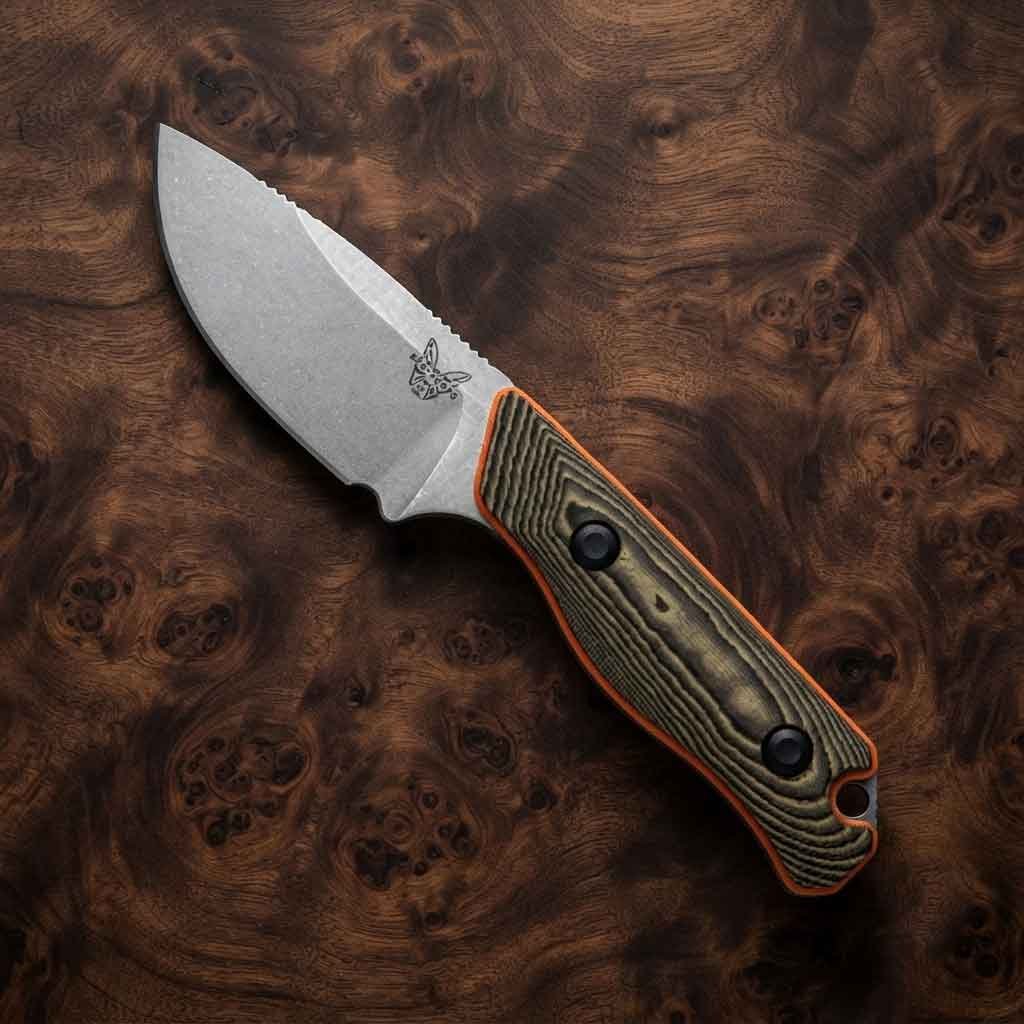
The steel that redefined affordable Premium performance when it launched. Crucible Industries developed CPM-S30V as a purpose-built knife steel — optimized specifically for blade performance rather than adapted from industrial applications. Good marks across all four attributes—still one of the most popular EDC blade steels in production.
Best for: everyday carry knives where balanced knife steel performance at a reasonable price point matters most.
Bohler-Uddeholm’s answer to M390 — similar composition but with a notably finer grain structure that delivers added toughness and wear resistance. Strong corrosion resistance. Solid all-around performer. Best for: Premium folding knives, collector pieces, and applications involving internationally manufactured knife steel.
Sometimes called “stainless D2,” CTS-XHP far exceeds that nickname. Stronger edge retention than true D2, better corrosion resistance, and a fine-grain structure from Carpenter Technology’s powder metallurgy process. Best for: EDC folders and medium-duty fixed blades requiring steel with balanced properties.
The gold standard for kitchen knife steel. Produced by Takefu Special Steel in Japan, VG-10 delivers consistent performance, good corrosion resistance, and easy maintenance. Best for: kitchen cutlery, everyday folders, and steel for thin slicers where sharpness and ease of care matter.
One of the most popular semi-stainless tool steel options in production. Affordable, widely available across 60+ knife categories, and genuinely capable for its price point. D2 develops a light surface patina over time — not rust, but evidence of its semi-stainless nature. Best for: budget-to-mid-range EDC knives and value-focused buyers wanting strong edge retention without Premium pricing.
An excellent hard-working steel for budget-to-mid-range knives. Made by Crucible Industries. Easy to maintain, decent corrosion resistance, and solid edge retention for the price. Best for: hunting knife steel applications, utility fixed blades, and medium-duty everyday carry.
Chemically identical to 154CM but manufactured via powder metallurgy — resulting in superior edge retention and a finer grain structure. The particle metallurgy process elevates a proven formula. Best for: Premium versions of 154CM applications where you want better steel edge retention rating without going full exotic.
A budget-sector champion from Bohler-Uddeholm. Strong corrosion resistance, respectable edge retention, and affordable pricing make it a staple of value-oriented European-made knives. Best for: budget EDC folders, casual outdoor knives, and beginner-friendly knife steel for humid conditions.
Much like its predecessor, CTS-BD1, but enhanced with nitrogen for better edge retention and fine-grain steel characteristics. Used extensively by Spyderco on their lightweight series. Best for: mid-range folding knife steel applications where easy maintenance knife steel quality matters.
Shop mid-range knives in D2, VG-10, 154CM, and N690 at American Knife Depot — competitive pricing on trusted brands like Kershaw, CIVIVI, and Ka-Bar.
Sandvik’s finest offering in the affordable tier. Exceptional toughness, strong corrosion resistance, and surprisingly sharp performance make 14C28N arguably the best budget knife steel available anywhere. Many experienced users consider it the best steel for knife beginners — easy to sharpen, forgiving to maintain, and capable of satisfying experienced EDC users. Best for: everyday-carry folders, entry-level fixed blades, and steel for knife beginners taking their first serious steps into quality knives.
The backbone of Chinese-manufactured budget knives. Respectable across all four performance categories for its price point. Easy to sharpen. Not a hard-use steel but perfectly capable for light and medium-duty tasks. Best for: first knives, gift purchases, and high-volume users who sharpen frequently and prioritize affordability.
Produced by Aichi Steel in Japan, AUS-8 is the quintessential beginner-friendly knife steel — easy to sharpen, decent corrosion resistance, and available on a wide range of affordable knives. AUS-8 and 8Cr13MoV perform nearly identically in real-world use — the primary differences are country of origin and slight compositional variations.
| Attribute | AUS-8 | 8Cr13MoV |
| Origin | Japan (Aichi Steel) | China |
| Edge Retention | Similar | Similar |
| Toughness | Slightly higher | Slightly lower |
| Corrosion Resistance | Similar | Similar |
| Ease of Sharpening | Easy | Easy |
| Price Point | Slightly higher | Lower |
Verdict: Either works well for steel for knife beginners. AUS-8 has a slight edge in consistency; 8Cr13MoV wins on price.
440C is the stronger performer — solid edge retention, good corrosion resistance, and wide worldwide availability. 440A prioritizes toughness and affordability over edge retention. Both represent honest, capable, affordable knife steel options. Best for: budget hunting knives, utility blades, and recreational use where Premium knife steel grades aren’t necessary.
An excellent entry point for steel for knife beginners. Easy to care for, won’t break the bank, and performs reliably for light- and medium-cutting tasks. Its upgraded variant, CTS BD1N, adds nitrogen for superior edge retention. Best for: first-quality knives and casual EDC users looking to step up from basic blade materials.
A nitrogen-alloyed steel from Zapp in Germany engineered for near-maximum corrosion resistance. LC200N achieves 59–61 HRC while resisting rust in environments that destroy conventional stainless steels. It’s the premier steel for divers and anglers who need performance under saltwater conditions. Best for: dive knives, fishing knives, and steel for saltwater environments where rust resistance is non-negotiable.
The most corrosion-resistant knife steel in production. Made by Myodo Metal in Japan, H1 uses a nitrogen-based composition that makes it nearly rust-proof — an extraordinary achievement for steel in saltwater knife steel applications. It sacrifices edge retention significantly — ranking last among production steels in that category. At the time of writing, only Spyderco produces H1 knives commercially.
| Attribute | H1 | LC200N |
| Corrosion Resistance | 10/10 | 10/10 |
| Edge Retention | 1/10 | 3/10 |
| Toughness | 10/10 | 8.5/10 |
| Ease of Sharpening | 1/10 | 3/10 |
| Best For | Maximum rust resistance | Better edge + rust resistance |
Verdict: LC200N wins for users who want both corrosion resistance and usable edge retention. H1 wins for pure rust-proof applications.
Produced by Bohler-Uddeholm using a special nitrogen-enhanced powder metallurgy process, Vanax achieves remarkable corrosion resistance — rivaling H1 and LC200N — while delivering better edge retention than either. It sits at 59–61 HRC, with genuinely impressive, balanced knife-steel properties for maximum corrosion resistance. Rare in production knives but worth seeking out for demanding marine environments.
A custom maker favorite for decades, AEB-L produces an exceptionally fine grain structure with top-tier toughness. Custom knifemakers prize it for its predictable heat-treatment behavior and its ability to take and hold a razor-sharp, thin edge. Best for: custom knives, handmade fixed blades, and steel for custom makers who want reliable, consistent performance.
A classic high-carbon steel and a Survival knife staple. Tough, easy to sharpen in the field, and capable of taking an exceptionally sharp edge. Its critical weakness is corrosion resistance — 1095 rusts quickly without a protective coating or active maintenance. Best for: Survival knives, bushcraft knives, and outdoor knives where fast-sharpening steel matters more than rust resistance.
Originally developed as a ball bearing steel, 52100 found a natural second career in forged knife blades. Incredibly tough with strong edge retention for a carbon steel. Beloved by blacksmiths for its forge-friendly behavior and fine grain structure after proper heat treatment. Best for: forged knife steel, blacksmith knife steel, and hard-use fixed blades for outdoor Survival applications.
A forge-friendly carbon tool steel,gggggg deeply loved by blacksmiths and custom makers, born for the forge. Holds a sharp edge well at medium hardness and responds beautifully to careful heat treatment. Best for: handmade knives, bushcraft fixed blades, and forged knife steel projects for steel for blacksmiths.
Readily available, affordable, and genuinely great for knifemaking practice. A2 delivers solid edge retention with respectable toughness — a forgiving steel that teaches good habits. Best for: custom fixed blades, practice knifemaking steel, and beginner knife makers learning steel alloy composition and heat treatment fundamentals.
A high-carbon spring steel with off-the-charts toughness — one of the toughest steels in the entire knife steel universe. Absorbs heavy impacts without flinching. Best for: large chopping knives, machetes, and heavy outdoor blades where steel that handles impact is the entire point. Steel for big choppers doesn’t get much better.
High marks in toughness and corrosion resistance at the expense of edge retention. 420HC (heat-controlled) offers higher hardness than base 420. Both offer maximum toughness characteristics and excellent stain resistance. Best for: hard-use outdoor knives, tactical blades, and applications where steel for light-duty cutting and rust resistance matter more than long-lasting blade edge performance.
Damascus — or pattern welded steel — combines two or more steels through forge welding, producing the iconic layered visual pattern. The acid etching process in ferric chloride reveals contrasting layers as different steel alloys patina at different rates.
Performance depends entirely on the base steels used. A Damascus blade built from CPM-3V and AEB-L performs very differently from one built from 1095 and 15N20. Damascus knife steel is primarily chosen for its extraordinary aesthetics rather than functional superiority. Only skilled blacksmiths can produce genuine pattern welded steel — which is why handmade Damascus commands Premium pricing.
Best for: knife collectors, display pieces, and enthusiasts who want both visual impact and genuine cutting performance from their handmade knife steel.
Browse our curated selection of Damascus, carbon steel, and specialty knives at American Knife Depot — from Ka-Bar Survival blades to Bradford Knives fixed blades, all in one place.
Even the finest Premium knife steel underperforms with poor heat treatment. The controlled heating and quenching cycle determines final hardness, toughness, and edge stability. A budget steel with exceptional heat treatment routinely outperforms a Premium alloy treated carelessly. Since heat treatment happens before the knife reaches you, the manufacturer’s reputation for quality knife heat treat becomes a critical buying factor.
Edge geometry matters as much as steel composition — sometimes more. A thin, acute edge geometry cuts effortlessly but chips more easily under hard impacts. A thick, obtuse edge resists chipping but feels sluggish through material. The right edge angle depends entirely on intended use:
Fine grain steel produces tougher, more consistent blades. Coarser grain structures can create weak points along the edge. Powder metallurgy steels achieve the finest grain structure available in production knives — a major reason they justify their higher price point. Steel with high carbide volume delivers superior wear resistance. The tradeoff is increased brittleness at extreme carbide concentrations.
Blade coatings add another layer of protection and performance modification:
Coatings don’t change the steel’s fundamental properties — but they do meaningfully extend corrosion resistance on carbon and tool steels.
| Use Case | Best Steel Choices | Why |
| Best steel for EDC knives | CPM MagnaCut, CPM-S35VN, M390 | Balanced properties, stainless, versatile |
| Best steel for fixed blades | CPM-M4, CPM-3V, CPM CruWear | High toughness, excellent edge retention |
| Best steel for pocket knives | CPM MagnaCut, M390, 14C28N, D2 | Balanced performance across all categories |
| Best steel for kitchen knives | VG-10, AEB-L, ZDP-189, CPM-154 | Sharpness, corrosion resistance, easy maintenance |
| Best steel for Survival knives | CPM-3V, 1095, 5160, A2 | Maximum toughness, field sharpenable |
| Best steel for hunting knives | CPM-S35VN, CPM-S30V, 154CM | Edge retention, corrosion resistance |
| Best steel for saltwater knives | H1, LC200N, Vanax | Near rust-proof performance |
| Best steel for hard-use knives | CPM-4V, CPM-3V, 5160 | Maximum impact resistance |
| Best steel for beginners | 14C28N, AUS-8, 8Cr13MoV | Easy to sharpen, forgiving, affordable |
| Best steel for blacksmiths | 52100, O1, 1095, 5160, A2 | Forge-friendly, predictable heat treatment |
| Best steel for custom makers | AEB-L, CPM-3V, CPM-4V | Fine grain, consistent behavior |
| Best steel for thin slicers | VG-10, ZDP-189, AEB-L | Thin edge performance, keen sharpness |
| Best steel for big choppers | CPM-3V, 5160, 420 | Maximum toughness, impact absorption |
| Steel for medium-duty tasks | CPM-S30V, 154CM, D2, N690 | Reliable balance of all attributes |
Maxamet, CPM-REX 121, CPM-S110V, CPM-S90V, ZDP-189. These are steels that hold an edge longest — but they demand diamond sharpening tools and careful handling.
H1, 5160, 420, CPM-3V, AEB-L, 14C28N. Steel that won’t chip easily under extreme impacts. Perfect for Survival, chopping, and tactical applications.
H1, LC200N, Vanax, 420HC. Near rust-proof performance for saltwater, marine, and humid environment use.
CPM MagnaCut, CPM-M4, CPM-4V, CPM CruWear. The hardest category to achieve — these are the most versatile high-performance knife steels available.
CPM-S35VN, CPM-S30V, Elmax, CTS-XHP, CPM-154. Reliable, well-rounded, and genuinely capable across all use cases.
14C28N, AUS-8, 8Cr13MoV, 440C, N690, D2. Affordable knife steel options that deliver real-world performance without Premium pricing.
CPM MagnaCut, M390, CPM-S90V, CPM-M4, Maxamet. The finest knife steels money can buy — each excelling in its specific performance niche.
Not sure which steel fits your needs? Browse by use case at American Knife Depot — our curated selection spans every performance tier and budget range.
What is the best knife steel overall?
CPM MagnaCut earns that title for the broadest range of buyers — exceptional balance of edge retention, toughness, and corrosion resistance in a single steel that works for EDC, fixed blades, and outdoor tools.
What is the best budget knife steel?
14C28N from Sandvik. Surprising performance at an accessible price — genuinely the best steel for knife beginners and budget-conscious buyers alike.
What knife steel holds an edge the longest?
Maxamet, followed closely by CPM-REX 121 and CPM-S110V. Expect to use diamond sharpening tools with all three.
What is the toughest knife steel?
H1 and 5160 trade blows at the absolute top. CPM-3V leads the powder metallurgy toughness category.
Does heat treatment matter more than steel type?
Sometimes, yes. A well-treated budget steel frequently outperforms a poorly treated Premium alloy. Always consider the manufacturer’s reputation alongside the steel grade.
What steel sharpens the easiest?
H1, 420, and 1095 are the most forgiving on a sharpening stone — making them ideal for field sharpening and fast-sharpening applications.
Is stainless steel or carbon steel better for knives?
Depends entirely on the application. Stainless knife steel wins for low-maintenance everyday use and wet environments. Carbon steel knives win out for maximum toughness, field-sharpenability, and traditional forge applications.
What steel is best for saltwater environments?
H1, LC200N, and Vanax — in that order for pure corrosion resistance. All three qualify as steel that resists rust in even the harshest marine conditions.
Steel selection isn’t about chasing the most prestigious name on a blade. It’s about matching the right material to the right job. An angler doesn’t need Maxamet — they need H1 or LC200N. A bushcrafter doesn’t need M390 — they need CPM-3V or 1095. A home chef doesn’t need CPM-M4 — they need VG-10 or AEB-L. Context is everything.
The best knife steel is the one that handles your specific tasks without requiring more maintenance than you’re willing to provide. Start with your use case. Build from there.
At American Knife Depot, you’ll find knives spanning every steel profiled in this guide — from budget-friendly 8Cr13MoV folders to collector-grade CPM MagnaCut fixed blades. With over 13,000 products across 60+ categories, brands including Gerber, Kershaw, Ka-Bar, Civivi, Zero Tolerance, and Bradford Knives, and a 4.8-star rating backed by 13,700+ verified customer reviews, finding your perfect blade has never been more straightforward.
Ready to find the right steel for your next knife? Shop the full collection at American Knife Depot — free shipping on orders over $300—sharp gear. Real value. Built for those who demand the best.
MagnaMax is a notable new knife steel that has been
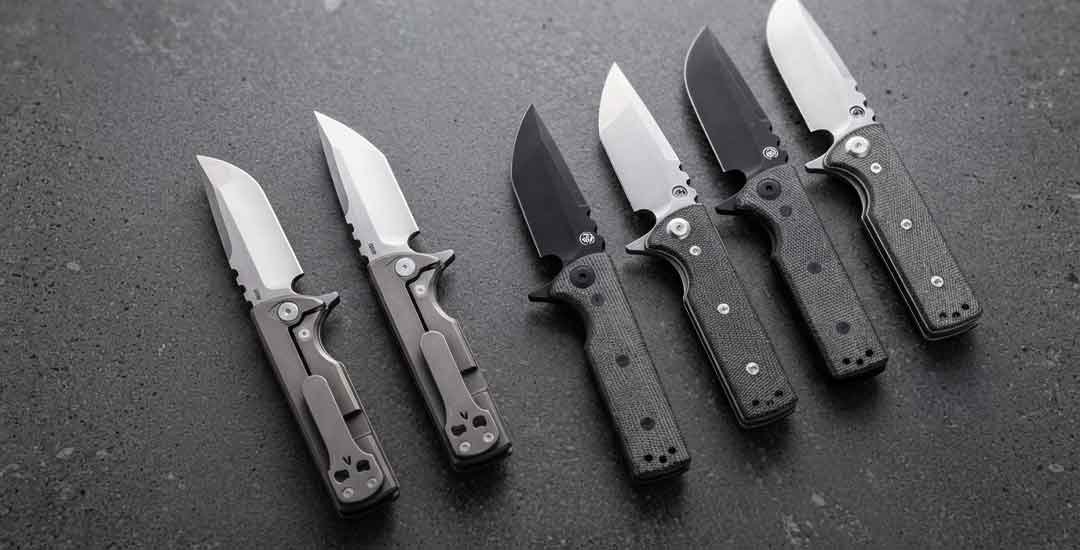
The history of Chaves Knives begins with one maker, basic
![Rated: 15 Best OTF Knives of 2026 [By Category]](https://americanknifedepot.com/wp-content/uploads/2026/09/Featured-Image-7.jpg)
Finding the best OTF knife is less about chasing the
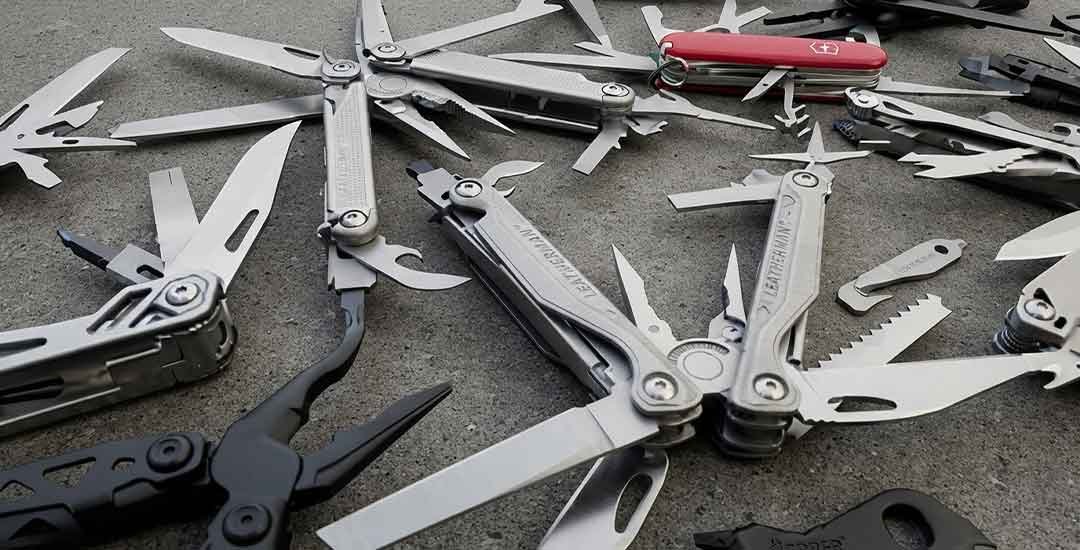
The Leatherman ARC multitool promises premium materials, 20 tools, and
















Civivi nails everyday carry. Smooth action, perfect balance, and clean design. Easily one of the best EDC knives I’ve owned at this price point.