
MagnaMax Steel – Everything You Need to Know
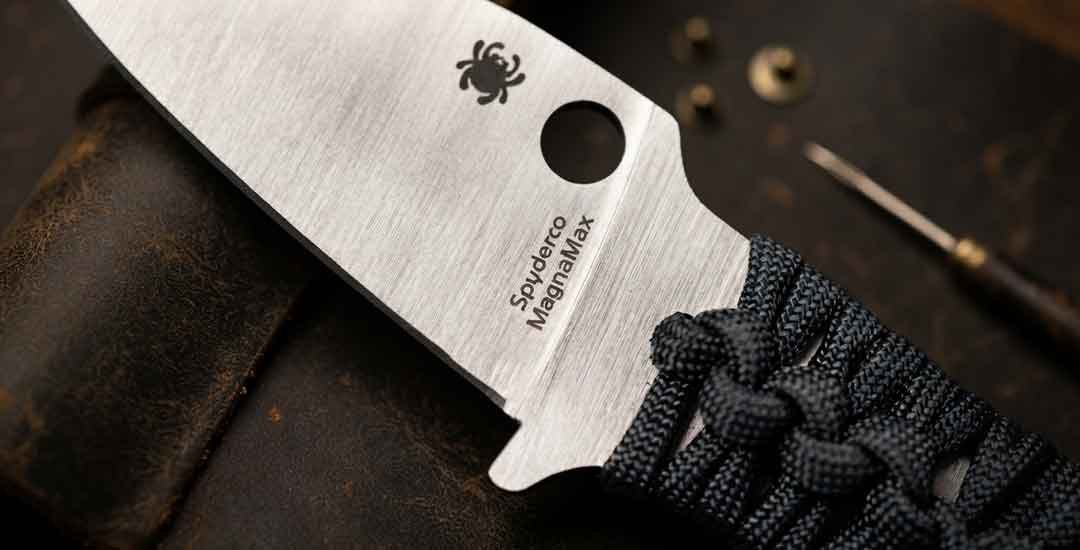
MagnaMax is a notable new knife steel that has been
Shopping for the best pocket knife shouldn’t feel like decoding a foreign language. Yet walk into the conversation cold, and you’ll hit a wall of terms like “S35VN” and “Axis Lock” before you’ve even picked a color. We get it. At American Knife Depot, we talk knives all day, every day, with home cooks, hunters, weekend anglers, and folks who just want something solid to open a box. This guide cuts through the noise and gets you to a confident answer fast.
Short on time? Here’s the cheat sheet.
| Category | Pick | Why It Wins |
| Best Overall | Civivi Elementum | Smooth action, great steel, fair price |
| Best Budget Pocket Knife | Ontario RAT II | Tough, simple, under $35 |
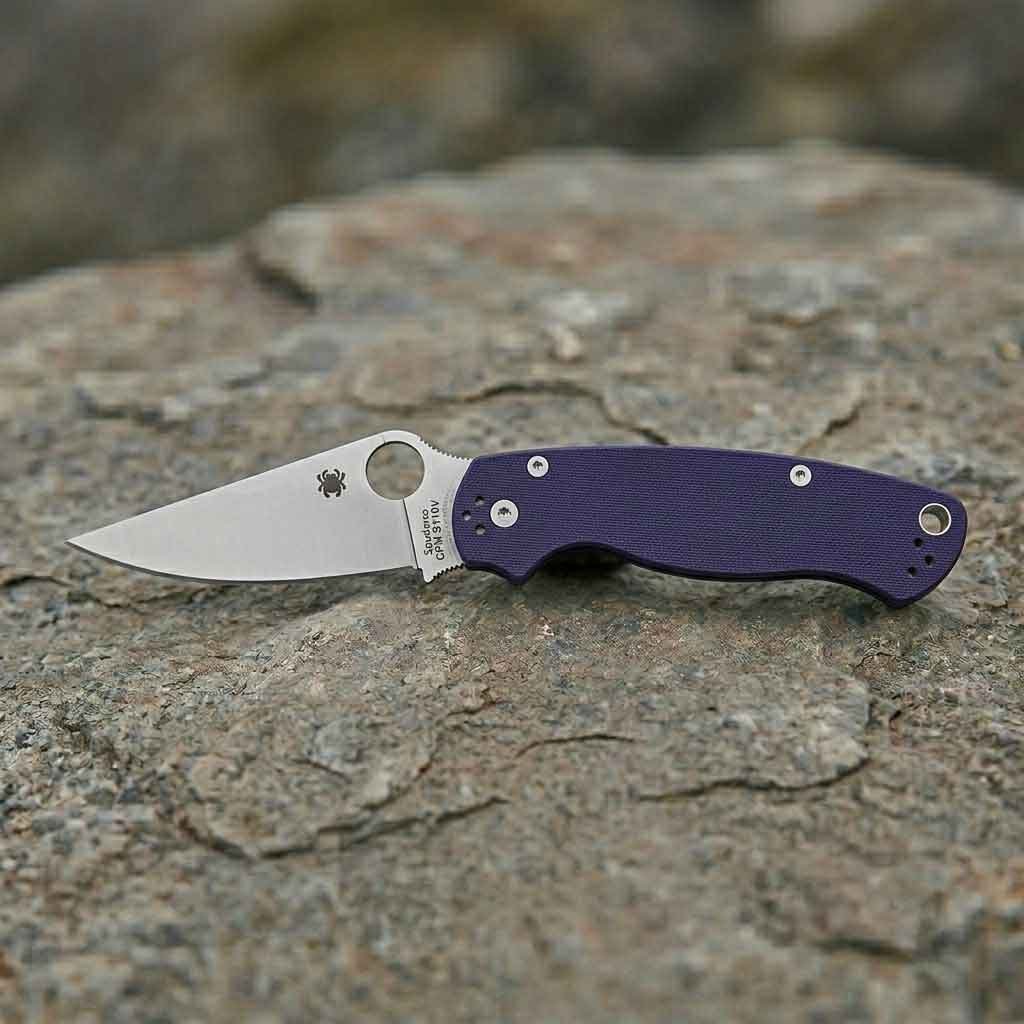
| Best EDC Pocket Knife | Spyderco Paramilitary 2 | Best-in-class ergonomics and lock |
| Best Lightweight Pick | Kershaw Skyline | Barely 2.5 oz, disappears in your pocket |
| Best High-End Folder | Zero Tolerance 0562 | Premium steel, bombproof build |
| Best Gift Knife | Ka-Bar Dozier | Classic, affordable, hard to mess up |
Suggested image: lineup of all six picks side by side. Alt text: “best pocket knives 2025 lineup including Civivi Elementum, Ontario RAT II, and Zero Tolerance 0562”
This isn’t a list pulled solely from spec sheets. Our team at American Knife Depot handles thousands of folding knives a year, fulfilling orders, answering customer questions, and fielding return requests when something doesn’t hold up. That feedback loop tells us a lot. We weighed four things for every knife on this list: real-world edge retention after weeks of daily cutting, lock reliability under repeated one-handed opening, how the handle feels after an hour of continuous use, and whether the price matches the actual build quality. A knife that looks great in product photos but loosens up after a month doesn’t make this guide, no matter how popular the brand name is.
Not every knife fits every job, and that’s the first thing most buying guides skip. Before you fall for a flashy blade, ask yourself what you’ll actually use it for.
Once you know your “why,” the rest of this guide becomes much easier to apply.
We tested, carried, and abused dozens of folders this year. These rose to the top.
The Ontario RAT II remains the gold standard for an affordable pocket knife. It runs AUS-8 or D2 steel, opens smoothly on a basic washer pivot, and shrugs off rough use without complaint. The Civivi Elementum sits just above it, trading a few dollars for a buttery bearing system and sharper D2 performance. Both prove a budget folding knife doesn’t have to feel cheap in hand.
This is where most serious EDC enthusiasts land, and for good reason. The Spyderco Paramilitary 2 earns its reputation with a Compression Lock that’s nearly impossible to disengage by accident, paired with S30V or upgraded steel options. The Benchmade Griptilian brings the famous Axis Lock and a handle shape that fits almost any hand size, with no single hot spot. Both qualify as some of the best EDC pocket knives on the market today.
For collectors and folks who want the best pocket knife money can reasonably buy, the Zero Tolerance 0562 delivers a titanium framelock, ball-bearing pivot, and CPM-20CV steel that holds an edge for weeks of daily use. If budget truly isn’t a concern, knives running M390 or CPM-S110V steel from Premium makers offer edge retention that borders on absurd, the kind of high-performance steel collectors specifically chase.
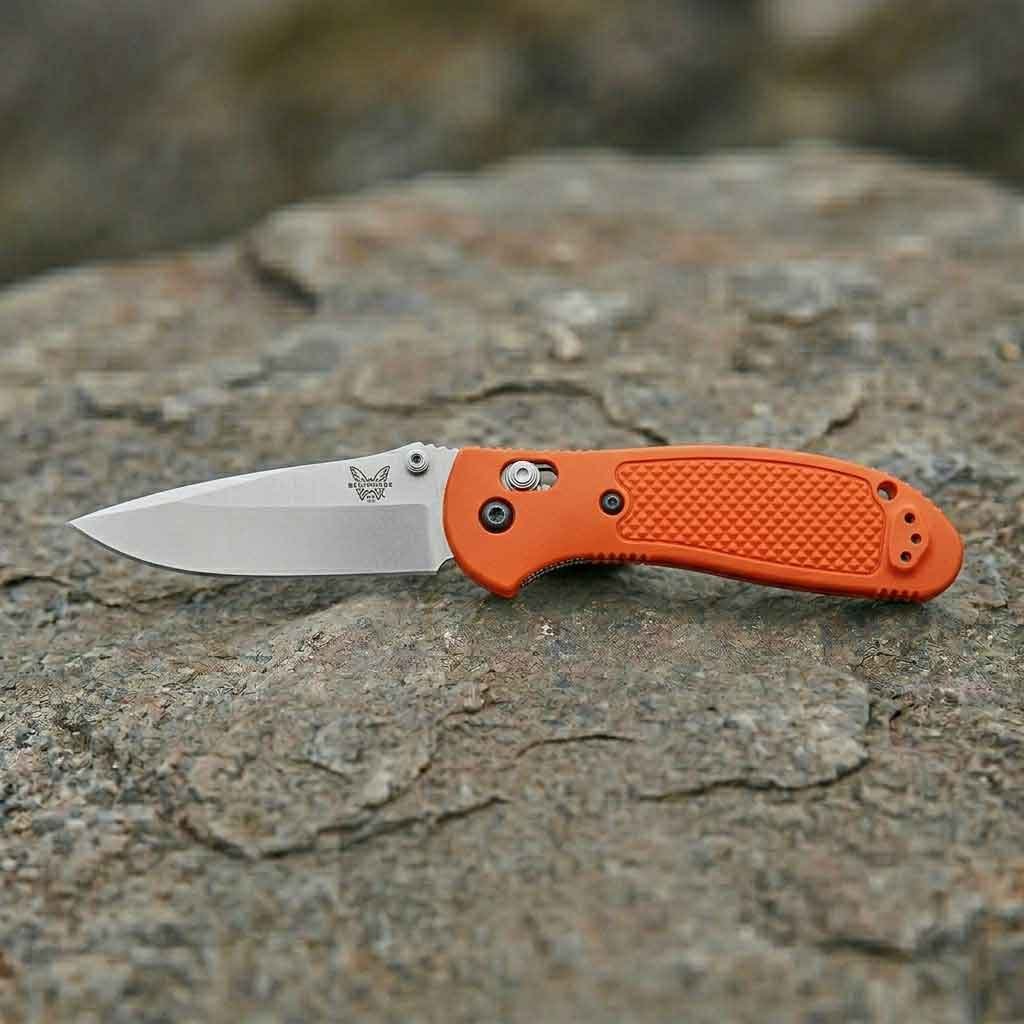
People assume a knife is just for “knife stuff.” In practice, a sharp pocket knife solves problems all day long.
A reliable pocket knife earns its spot in your pocket fast once you start noticing how often you reach for one. It’s also worth knowing the difference between a true pocket knife and other carry options. A Swiss Army knife or slipjoint knife opens with two hands and skips a locking blade entirely, which makes it a great choice for light tasks but a poor substitute for a locking EDC knife on tougher jobs. An out-the-front knife, or automatic knife, opens with a button push instead, and such knives fall under stricter local knife laws in many states.
Most everyday carry knives land between 2.5 and 3.5 inches. Shorter blades draw less attention and slip past most local restrictions, while longer blades trade legality and discretion for more cutting power. The overall length and blade thickness also affect how a knife carries day to day; a thinner profile rides flatter in your pocket. Check your state and city ordinances before carrying anything close to the upper limit. The American Knife & Tool Institute keeps an updated guide on state-by-state knife laws if you want specifics.
Steel determines how long your edge lasts, how resistant it is to rust and corrosion, and how much elbow grease you’ll need to sharpen it. Here’s the breakdown:
| Tier | Steel Examples | Best For |
| Entry-Level | 8Cr13MoV, AUS-8, CTS-BD1 | Budget knives, easy sharpening |
| Mid-Range | 154CM, D2, S30V, S35VN, 14C28N, CTS-XHP | Everyday carry, balanced performance |
| High-Performance | M390, CPM-20CV, CTS-204P, S90V, S110V | Long edge retention, Premium folders |
| Exotic/Specialty | ZDP-189, Maxamet, LC200N, K390, RWL-34 | Extreme edge retention or rust-proofing |
Entry-level steels like 8Cr13MoV won’t hold an edge for weeks, but they sharpen up on basic equipment in minutes, which makes them perfect for a first knife. Mid-range steel, especially D2 and S35VN, hits the sweet spot most EDC enthusiasts settle on, balancing carbon and chromium for solid wear resistance without a nightmare sharpening session. High-performance steel costs more upfront but pays you back with fewer sharpening sessions, thanks to elements like vanadium and molybdenum that boost edge stability.
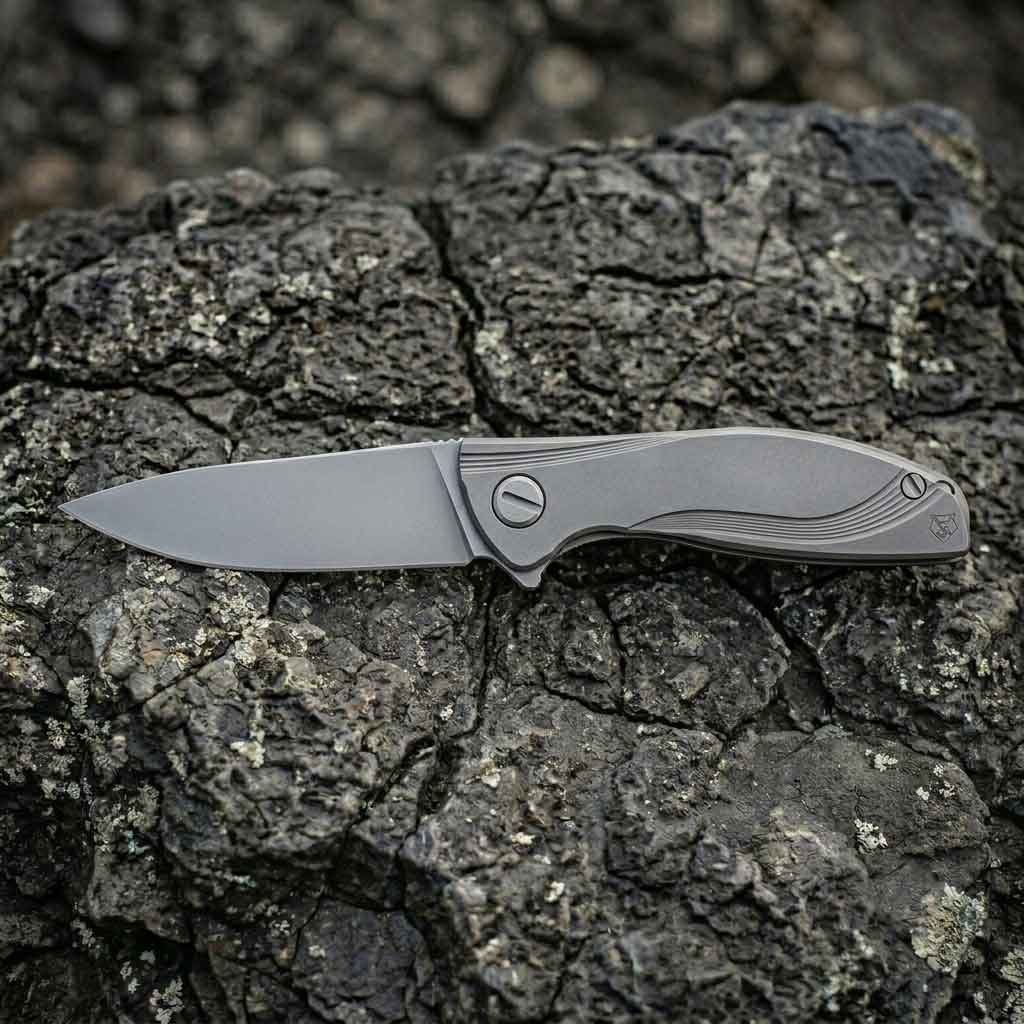
| Shape | Strength | Common Use |
| Drop Point | Strong tip, versatile edge | All-around EDC, hunting |
| Clip Point | Fine piercing tip | Detail work, traditional carry |
| Tanto / Reverse Tanto | High tip strength | Hard-use tasks, light prying |
| Sheepsfoot / Wharncliffe | Rounded or straight, safe tip | Utility cutting, first responders |
| Recurve | Extra cutting surface | Rope and cordage work |
| Spear Point / Dagger | Symmetrical, piercing-focused | Specialty and fixed-blade designs |
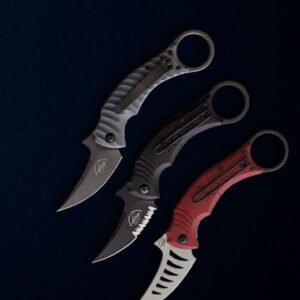
If you only buy one knife, a drop point handles 90% of daily tasks without complaint. A recurve blade adds extra cutting surface for rope work but takes more effort to sharpen. Specialty shapes like the karambit or dagger profile serve narrow self-defense purposes and rarely make sense for general carry.
Thumb studs and flipper tabs dominate the modern market because they’re fast and intuitive. Thumb holes work similarly but keep the blade profile cleaner. A front flipper and the Emerson Wave opener are suited to more specialized carry styles. Automatic and assisted-opening knives add speed but carry stricter legal restrictions in many states, so double-check local knife laws before you buy.
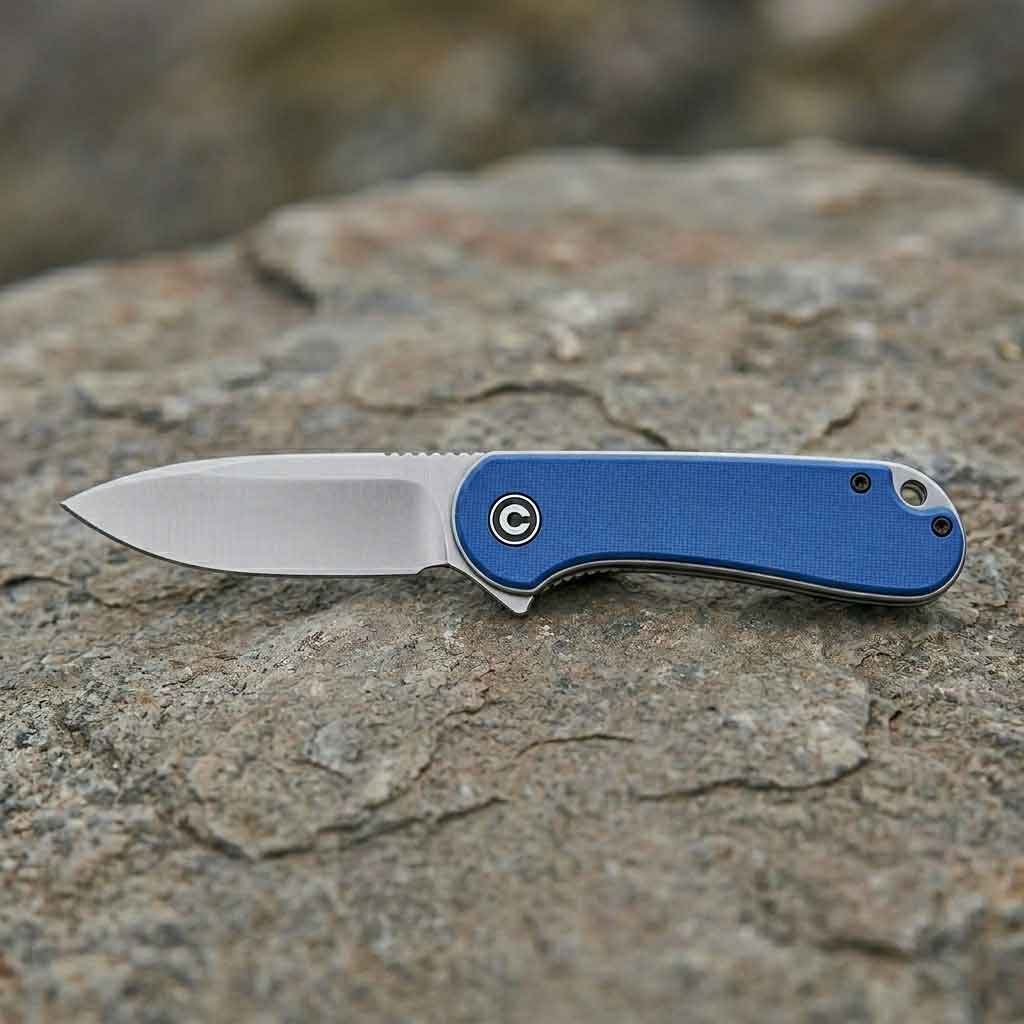
“A lock you trust is worth more than a steel you brag about.” That’s the unofficial motto around our office, and it holds up.
Lockup strength and detent strength both matter here. A loose lock with noticeable blade play is a sign of poor fit and finish, regardless of how good the steel is.
Washer pivots, usually phosphor-bronze, offer a stable, low-maintenance opening action. Bearing pivots, including caged bearings and IKBS systems, deliver noticeably faster, smoother deployment but require more frequent cleaning. Neither is objectively better. It comes down to whether you want low fuss or maximum glide.
A knife can have perfect steel and still feel terrible in your hand. Look for a forward choil if you do detail work, since it adds control at the cost of a slightly shorter cutting edge. Watch for hot spots, too. The pocket clip is the usual culprit on knives that look great in photos but bite your palm after an hour of real use. Good hand fit comes down to handle shape, grip position, and overall balance, not just blade specs.
Deep-carry clips tuck the knife low in your pocket for a more discreet, low-profile carry. Four-position clips give you tip-up, tip-down, left, or right carry, which matters if you’re left-handed or simply picky about how a knife rides in your jeans. A stamped clip flexes more for easy insertion, while a machined clip looks sharp but can be stiffer to use.
American Knife Depot stocks the brands that knife enthusiasts actually trust, not filler names.
| Brand | Known For |
| Gerber | Budget-friendly tactical folding knife and Survival knife options |
| Kershaw | Affordable EDC with SpeedSafe assisted opening |
| Zero Tolerance | Overbuilt, Premium hard-use folder construction |
| Civivi | Outstanding value-to-performance ratio |
| Ka-Bar | Rugged, no-nonsense fixed-blade knife and folding designs |
| Bradford Knives | Collector-grade fit and finish, US-made knives |
Suggested image: brand logo grid or product flat-lay. Alt text: “top pocket knife brands sold at American Knife Depot, including Kershaw, Civivi, and Zero Tolerance”
Browse the full pocket knife collection at americanknifedepot.com, where every listing includes real steel specs, not vague marketing copy.
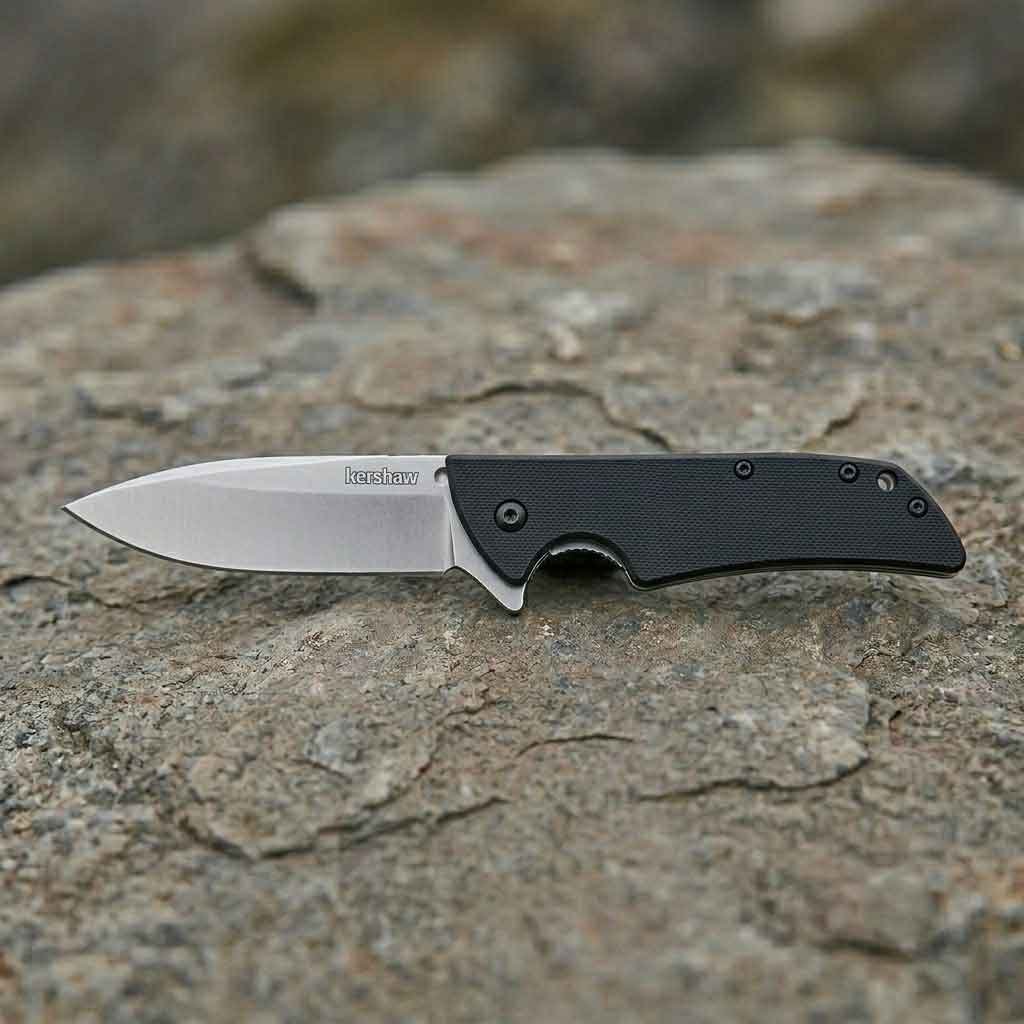
A great knife rewards basic care. Skip maintenance, and even M390 steel will let you down eventually.
Five minutes of care every month keeps a $40 budget pocket knife performing as if it cost twice as much.
What is a pocket knife?
A pocket knife is a folding blade small enough to carry comfortably in a pocket, typically used for everyday cutting tasks rather than combat or survival-specific work.
What’s the difference between a liner lock and a frame lock?
A liner lock uses a thin metal liner inside the handle to secure the blade. A frame lock uses the entire handle scale as the lock bar, making it generally stronger and easier to manufacture well.
Is G10 or Micarta better for a knife handle?
G10 wins in terms of chemical resistance and texture options. Micarta wins on natural feel and how it ages over time. Neither is wrong; it depends on personal preference.
Do bearings really make a knife open faster than washers?
Yes, bearings reduce friction significantly compared to washers, resulting in faster, smoother deployment. Washers, however, need less maintenance and handle grit better over time.
What makes a pocket knife durable?
Durability comes down to three things: steel quality, lock strength, and handle material. A D2 or S35VN blade paired with a frame lock and G10 scales holds up to years of daily abuse.
How do I prevent my knife from rusting?
Dry your blade after use, apply a light coat of oil periodically, and avoid leaving it in humid environments, such as a damp tackle box, for extended periods.
What’s the best blade shape for everyday use?
A drop point blade handles the widest range of daily tasks, from opening boxes to food prep, without sacrificing tip strength.
Are assisted-opening and automatic knives legal to carry?
It depends on your state and city. Many areas restrict automatic knives more heavily than manual folders, so always confirm local knife laws before carrying one.
The best pocket knife isn’t the one with the flashiest steel or the highest price tag. It’s the one that matches how you actually live and work. Whether you need a tough budget pocket knife for the job site or a Premium folder worth showing off, the fundamentals in this guide- steel, lock type, handle material, and blade shape- will steer you right every time.
American Knife Depot carries over 13,000 products across 60+ knife categories and is backed by a 4.8-star rating from more than 13,700 verified customers. We’ve built our reputation on stocking real brands at fair prices, not gimmicks. Shop our full pocket knife collection today and grab free shipping on orders over $300. Got questions about a specific steel or lock type? Reach out to our team; we talk knives for a living, and we’re happy to help you find the right one.
MagnaMax is a notable new knife steel that has been
The history of Chaves Knives begins with one maker, basic
![Rated: 15 Best OTF Knives of 2026 [By Category]](https://americanknifedepot.com/wp-content/uploads/2026/09/Featured-Image-7.jpg)
Finding the best OTF knife is less about chasing the
The Leatherman ARC multitool promises premium materials, 20 tools, and












Civivi nails everyday carry. Smooth action, perfect balance, and clean design. Easily one of the best EDC knives I’ve owned at this price point.