

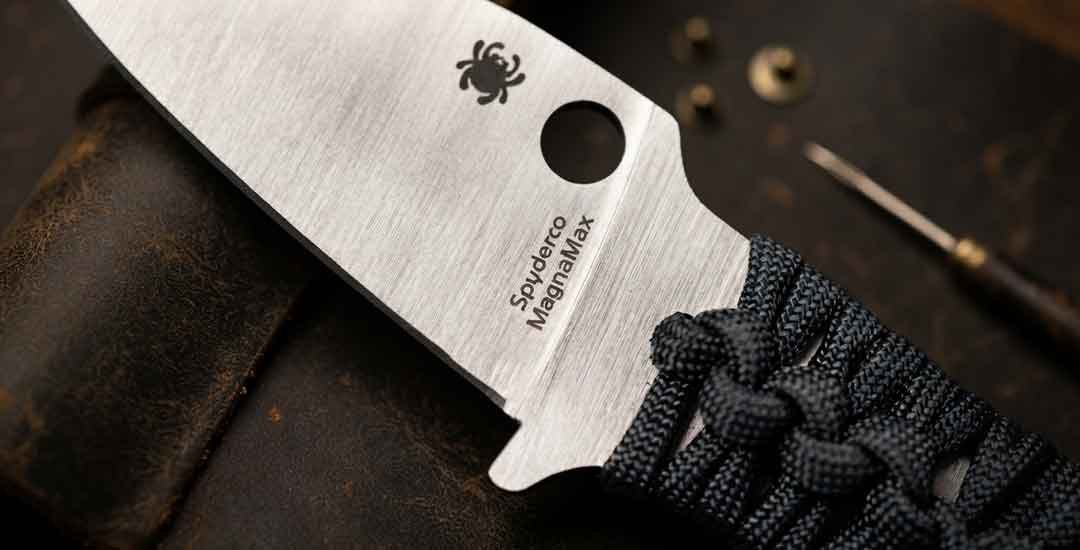
MagnaMax Steel – Everything You Need to Know
MagnaMax is a notable new knife steel that has been

A great blade can still feel wrong if the handle fights your hand. The best knife handle material improves control, comfort, balance, and confidence.
This guide compares knife handle materials, explains how they perform, and shows which options fit your needs. You’ll also learn what knife scales are and why manufacturing changes performance.
Explore American Knife Depot’s knife selection and compare handle materials by carry style, purpose, and budget.
The best material for knife handle construction depends on more than appearance. A good handle should support how you actually use the knife.
Focus on these factors:
Checkering, ridges, etching, bead blasting, and contouring often matter as much as the material itself.
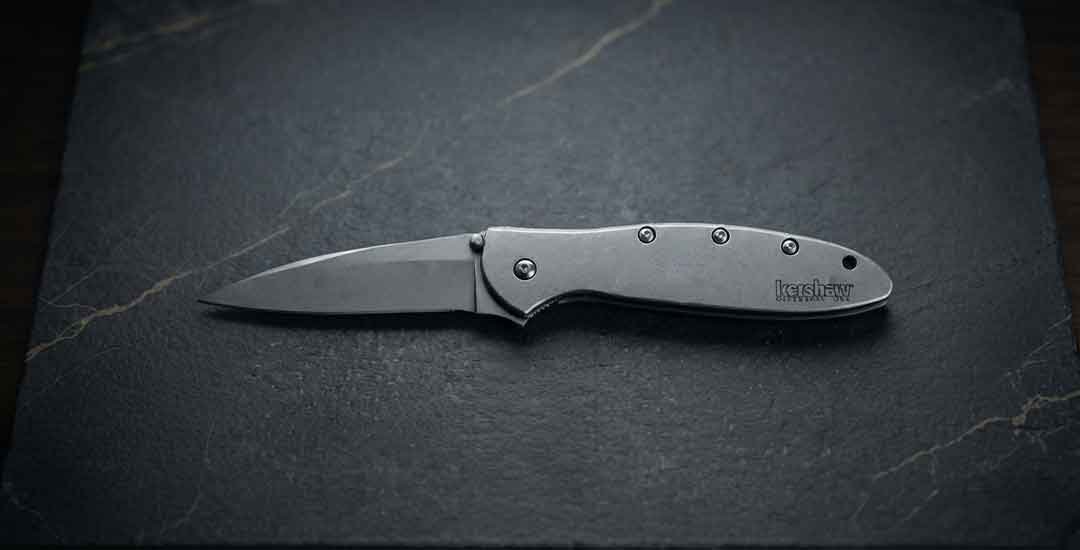
| Material | Grip | Weight | Durability | Moisture Resistance | Cost | Best For |
| G-10 | Excellent | Light | Excellent | Excellent | Midrange | EDC, tactical, outdoor |
| Micarta | Excellent | Light | Excellent | Very good | Midrange | Hunting, bushcraft |
| FRN/Zytel | Very good | Very light | Very good | Excellent | Budget | EDC, utility |
| Carbon fiber | Good | Very light | High | Excellent | Premium | Lightweight folders |
| Aluminum | Good textured | Light | High | Very good | Midrange | Folding knives |
| Titanium | Good textured | Light | Excellent | Excellent | Premium | High-end folders |
| Stainless steel | Fair smooth | Heavy | Excellent | Excellent | Midrange | Pocket knives |
| Stabilized wood | Good | Medium | Good | Good | Varies | Hunting, collector |
| Bone | Fair | Medium | Moderate | Fair | Varies | Traditional knives |
| Mother of pearl | Fair | Medium | Moderate | Good | Premium | Dress knives |
| Leather | Good | Medium | Moderate | Fair | Varies | Traditional fixed blades |
G-10 is a fiberglass resin laminate made from woven fiberglass cloth and epoxy resin. It delivers excellent toughness, hardness, and dimensional stability while remaining lightweight.
Manufacturers machine texture patterns into G-10 scales. Deep checkering creates a secure grip for wet, dirty, or gloved hands. Softer texturing works better for everyday carry because aggressive patterns can rub clothing.
For buyers asking about the best knife handle material for grip, textured G-10 deserves serious attention.
Compare G-10 EDC and outdoor knives at American Knife Depot if traction is your priority.
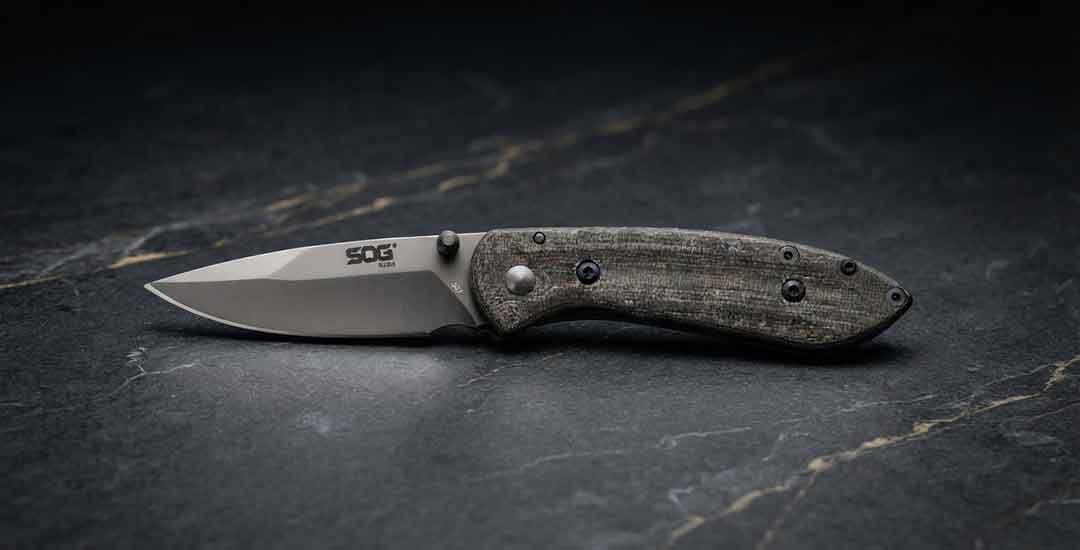
Micarta typically uses linen, canvas, or similar fabric layers bonded with phenolic resin. The result feels warm, solid, and comfortable.
A Micarta handle can provide excellent hand feel during extended use. Canvas Micarta often develops useful grip when damp, while polished Micarta may feel smoother.
This makes G-10 vs Micarta practical. G-10 usually provides sharper texture and lower moisture absorption. Micarta often feels softer and more natural.
For knife handle materials, wood vs. Micarta, Micarta usually wins for low-maintenance durability. Wood wins on natural beauty.
FRN means fiberglass-reinforced nylon. Zytel is a nylon resin family associated with DuPont.
Injection molding lets manufacturers consistently create FRN handles while incorporating traction into the surface.
FRN offers low weight, impact resistance, moisture resistance, and affordable production cost. It can feel less premium than G-10 or titanium, but performance can be excellent.
For a budget folding knife handle, FRN remains a good material to consider.
Browse lightweight FRN and polymer-handle knives at American Knife Depot for practical everyday carry.
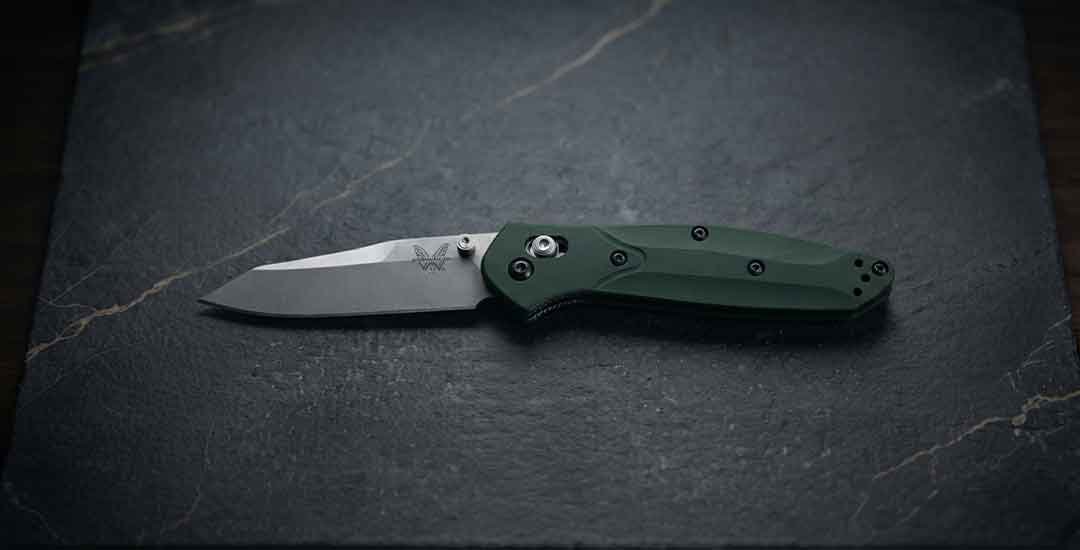
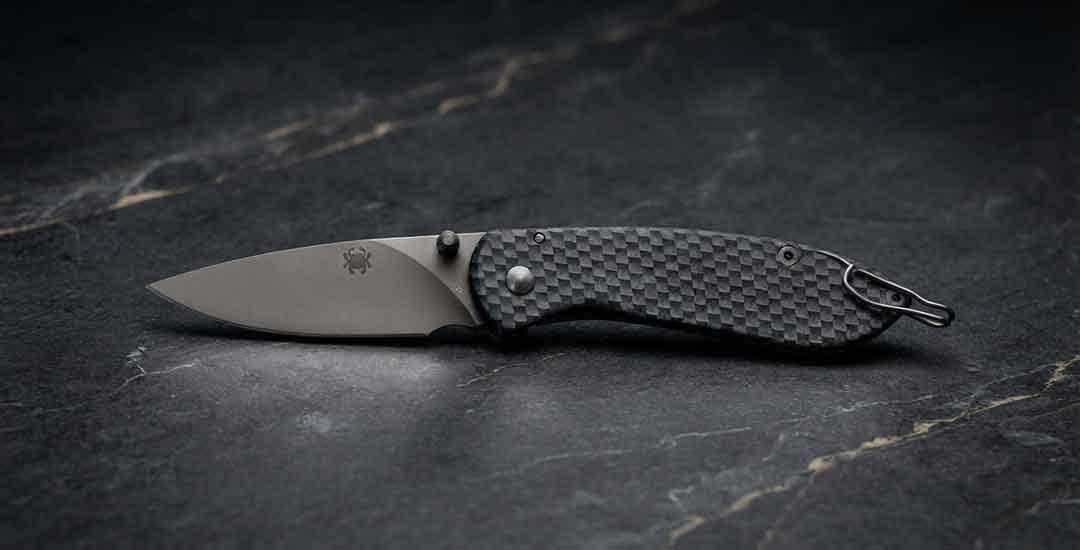
A carbon fiber knife handle is made from carbon strands or carbon weave set in resin. It offers excellent stiffness with very little weight.
Carbon fiber scales suit premium folding knife handles, collector knives, and lightweight EDC designs. However, carbon fiber can be brittle under sharp impact, while glossy finishes may reduce grip traction.
A cast-aluminum knife handle or machined-aluminum scale can provide excellent strength without excessive mass. 6061-T6 aluminum combines low density, tensile strength, corrosion resistance, and good machinability.
Anodized aluminum improves surface protection and color options. Milling and ridges improve metal grip.
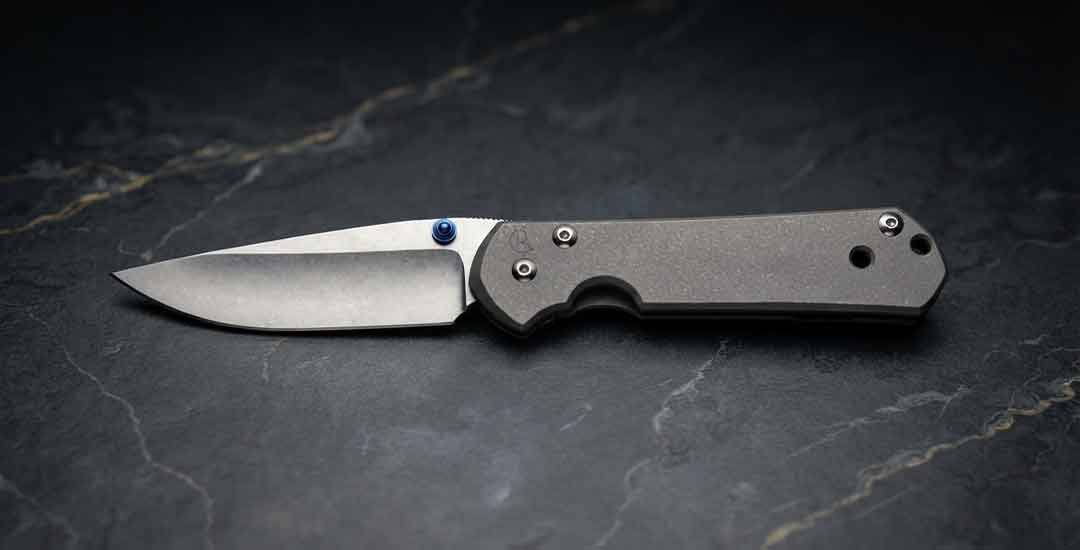
Titanium combines high strength, low weight, excellent rust resistance, and premium appearance. It is popular on higher-end folding knives and frame lock designs.
Titanium can be bead blasted, machined, or anodized. Those processes alter handle texture, grip, and finish.
Explore aluminum and titanium folding knives at American Knife Depot if you want a premium metal handle.
A stainless steel knife handle offers strength, rigidity, scratch resistance, and long service life. Its main drawback is weight. Smooth steel can also become slippery when wet with water or sweat.
Manufacturers often add etching, ridges, inlays, or texture to improve friction.
For best knife handle materials, wood vs Micarta vs. steel- steel favors toughness. Wood favors warmth. Micarta balances comfort with field performance.
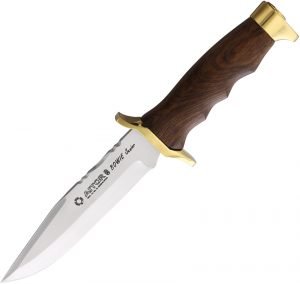
A high-quality wood knife handle adds warmth, comfort, and traditional character. The best wood for a knife handle depends on stability, hardness, moisture exposure, and intended use.
Stabilized wood uses polymer resin to improve material stability and moisture resistance. For the best knife handle wood in regular outdoor use, stabilized hardwood usually makes more sense than soft, untreated species.
Shop American Knife Depot for wood-handle hunting, traditional, and collector knives with distinctive natural character.
Bone, antler, and horn create traditional knife scales with unique patterns. Common materials include cow bone, deer antler, elk antler, cow horn, sheep horn, and buffalo horn.
Bone can be jigged, dyed, and polished. Antler adds natural texture. These materials can react to moisture, heat, and dryness, so proper care matters.
Ivory is different. U.S. rules strictly limit the ivory trade, so buyers should verify the legality and documentation of vintage collector pieces.
Mother-of-pearl knife handle material comes from mollusk shells and offers an elegant, reflective appearance. Black mother-of-pearl and abalone often appear on upscale knives.
Match your use case with EDC, hunting, survival, tactical, or collector knives at American Knife Depot.
G-10 offers crisp texturing, excellent moisture resistance, and high toughness. Micarta offers a warmer hand feel and a comfortable grip.
FRN wins on price and very low weight. G-10 usually feels denser, stiffer, and more premium.
G-10 favors grip and impact toughness. Carbon fiber is favored for low weight and cosmetic appeal.
Titanium offers premium corrosion resistance and strength. Aluminum delivers lower cost and excellent weight savings.
Wood offers natural appearance and warmth. Synthetic materials usually offer predictable moisture resistance and lower maintenance.
What is a knife scale? A scale is one piece attached to a knife frame, liner, or tang to form the gripping surface.
So, what are knife scales compared with a handle? “Knife handle” is the broad term. Scales describe attached outer pieces on many designs.
Common knife scale materials include G-10, Micarta, carbon fiber, wood, aluminum, titanium, stainless steel, and bone.
You may also see knife scale material, knife scale material, or handle scale material when shopping.
What is a knife handle called? Usually, simply the handle. Depending on construction, terms can include scales, grip, frame, or hilt. Knife hilts may include a guard and pommel.
Important processes include:
For modular detachable knife handle design best practices, manufacturers should prioritize secure attachment, repeatable fit, structural strength, safe cleaning, and dependable fasteners.
Use this simple checklist:
Remember, material for knife handles affects comfort and control, while the best material for knife blade performance depends on edge retention, toughness, corrosion resistance, and sharpening needs.
Use these criteria to narrow your choices, then compare suitable knives at American Knife Depot.
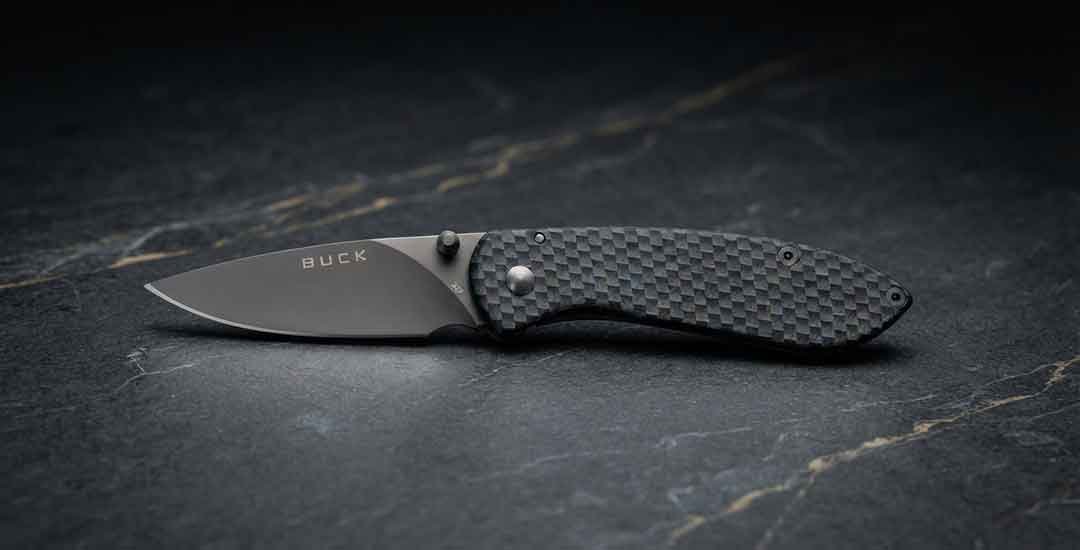
G-10 is one of the best all-around choices because it balances grip, toughness, low weight, moisture resistance, and value. Micarta, titanium, FRN, and stabilized wood may better fit specific needs.
Textured G-10 offers excellent grip security. Micarta can feel more comfortable during extended use, especially thanks to its useful surface texture.
G-10, titanium, stainless steel, Micarta, and quality FRN all provide strong durability. Construction quality and thickness also affect strength.
Carbon fiber and FRN are among the lightest common choices. Lightweight G-10 and titanium also work well for EDC.
Wood scales offer natural beauty and warmth. Micarta scales generally offer better moisture resistance, consistent toughness, and lower maintenance.
Yes. Folding knife handles work with pivots, liners, locks, and internal hardware. Fixed blade handles can focus more on grip shape and tang coverage.
The common term is automatic knives. Laws vary by location, so buyers should check current federal, state, and local rules before carrying or purchasing one.
The best knife handle material depends on your priorities. G-10 delivers excellent grip and durability. Micarta blends comfort with field performance. FRN offers affordable, lightweight reliability. Carbon fiber emphasizes minimal weight and premium looks.
Aluminum balances rigidity with value. Titanium brings corrosion resistance and refinement. A stainless steel knife handle favors toughness. Wood, bone, mother-of-pearl, and leather lend traditional character.
American Knife Depot serves U.S. buyers looking for EDC, hunting, survival, tactical, folding, outdoor, kitchen, and collector knives across a broad range of brands and price points.
Explore American Knife Depot and choose the knife handle material that fits your hand, environment, and work ahead.
MagnaMax is a notable new knife steel that has been
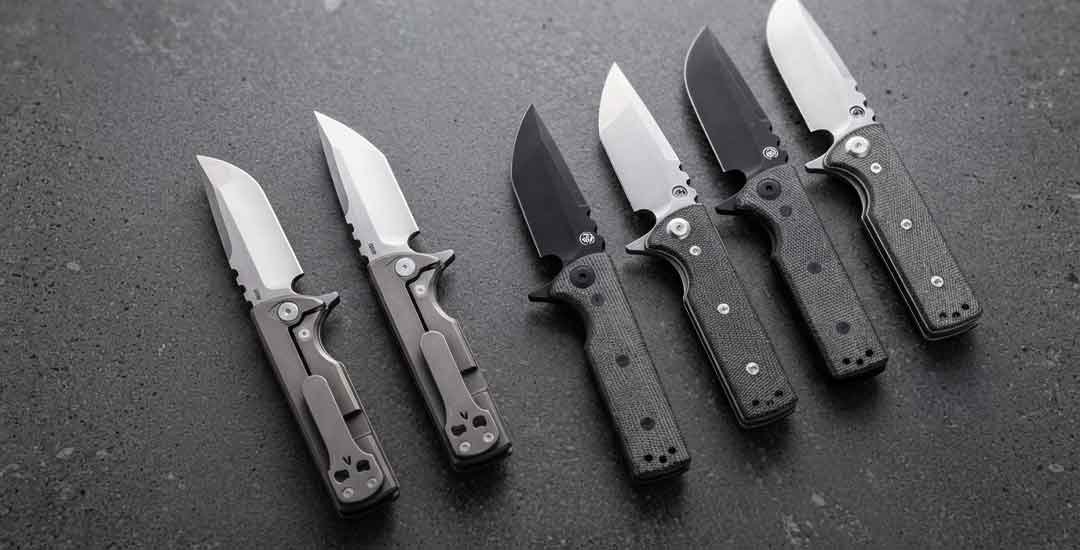
The history of Chaves Knives begins with one maker, basic
![Rated: 15 Best OTF Knives of 2026 [By Category]](https://americanknifedepot.com/wp-content/uploads/2026/09/Featured-Image-7.jpg)
Finding the best OTF knife is less about chasing the
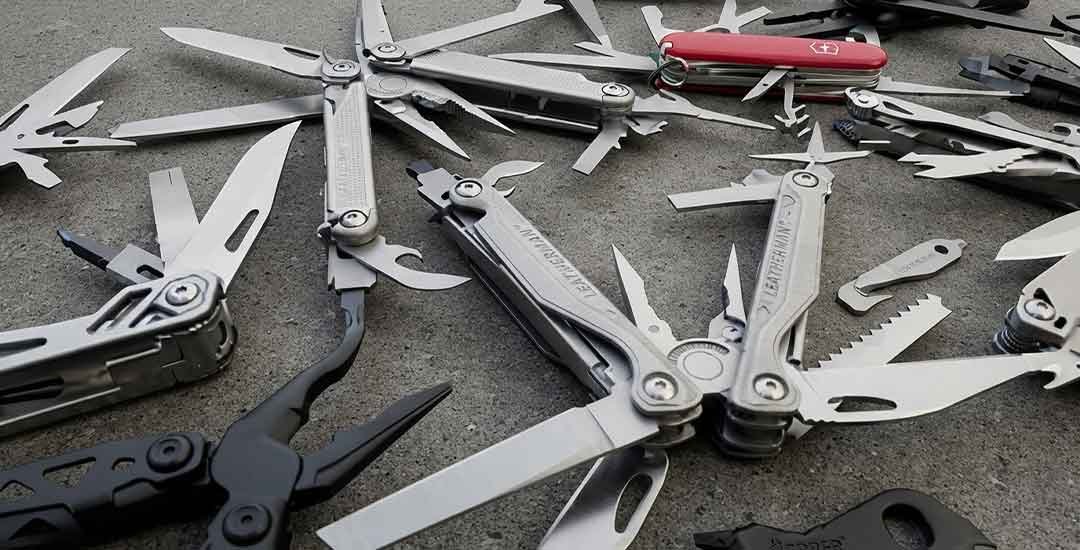
The Leatherman ARC multitool promises premium materials, 20 tools, and
















Civivi nails everyday carry. Smooth action, perfect balance, and clean design. Easily one of the best EDC knives I’ve owned at this price point.