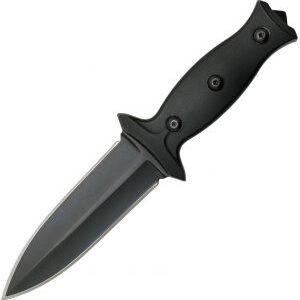
Dagger knives span compact fixed-blade designs, historical reproductions, and decorative pieces made for collectors. Many have a narrow, pointed profile and two edges, but dagger construction varies by style.
Browse daggers for sale at American Knife Depot and compare blade length, materials, handle design, and included sheaths. Use each product’s description to confirm whether it is intended for display or other permitted uses.
Dagger Blade Designs and Construction
A fixed blade dagger has a nonfolding blade attached to its handle. Many conventional daggers have symmetrical spear-point profiles, although historic examples include different blade and edge shapes.
Some modern catalog styles are compact boot daggers, while other pieces feature broader guards or ornamental fittings.
Before comparing fixed blade daggers, check overall length rather than blade length alone. Look for the listed steel, blade thickness, tang construction when disclosed, and whether the edges are sharpened.
A Damascus-pattern finish is a visual characteristic; it does not by itself establish specific steel composition, manufacturing origin, or performance. Read each maker’s specifications instead of judging from photos.
If a product lists full-tang or hidden-tang construction, treat that as a design detail to compare alongside its stated purpose, not a stand-alone guarantee of quality.
Historical, Medieval, and Renaissance Daggers
Medieval daggers are not one standard pattern. Historical examples include rondel-style designs with disc-shaped guards and pommels, along with varied crossguards and grips.
Renaissance daggers can include elaborate hilts and decorative metalwork. A modern piece may borrow these details without being an authentic antique.
If you’re comparing historical daggers or medieval daggers for sale, check whether the item is described as a reproduction, decorative interpretation, or collectible original.
Provenance and date claims should come from reliable product documentation, not a weathered finish or period-style name.
Fantasy, Decorative, and Collectible Daggers
Fantasy daggers often feature imaginative contours, sculpted handles, or distinctive finishes. Decorative daggers may be made primarily for display, while some historically inspired pieces have different construction and edge conditions.
Neither appearance nor a dramatic product name establishes intended use.
Compare ornate daggers by overall measurements, finishing details, and display or storage options. Check whether a sheath or stand is included.
Photographs can help assess design, but verified specifications are more reliable for material and construction claims.
Display pieces also deserve safe storage: check overall length before selecting a case, shelf, or cabinet.
How to Choose a Dagger Knife
Compare Size, Materials, and Design
Start with your reason for buying: collecting a particular style, appreciating historical design, or selecting a display piece.
Small dagger knives may suit a compact collection, whereas longer pieces need adequate storage. Review blade profile, guard proportions, handle materials, weight, and the stated edge condition.
For boot dagger styles, verify the actual configuration and dimensions, since not every product has the same construction.
Check Sheaths, Finish, and Product Details
Check the description for included accessories and finish details.
Look for accurate brand, manufacturing location, and steel information; verify labels such as “Solingen” for each item.
Store sharp pieces securely and follow local rules for purchase and possession.
Shop Dagger Knives at American Knife Depot
Explore dagger knives across modern, historically inspired, and decorative styles where available.
Compare listed dimensions, materials, edge descriptions, and included accessories to select a piece that matches your interests.
For a wider overview of knife designs, see our Types of Knives guide.