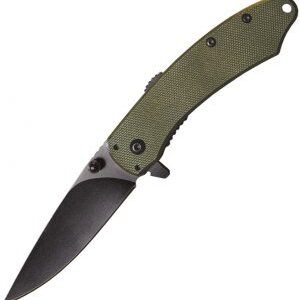
Assisted opening knives combine a deliberate manual start with a mechanism that helps complete blade deployment. For everyday cutting, this design can make access easier without requiring you to open the blade entirely by hand. At American Knife Depot, compare opening controls, blade dimensions, handle comfort, and lock operation to find a folding knife that matches your routine.
How Assisted Opening Works
To open a spring-assisted folding knife, first move the blade using a thumb stud, flipper, or other model-specific control. Once it passes a designed point, spring tension helps carry the blade toward the open position. A manual folder relies on your hand throughout the movement. An automatic knife uses a separate release control to initiate opening.
The opening mechanism and the blade lock do different jobs. Assistance moves the blade; a lock, when present, keeps it open during normal cutting. Check the actual mechanism and lock in each product’s specifications rather than relying on appearance alone.
Opening Controls and Locking Systems
Flippers, Thumb Studs, and Spring Assistance
A flipper tab can offer an accessible push point, while a thumb stud lets you start opening near the blade. Neither feature proves a knife is assisted; both appear on manual models too. When comparing open assist knives, consider which control is comfortable for your preferred hand and how much effort it takes to start the blade moving.
Know How the Blade Locks
A liner lock or frame lock may hold a folding blade open, but lock designs and release methods vary. Some models add a separate safety to reduce unintended opening. Do not assume a safety or a particular lock is included unless the listing confirms it.
How to Choose an Assisted Opening Pocket Knife
Match the Blade to Everyday Tasks
Begin with the material you cut most: packages, cord, tape, or light work supplies. A shorter blade can offer control for detail work; a longer edge may make slicing easier. A drop-point profile offers a versatile tip, while a straighter edge can suit controlled utility cuts. Compare plain and partially serrated edges based on your cutting needs and sharpening tools.
Blade steel also affects corrosion care and how often the edge needs attention. The best option depends on the actual alloy and how you use and maintain it—not simply the steel’s marketing label.
Consider Grip, Carry, and Closing
Closed length, weight, handle texture, and pocket-clip position affect daily comfort. Check whether the clip suits your preferred carry side and whether you can reach the opening control without shifting your grip. Before purchasing, review how the blade closes and where your fingers must be placed to release the lock.
Safe Handling and Maintenance
Keep fingers outside the blade’s travel path and operate the knife according to its instructions. If opening becomes uneven or the lock fails to engage as intended, stop using it until the issue is assessed. Clear pocket lint and residue, dry the pivot area, and follow the manufacturer’s lubrication guidance; do not dismantle the assisted mechanism without appropriate instructions.
Assisted-opening and automatic knives may be treated differently under applicable laws. Check local ownership and carry rules for your exact model. For an overview of folding mechanisms, see our guide to knife types.
Shop Assisted Opening Knives at American Knife Depot
Explore assisted opening knives and compare opening controls, blade shapes, locking systems, and carrying features. Use each product’s current specifications to choose a design that fits your everyday tasks and handling preferences.